Breeder’s Connection 2026 | The Pitzer Ranch
Horses that are good minded and pretty
“I was raised just like these horses are, on the ranch.”
– Jim Brinkman
The Pitzer Ranch has long been instrumental in the horse industry, and in the state of Nebraska as well.
Founded by Howard Pitzer in 1945, northwest of Ericson, Nebraska, the horse that put it on the map was Two Eyed Jack, AQHA World Champion and Hall of Famer.
Now owned and managed by Howard’s grandson, Jim Brinkman, his wife Tana and their children, the Pitzer continues to churn out high quality horsepower.
Four hundred broodmares run across the 28,000 acres in the eastern part of the Sandhills. The herd is line-bred, back to Two Eyed Jack, with stallions raised out of that group.
Brinkman brings in new blood in the form of different stallions and broodmares.
“If I see a good brood mare bred with a line that I like, I’ll buy her and put her in the band and breed her to the linebred studs,” he said, with the plan of breeding the filly back to the linebred again.
The ranch stands five studs to “mix and match” when things get a little tight – too much of the same blood, he said.
Brinkman often looks for the third generation/second cross to be successful.
He recalls a story his granddad told him as a kid.
“Howard said, you take a border collie and a greyhound and breed them and you now have the slowest coyote hound in the country, and the dumbest cow dog. But then you cross it back on a good border collie one more time and you have a half-litter of fast cow dogs.”
He referenced the “old genetics,” he said, where Doc Bar, a racehorse, was crossed on mares sired by Poco Tivio, a well-known cow horse. The mix was better than both sides, he said. “You’ll see that in almost all the great lines. A lot of times the third generation, the second cross, is better.”
Breeding
The Pitzer Ranch stands two outcross bred stallions: Metallic Casanova, a cow horse with over $204,000 in earnings in the NRCHA and Mia Browbeater, a sorrel Riata stallion whose prodigy have earned over $150,000. Two more studs round out the group: Dukes N Divas and Favorable Intentions, both linebred Jack stallions and both Riata sires.
In his horses, Brinkman wants to raise “a sound horse that’s good-minded and pretty.”
The ranch’s large number of broodmares works to their advantage. “We have the luxury of having the numbers,” he said.
“That’s the way we make the breeding list in the spring, to where the mares go. If you breed like to like, you’ll get closer to what you want and percentages go up. You want to make a herd of cow horses? Throw mares together and breed to a cow horse.”
But he loves the experiments, too. “Every time you turn a stud out with 25 mares, there are a few experiments. And I love that.” One of the successful experiments was a stud, Show Me Song Joes, a ranch bred, linebred on top, with a mother whose sire was Sonny Go Lucky out of a Smooth Town mare. “It was a halter horse on a race horse, and it worked,” Brinkman said. “He was a great horse. He got the pretty form from the halter side and the disposition and soundness from Two Eyed Jack, and he had a little extra speed from his grandma (the Smooth Town mare). And it made him a great rope horse.”
But a breeder has to be calloused when it comes to cull time.
“That part is the hardest as a breeder,” Brinkman said, “to be ruthless enough to go down to Tractor Supply and buy a sorting stick and run them by you, and sort them, and then go check what their papers are.” The results are either disappointment, or a pleasant surprise, he said.
“Everybody always says, how do you get those good horses? I say, you run them down the alley, and if you have enough numbers, there are some good ones.
“A lot of our mare lines, the daughters and granddaughters, have a tendency to have the better colts, so I end up with a lot of the maternal lines that are fairly dominant. But you never know,” he said.
“They say, a stud man will never commit suicide. He has to hang around to see next year’s colts.”
Patience is a big part of being a breeder. “You really don’t know till they’re about four years old, what you actually have. To be a breeder, you have to have a lot of patience and a lot of faith to make the decision. And there can be very little chance of return of your dream working out. It will be four or five years down the road before you know if it worked.”
Brinkman doesn’t wait till the colts are four years old before he assesses them.
“I can look at a baby at three or four months,” he said, “and be correct on about seventy percent of them.” He looks at angles and balance, and if they have muscle. “A colt that’s actually got muscle will have muscle on his forearm. That’s about the last place they put fat on. You can get tricked by the fat, because some mares do a good job of taking care of them. But by the same token,” he said, “a colt that is real fat and has a crest on his neck, that’s fat from (feeding on) mama. That will come down when he’s a two-year-old.”
Brinkman and his crew have scored the colts for the last forty years, from 1-10, on their head, neck, muscle, balance, size, and more. They are scored at three to four months of age and again at four years old. Those numbers can be used for culling as well.
When the colts are two-and-a-half or three years of age, he assesses their movement. If the animal has the angles and the movement, then “it’s just a matter of development and trainers developing them right.”
Cattle
He and his family, including wife Tana, son Sam and his wife Kendra, and daughter Sarah, along with Sarah’s son Kale, also run a commercial herd of cattle on the ranch. It used to be registered Angus, but to concentrate on horses, the registered herd ended.
Running cattle alongside horses has its benefits. “We put a stud with a band of mares in one pasture, then the next pasture has a set of cows, and then a stud and mares in the next pasture,” Brinkman said. “It splits them up.”
It also makes for more complete grazing, he said. Horses are spotty grazers, grazing an area all the way down and then returning to it, when cattle will eat across the whole pasture. “You can alternate them and get better utilization out of a pasture.”
And in the fall and winter, horses can be turned out to pastures to clean up rough feed that a cow can’t digest. “Horses have simple stomachs,” he said. “If the nutrition isn’t there, they’ll eat more. A cow has to stop, sit down, and chew cud, and she runs out of hours in the day. She can’t get enough feed in her belly to stay alive.”
When water tanks lightly freeze over, horses paw through the ice crust and open up the water, making it available for the cattle.
“They complement each other,” he said.
Showing
The ranch stays relevant by showing and competing on their animals at events. “If you can still compete with the horses there, and have an honest chance of winning,” he said, “your horses are staying relevant.”
Brinkman doesn’t usually buy the most popular trending horse. “I’m not a big fan of going to last year’s futurity champ and breeding to him,” he said. “He isn’t proven. He could be a great horse, but it doesn’t mean he’s a sire. You have a horse like Metallic Cat that’s proven. He’s 19, he’s had all those colts, and there are some really good ones in there.
“I know I miss a little of the financial bubble, when the new ones are introduced, but my percentages of good horses are a lot better breeding to those older, solid horses, and you don’t have to do the marketing. If the colt is out of a Metallic Cat mare, everybody knows what that is. If it’s out of a new horse, a lot of people haven’t heard of them yet. Not saying they’re bad horses, but I’m going to wait till they’re proven.”
Racing
Lately, Brinkman has dabbled in racehorses. An AQHA racetrack opened in Ogallala, Nebraska, in August, and he’d like to race. He owns Sixes Liaison, a running quarter horse stallion with a 102 speed index, who was shown in halter and won fifth at the World Show. “He’s a very pretty horse, and I wanted all of the (traits), to go a couple different ways with him.”
Racing “will be fun,” he said. “It’s a new track, and I don’t expect it to be real big for a few years, but it will be fun to get in on the front end of it. Maybe I’ll win a race on one of my old (team roping) head horses, I don’t know,” he laughed.
It takes a large support system to help with the ranch. Sam runs the daily ranching operations, the cattle and the hunting business (for waterfowl and big game on the ranch); Sam’s wife Kendra does much of the breeding records and cares for the broodmares and colts. Daughter Sarah does breeding and palpating, and Sarah’s son, Kale, who is 17, is “half-colt trainer, good breeding barn and cow help, and farms. We make him do everything right now,” grandpa Jim said.
-
Horses graze while foals rest in the Sandhills on the Pitzer Ranch.
1 horses in pasture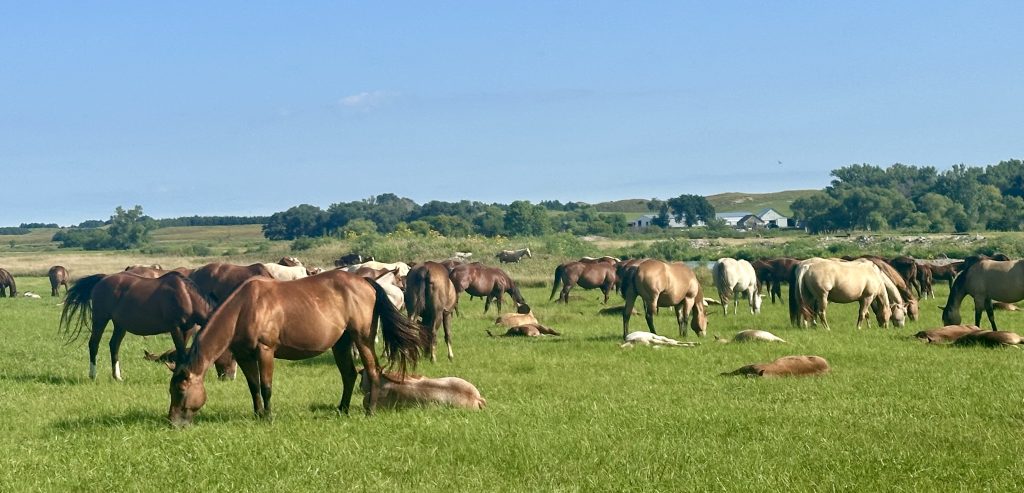
-
Jim Brinkman crosses a river on a Pitzer horse.
2 Jim crossing River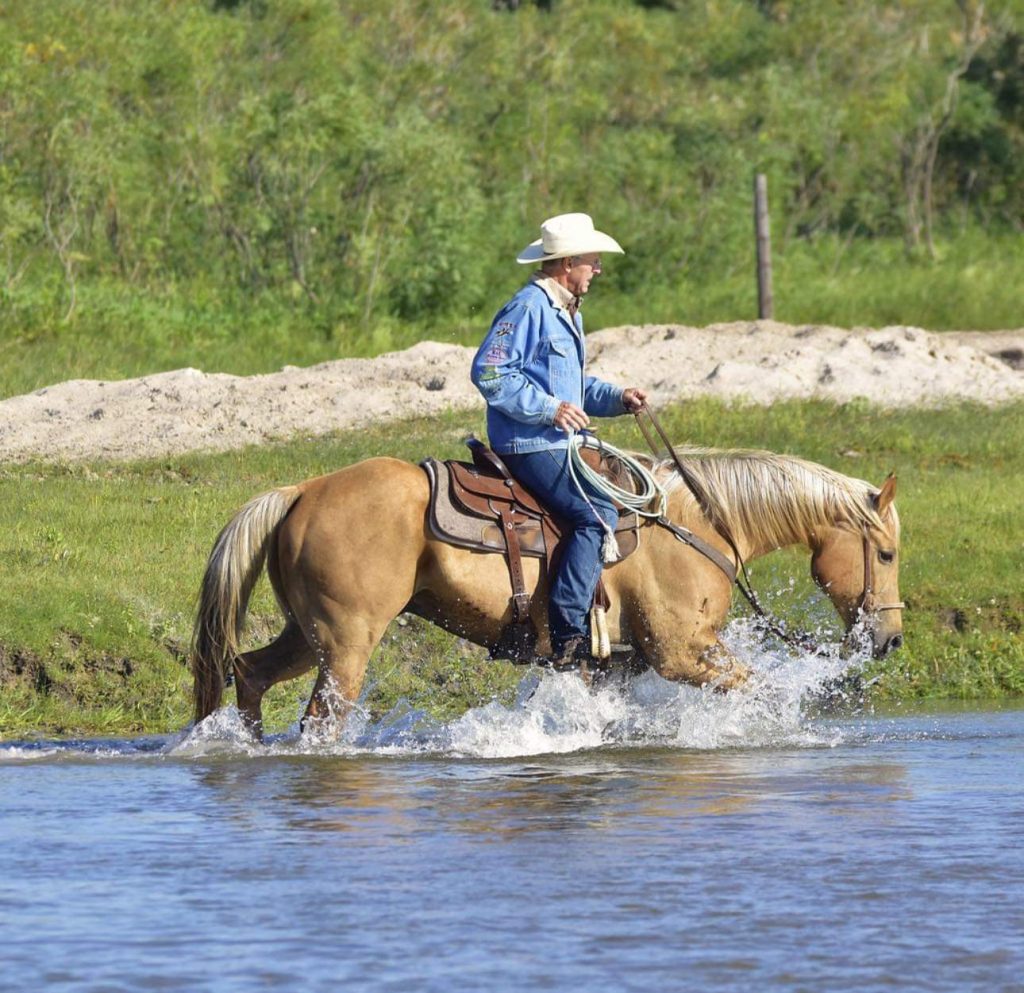
-
The founder of the Pitzer Ranch, Howard Pitzer, with his many trophies. Pitzer’s biggest accomplishment was Two Eyed Jack, an AQHA World Champion who sired over 1,400 horses which accounted for more than 17,000 AQHA showing points and 14 AQHA World Champions.
3 Howard with trophies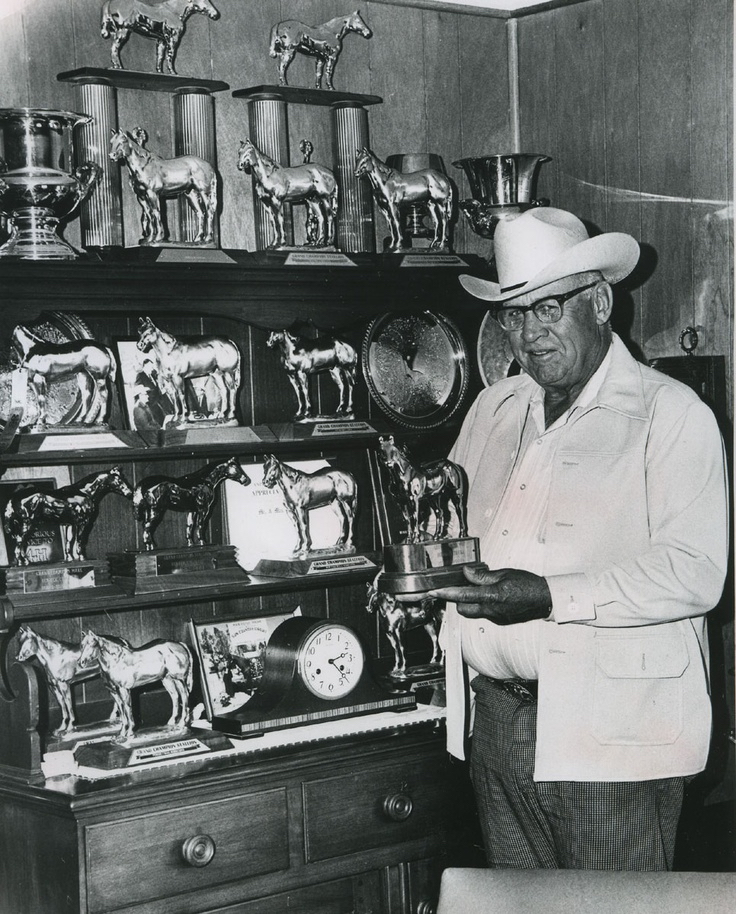
-
-
Jim and Tana Brinkman’s granddaughters, Rio and Brooke Brinkman, helping on horse sale day, on a home-raised mare.
4 Jim’s granddaughters Rio & Brooke Brinkman helping at Horse Sale on a home raised mare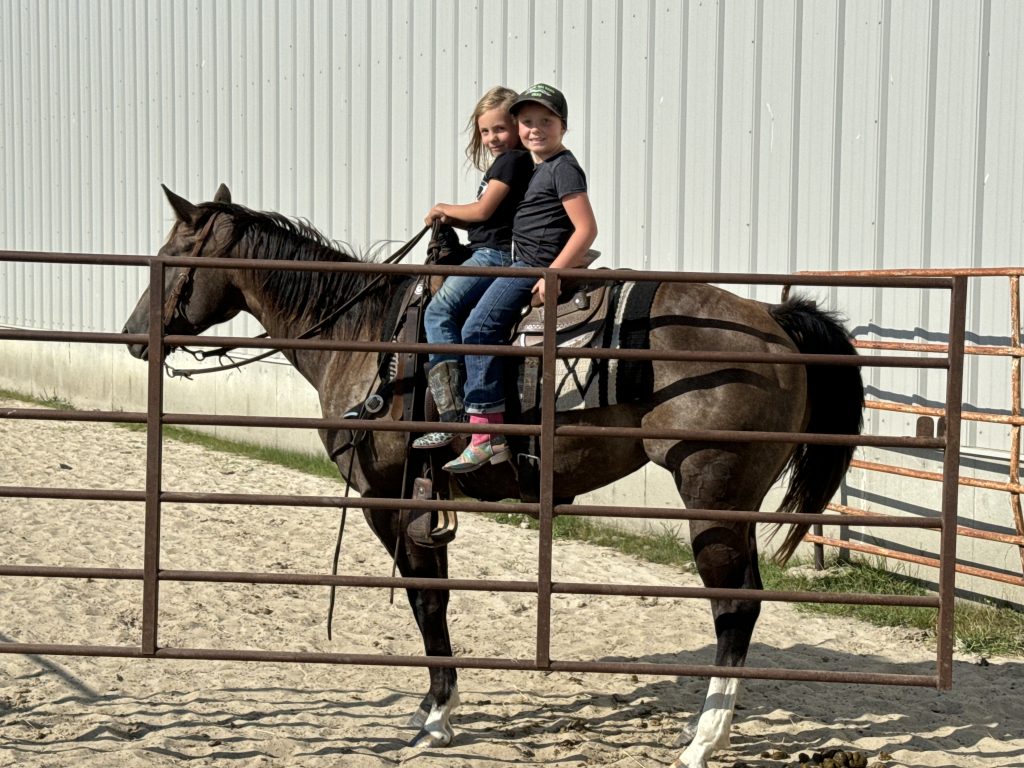
-
A colt sired by Mia Browbeater.
5 Colt Sired by Mia Browbeater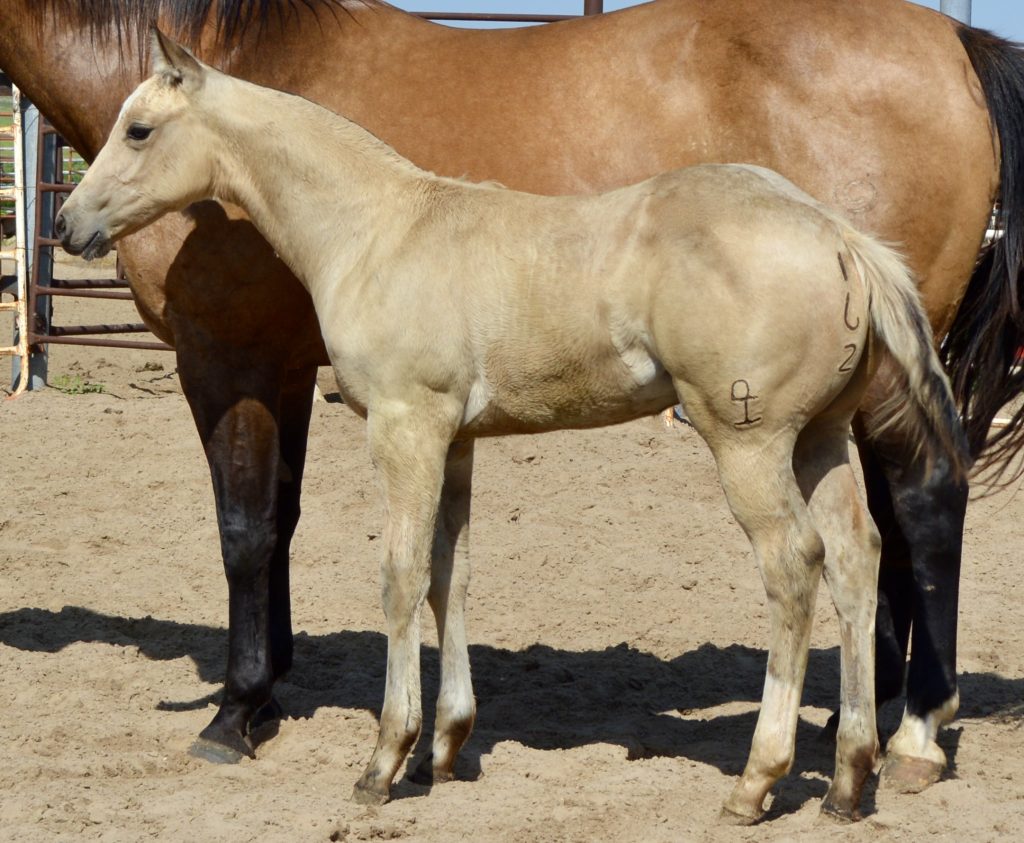
-
Jim Brinkman, who will serve as the 2026 AQHA president.
6 Jim Brinkman
-
The Pitzer Ranch Horse Sale. The ranch has two sales, one in April and one in September.
7 Pitzer Ranch Horse Sale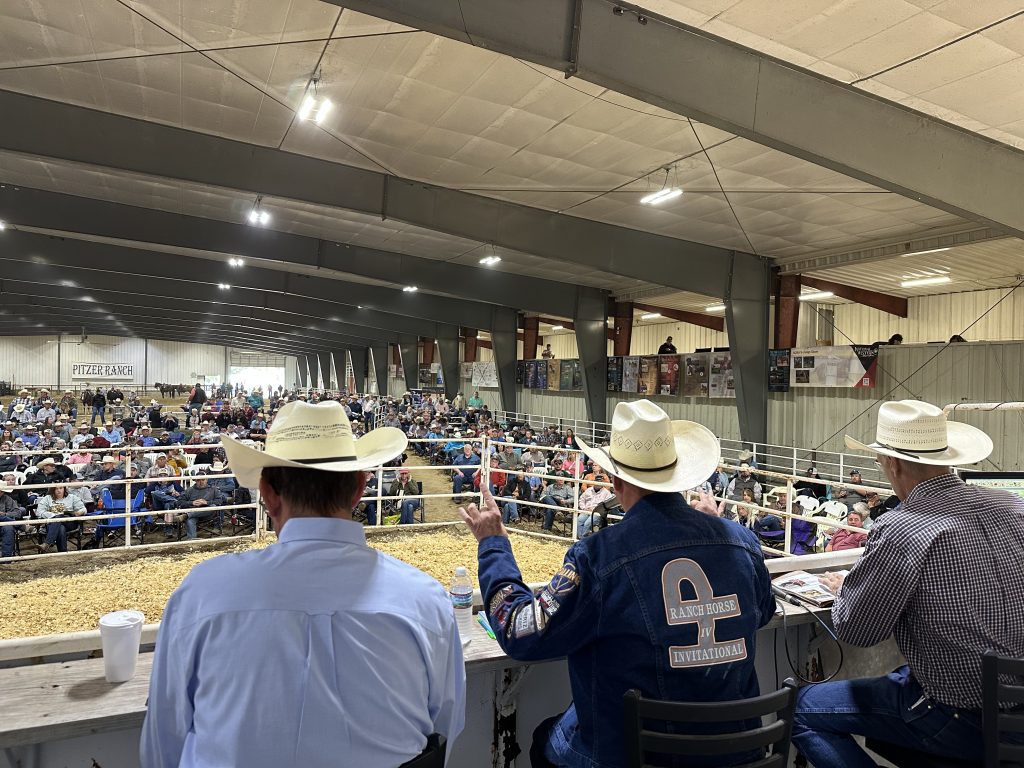
-
The Pitzer Ranch Brand. Photo courtesy EE Marketing.
8 Pitzer Ranch Brand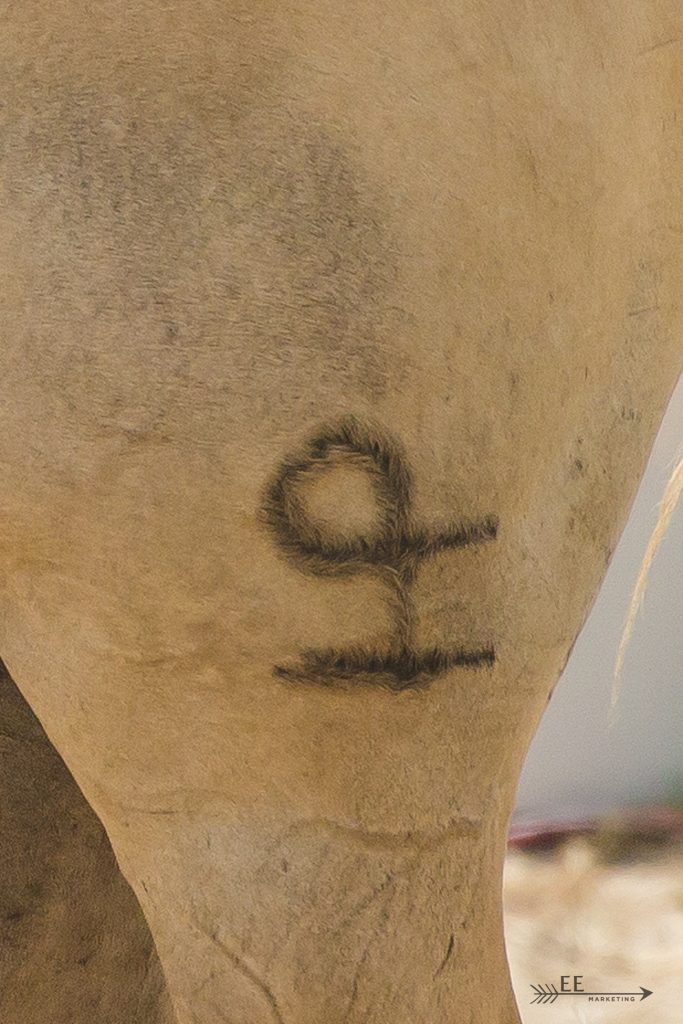
Bret Schlenger and Colin Schlenger ride colts, show rope horses, and help with the cattle and day to day ranch work. Kenna Howard works the breeding barn, leads and gentles the yearlings after weaning, and exercises the studs.
Jim’s wife, Tana, is, according to him, the “Boer Goat Queen of Nebraska.” She shows Boer goats across the country, is full-time babysitter for Sam and Kendra’s three young daughters, “and tries to keep me from buying too many horses when I go to the sale,” he joked.
“She’s got to hold my arms down, lead a goat and change diapers. She’s busy,” he quipped.
Brinkman was elected to the AQHA board four years ago. In 2025, he served as vice-president; in 2026, he will be president.
Horses run through his veins.
“I was raised just like these horses are, on the ranch,” he said. “I love riding a good horse, I like training a colt. It’s just fun to see them progress and feel like you built something. I like all of it. I never wanted to do anything else.”
The Pitzer Ranch holds two annual sales, in April and September. The 2026 April sale will be April 25.
For more information, visit the website at PitzerRanch.net.