Changes being discussed regarding Bent’s Old Fort
Ruth Wiechmann Follow
Screen Shot 2024-02-20 at 1.00.13 PM
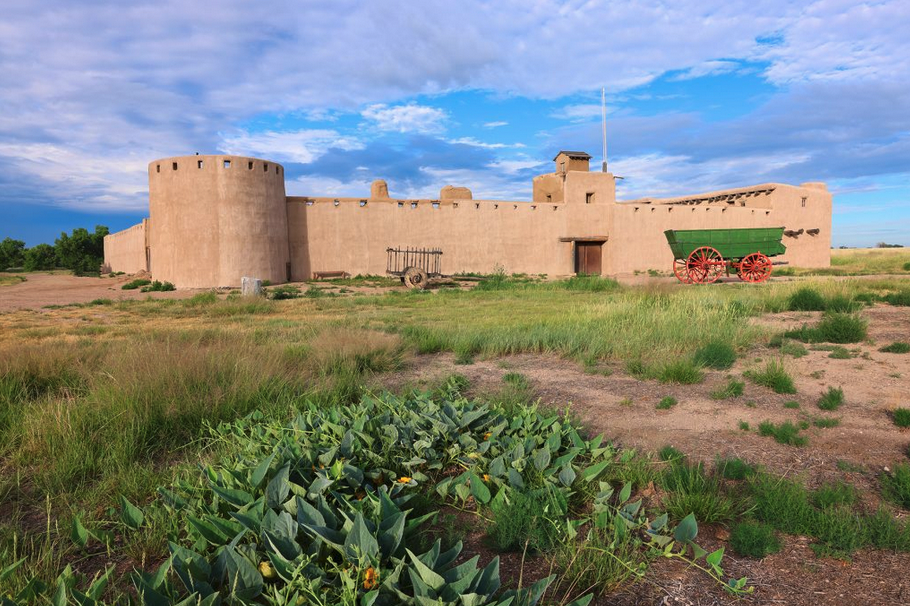
Recent public outcry brought to attention some fresh changes and possible pending changes at Bent’s Old Fort National Historic Site near La Junta, Colo. The second floor of the fort was closed in November, 2023, due to structural concerns. The park’s website indicates that animals currently being maintained as part of the historic site may be phased out or reduced in number.
Melissa Prycer, Prycer Consulting, did an independent study of Bent’s Old Fort in November, 2023. An Interpretive Plan was completed for the fort in 2006.
Prycer said her role was not to make decisions or dictate changes in operations, but to ask questions and look at the overall sustainability of the National Historic Site. Coming from a background of over 20 years in the museum field and 17 years of working at Dallas Heritage Village, Prycer said she was asked to evaluate the overall sustainability of Bent’s Old Fort.
“The timing of my visit was quite good; some structural issues with the building had just been discovered and the second floor was closed to visitors for safety reasons,” she said. “Even without my recommendations, the visitor experience was fundamentally different because of the closure. When half of your space is closed, you have to be creative.”
MORE STORIES TO TELL
Going forward, Prycer said that the goal is to tell more of the stories that are part of the Bent’s Fort heritage.
“The idea is not to change the story or change direction, but to do more to share the rich history at that site. It is hard to tell all the stories the way things currently set up,” she said.
Prycer recommended asking questions about how the animals at the fort are being utilized.
“What stories can they tell? Are they telling them well?” she asked. “For instance, is there anything to let visitors know why there are peacocks at Bent’s Old Fort if a staff member is not present?”
Prycer expressed concern about the animals’ well-being should future staff not have the necessary skills to care for them. Current personnel are able to care for the livestock, and, Prycer said, doing a “wonderful job” with the interpretive process for visitors.
“Animal care is expensive,” she said. “While they are well cared for now, what will that look like long-term? That is a skill set that is fading, and they don’t have a person dedicated just to those animals. When current caretakers leave for whatever reason, is there someone else coming up who can do that? My encouragement is to really take a close look at why those animals are there, and how they are supporting the many stories that the fort can tell.”
Prycer’s experience at Dallas Heritage Village included living history and animals. She says that both visitors’ and staff members’ experience levels, skills and understanding of history have changed, and museums and historic sites need to be aware of this.
“Living history requires certain skill sets, and those skills are fading,” she said. “We need to make sure our staff are well prepared to work with visitors. We need to ask if we are making the best use of our resources. In a living history interpretive museum, if someone is out for a day, it is as if an entire exhibit is closed, because there is nothing but that person to tell folks what is going on. We also can’t assume that folks are walking in with previous knowledge; most visitors walk in with very little knowledge of the past.”
A museum’s job is to teach and inspire people, Prycer said.
“We need to do that in a variety of ways. In my mind, the goal is that visitors leave a museum, whether Bent’s fort or another, wanting to know more, wanting to find a book, watch a documentary or go to another museum.”
Prycer reiterated: “We are not talking about change, but about expanding, what stories are being told, and we hope we can expand the audience as well.”
MAKING HISTORY COME ALIVE
John Carson, Las Animas, Colo., volunteered as a living history interpreter at Bent’s Old Fort for over 20 years, and then worked as a paid employee for 14 years. He retired three years ago. He said that for the first 45 years after it was built, Bent’s Old Fort was a “top notch living history site.”
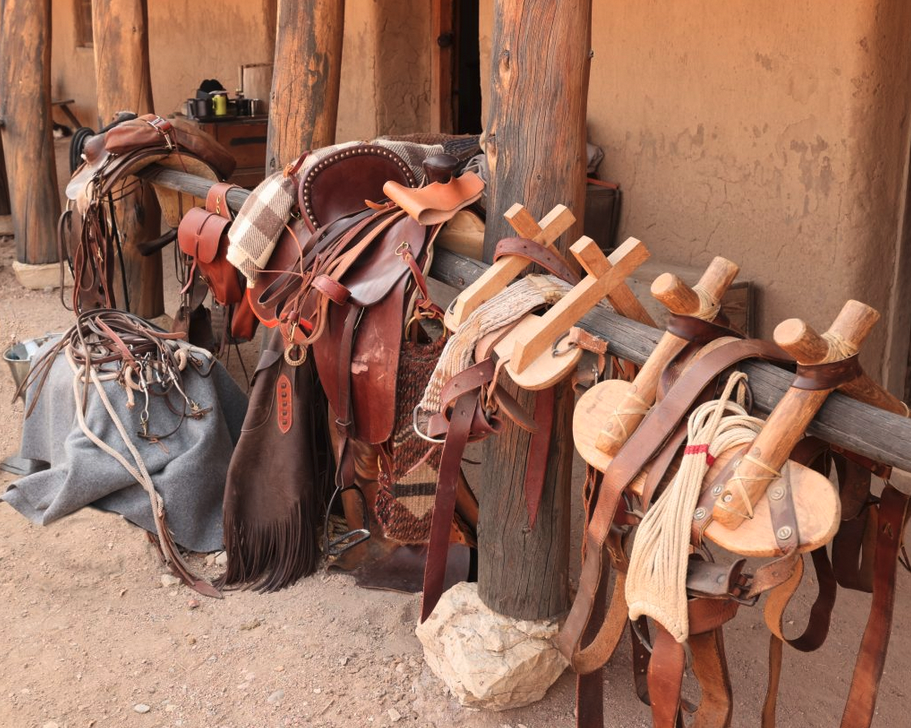
“We dressed in documented period clothing, and tried to give people an idea of what life would have been like in the 1830s and 1840s out along the Santa Fe Trail.”
Carson said that previous directors emphasized the importance of giving people the most accurate depiction of what they would have seen if would have visited back in the fort in the 1800s.
“I was an historic interpreter, specifically, I portrayed the role of the old mountain man or fur trapper. It was a good gig, and you took pride in being as accurate and as helpful to the visitor to as you could be,” Carson said.
He and other concerned citizens and former volunteers would like to see a public meeting held to explain what he feels is a change in philosophy. He doesn’t want to see the fort become a “static building.”
“It has been a place to immerse yourself in another time period, but if there are no animals there and employees come out in green and gray uniforms rather than period costumes, it will lose a lot of its appeal to the public I believe,” he said.
During his tenure as a volunteer and employee at Bent’s Old Fort, Carson said there was a definite pride in the employees and the hundreds of volunteers that came out during special events, and people cared about what was going on there.
“Bent’s Old Fort was a good place to be,” he said. “When we had special events, the place came alive, we had mountain men, fur trappers, carpenters, blacksmiths, traders, ladies, laborers, and so forth; it was as close in today’s world as you get to the way life would have been like almost 200 years ago.”
Carson said that the animals at the fort are animals that would have been there in the 1830s and 1840s, including horses, mules, peacocks, chickens and goats, and they previously had oxen. He said the animals are another way to illustrate what life was like in the 1830s and 1840s.
“All of the different animals would have served a purpose for the Bent, St. Vrain Company,” he said. “The way I read the proposals it will become a static museum, just a building with little placards and signs.”
That, he said, would be “embarrassing.”
Eric Leonard started work as the current superintendent at Bent’s Old Fort last fall. In his career working at national parks, he has worked at seven different parks in seven states over nearly three decades. He is aware of the objection circulating in the community, yet said, “We all care about the same thing.”
“The first time I came to Bent’s Old Fort was 26 years ago this summer,” Leonard said. “I was working as a seasonal ranger at Fort Larned in western Kansas, and I came as a re-enactor to help with a living history event on the post-Civil War west.”
Leonard’s family roots trace back to western Kansas, and he said that he has always wanted to work at Bent’s Old Fort, along with the Sand Creek Massacre site and the soon to be established Amache historical site, which he currently supervises.
“All three of them tell a century long story about the promise and peril of American history,” he said.
Leonard suggested considering two aspects of the site: the building and the programming.
THE BUILDING
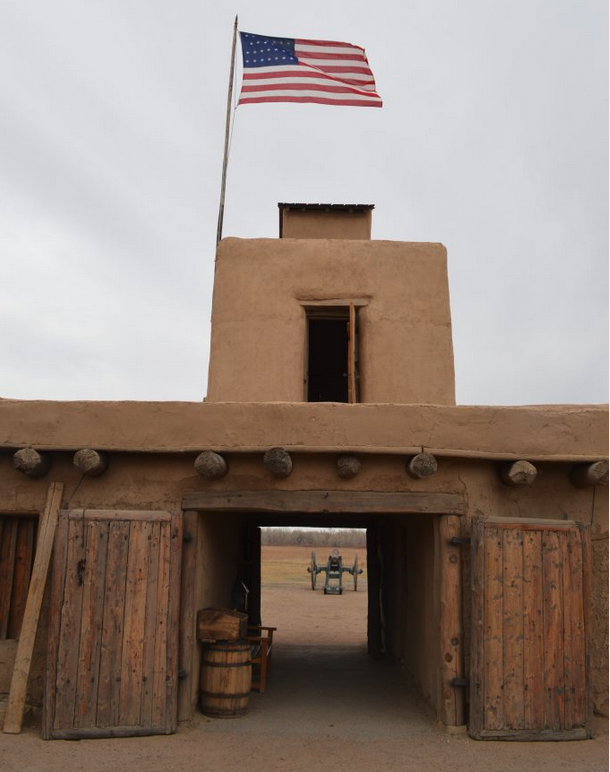
“Part of the opportunity right now is to talk honestly about the building,” Leonard said. “One thing to not is that it’s not an authentic fur trade post, it’s a building from the 1970s that has asbestos, and a lot of other little things that can snowball if not addressed.”
The original “Bent’s Fort” was constructed in 1833 on the exact location where the current building now stands. It was an operational trading post for the Bent, St. Vrain Company until 1849. A decade of disuse later, it was turned into a stagecoach station, and used as a stage stop and a post office into the 1870s. The remains of the original adobe structure were obliterated by a flood of the Arkansas River in the 1920s.
The Daughters of the American Revolution purchased the site with hopes of someday reconstructing the fort. In the 1950s, ownership was transferred to the state of Colorado.
“When the National Park Service took over in the 1960s, we were only a decade or so out from celebrating the U.S Bicentennial. The year 1976 was also Colorado’s statehood centennial; those two things helped create funding for a multi-million dollar reconstruction of Bent’s Old Fort,” Leonard explained. “It was designed to mimic a building constructed 150 years earlier, but it was not built of adobe. What was built was a static structure based on archaeology, the written record, and some conjecture. Unfortunately, it was built on a concrete footing that obliterated any remaining traces of the original structure. As the building gets old, choices that were made to beat the 1976 deadline are beginning to show up.”
Before Leonard arrived, the staircase to one of the towers collapsed. Both towers have now been closed.
“The second level boardwalks doesn’t meet a safety standard,” he said. “I am optimistic that by the end of this summer we will remove the key safety issues we see now. Without the structure, everything else becomes academic.”
Leonard is working with a regional NPS officer to determine what the building needs over the long term.
“There are a series of things we are going to have to start addressing with the building, and I am committed to doing that,” he said. “Two-foot-diameter cottonwood beams were concreted in; if we have to replace them we will have to remove the roof. Due to the complexity of what we’re dealing with, and the fact that we are a federal government agency, fixing some of those things may take a couple of years.”
Leonard said that the reconstructed Bent’s Old Fort will soon be old enough to be eligible for listing on the National Register of Historic Places, and he’s researching the possibility of getting it listed. He also mentioned that the Federal Preservation Act of 1966 will govern some aspects of repairing and maintaining the building.
“Preservation requires a portfolio of choices,” he said. “People need to come to Bent’s Fort, there is nothing like it in America. That experience is deeply important, and even though we can’t allow visitors on the second level, our primary first floor space is all open so visitors can experience the core of the building.”
PROGRAMMING
As a broad observation, Leonard noted that the historic sites administered in the National Park system are not the highest visited places.
“We average around 20,000 visitors annually,” he said.
By contrast, Yellowstone’s record is 4.86 million visitors in 2021.
“Visitation isn’t a contest,” Leonard said. “I don’t know if we could handle even half a million visitors in a year, but we could accommodate more than 20,000.
For almost 25 years, the park’s programming has revolved around living history events.
“If you came on a day when there wasn’t a program, you would still see a staff member in costume available to answer your questions,” Leonard said.
Four to six big events are held every year, averaging 200 visitors per day.
“On average, those events reach 1,200 visitors. That’s 6 percent of our total. It might not be our most effective strategy to save all of our energy for a small number of events. Part of what I’m proposing to do is hold smaller events more often. Looking at the big picture, I think smaller events more often would allow us to be more nimble.”
Living history is a missive for presenting the past, but that trend may be changing, Leonard said. One challenge is that it requires a great deal of training.
“It’s a professional practice with a set of standards,” he said. “We rely on volunteers to help tell our story here. Living history, or reenacting, was at its apex about 30 years ago. Movies like Gettysburg and Dances With Wolves depended on re-enactors. Demographically, things have changed since then, but I don’t want to diminish the value of living history. I have had many extraordinary moments being in an historical place in an historical costume.
Leonard described claims that he was going to remove all animals from Bent’s Fort by Feb. 9 as “unfounded.” He has made the decision to look at reducing the number of animals kept permanently at the site. He explained that there has not been a public comment period involved in the decision making process regarding the Bent’s Fort animals because it was a management choice to introduce them initially, rather than a stipulation that animals be managed as part of a particular resource.
But he said that feedback from the public is welcome. Comments can be submitted at a link on the park’s website: https://www.nps.gov/beol/contacts.htm.
“As early as 2006, the livestock issue was flagged in our internal long range interpretive plan,” Leonard said. “We have an obligation to treat our livestock humanely. We have never had a single staff person dedicated to animal care. In the past, many more people had livestock handling in their background. In the current workforce, I am unusual in that my family had sheep and goats when I was little, but that does not make me a stock expert at all.”
Leonard said it’s worth noting that pre-pandemic the park was “pretty close to zero livestock” but the choice was made to bring more animals to the fort after that period of reduction. The key difference between the livestock at Bent’s Fort and livestock at certain other national parks such as the Lyndon B. Johnson park in Texas or the Grant-Kohrs Ranch in Montana, he said, is that those animals managed as a part of the resource.
“The animals here don’t rise to that level,” he said. “It was a management choice to introduce them. Going forward the most important concern in how we manage them is the health and safety of the animals themselves and the employees that work with them. While I have made the decision to look at reducing our stock, I’m not in a hurry to do so.”
One option up for consideration is inviting volunteers to bring their own animals with them to events at the fort.
“We had a program last year that featured Civil War era cavalry, and volunteers brought their own horses in; park animals were not used for that event,” he said.
Leonard said that he is looking into the possibility of the creation of a philanthropic group that could raise funds for Bent’s Fort, and he hopes to shift the concern being expressed in a more positive direction. He believes the future for Bent’s Old Fort is bright.
“People really love this place and are committed to the story of it,” he said. “I hope they will channel their energy into helping us and working with us, and I look forward to that. We have an opportunity here as the hysteria dies down to share a really engaging story about how the West was born. For me, I think we will be successful, if when visitors come to Bent’s Fort, they go away feeling like they’ve seen America in a way they’ve never seen it before.”