Going in: Firebase Ripcord Evacuation, Vietnam, 1970
Ruth Wiechmann Follow
Veterans3
“We’re going in.”
At dawn on July 23, 1970, operations began to evacuate Fire Support Base Ripcord, in the A Shau Valley of Vietnam. Fourteen Chinook helicopters with the capacity to transport over 30 people apiece began a mission to evacuate approximately 400 soldiers from the 2,800-foot mountain top firebase. At 7:40 a.m., anti-aircraft fire from the North Vietnamese Army hit one of the Chinooks and it crashed on the landing pad. Now the infantrymen of Ripcord would have to be evacuated six at a time by Bell UH-1 Hueys.
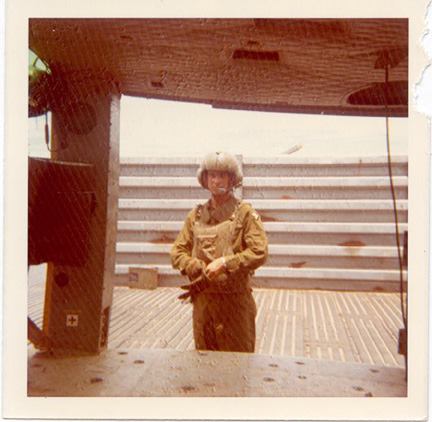
Wayne Wasilk’s “bird” took to the air, along with every available Huey in the U.S. Army’s 101st Airborne Division.
“I knew what it was like to be infantry,” said Wasilk, who was serving his second tour of duty as a door gunner.
SOUTH DAKOTA FARM BOY
A South Dakota native, Wasilk received his draft letter in November, 1968.
“I turned 18 in September and was drafted in November,” Wasilk said. “Everybody from my little town of Grenville was drafted; we all served in Vietnam. We were pulled because we were hell raisers. We were on the wild side of life; we were farm boys.”
Wasilk said he graduated from the “school of hard knocks.” He attended school only through the eighth grade.
“I didn’t have time for school,” he said. “Then we went to work in the Cities (Minneapolis-St. Paul) and were making big money. We all knew that sooner or later we were going to get a letter.”
Wasilk’s father called to let him know when the letter arrived. Wayne reported to Fort Polk, La., for nine weeks of basic and eight weeks of Advanced Infantry Training. After his 17 weeks of training were up, Wasilk went home for 10 days before flying to California to deploy.
The 18-year-old whose hometown had a population of 250 was amazed when they landed in San Francisco.
“That was big, something I’ll never forget,” he said. “We crossed the Golden Gate Bridge to Oakland and that’s where we were for two days. One early morning we got on a nice United Airlines plane and flew out for Vietnam, ‘that wonderful country.'”
Getting off the plane in Saigon, the smell of the country hit hard.
“That smell was worse than the smell of hog shit; it was the most rottenous smell you ever smelled. I never smelled such a terrible smelling country. Everywhere it was the same smell, but we got used to it,” he said.
HILL 937
Wasilk’s introduction to the war was at a place dubbed “Hamburger Hill.”
“As soon as I got in country, we were supposed to be orientated for five days as to what was expected,” he said. “After two days and one night’s sleep, the next day we were on a C-130.”
The battle at “Hamburger Hill,” also called Hill 937, began on May 11, 1969. Located in the A Shau Valley, about a mile from the Laos border, American troops had taken the hill as part of Operation Apache Snow. Well-entrenched North Vietnamese troops repulsed the initial attack and a fierce, 10-day battle ensued. On May 20, in the 11th attack, American troops finally fought their way to the summit.
“I had never seen so many dead people in my life,” Wasilk recalled. “That was when I knew: this is war and this is hell. We came off that hill and when we came down to the fire base there were 86 body bags stretched out there.”
Nothing in training or orientation had come close to preparing Wasilk for the reality of the war.
“They didn’t tell us nothing, nothing at all,” he said.
His upbringing on a dairy farm in the northeastern corner of South Dakota did help him cope with the harsh realities he faced in Vietnam, though.
“We were dairy farmers and milked about 25 cows. At that time, 25 was a big herd, you know. I had a home bringing up of hard work: we worked and we weren’t immune from nothing. You worked and that’s how it was.”
While Wasilk faced plenty of terrible things while serving in Vietnam, he said he tries to always think about the good parts of his experience, not the bad parts.
“It’s better and easier that way,” he said. “It was something that we had to do. For all the hell I went through, still I wouldn’t trade my service time for nothing.”
Wasilk served his first tour in Vietnam as an infantryman and the second as a helicopter door gunner.
“If my folks had only known what I was doing, ma would have never slept a day,” he said. “We just never wrote everything about what we did.”
Wasilk’s father wrote him about once a month.
“He was quite a writer, he wrote everything with no periods,” Wayne said. “He was proud of his boys. He’d be in Grenville drinking beer, and tell everyone, ‘Our boys are over there doing what they do best: raising hell.’ He didn’t know it was with an M60 machine gun, it wasn’t in a bar. We didn’t dare write nothing about the bad experiences.”
Wayne’s brother Ted was drafted around the time Wayne’s first tour was ending.
“I knew when he came over that they were going into Laos and it was not going to be good,” Wasilk said. “I extended for another tour to be a door gunner on a UH 1 Huey assault helicopter and flew the next 10 months as a door gunner.”
RIPCORD: HOT EXTRACTION
Firebase Ripcord was first used by the Marine Corps in 1967-68. The 101st Airborne conducted operations there in 1969. It was reopened in April 1970. By July, it was under heavy artillery attack.
“They got overrun and we were going to take them off,” Wasilk said. “We should have took them off two weeks earlier, but the government is the government. They thought it wasn’t going to be all that bad but found out it was going to be. When the NVA started coming up that hill there was a lot of them.”
Some have compared the situation of the troops on Firebase Ripcord on July 23 to General George Armstrong Custer’s 7th Cavalry at the Little Bighorn on June 25, 1876. Surrounded and outnumbered, the Hueys were their only way out. Anti-aircraft, machine gun and mortar fire made landing difficult if not impossible. But the unspoken commitment of the helicopter crews was that they would come to the aid of their fellow soldiers, no matter what. For the men on the ground, hearing the “Thwop, thwop” of the rotors meant help was coming, no matter how bad things got.
“We were number three chopper coming in [in a group],” Wasilk said. “The first two broke off because they were taking fire.”
Could they land, or should they veer away to safety? In a split second, the crew had to decide. Six infantrymen stood waiting on the ground. Pilot Ken Mayberry and co-pilot David Rayburn continued toward the landing zone, in spite of heavy fire and a radio call to “go around.” Both knew they were the only way out for the waiting men.
“Mayberry said, ‘we can either break off or go in and take them out,'” Wasilk recalled. “I said, ‘We’re going in.’ I knew what it was to be in the infantry.”
When the Huey landed, the skids were seriously damaged. As the infantrymen ran for the helicopter, mortars exploded in front of and behind them, severely wounding the men.
Wasilk and fellow crew-member John Ackerman from Sisseton, S.D., jumped out of the chopper and one by one, dragged the men aboard.
“I carried these guys aboard the chopper, their asses were chewed up so bad they looked like hamburger,” Wasilk said.
Mayberry managed to get the helicopter back in the air.
“When we came off that hill, we basically slid off; we didn’t have any skids left. Mayberry just slid her over that hill and got going,” Wasilk said.
As they flew back toward Camp Evans, Wasilk tried to apply pressure bandages to the badly wounded men.
“I’ll never forget Mayberry writing one time that he never knew what the smell of human blood was until that day,” Wasilk said.
The “bird” was smoking, losing oil and losing altitude, but she was still flying.
“I didn’t think we’d get to Camp Evans, but at the time I was so worked up it didn’t bother me,” Wasilk recalled. “But she made it. That was probably the closest to the pearly gates I came was that day. But that was just what you did. You kept flying and you didn’t quit.”
When the helicopter landed, the crew counted over 40 bullet holes in her. Wasilk figured she was done.
“I figured they weren’t going to fix it; it was done. The skids were broke out of it and there were so many bullet holes. They gave us a different one to fly.”
Mayberry and his crew went back to picking up other troops in the Ripcord area. By early afternoon, all known survivors from Firebase Ripcord had been transported to Camp Evans.
‘LUCKY TO GET BACK’
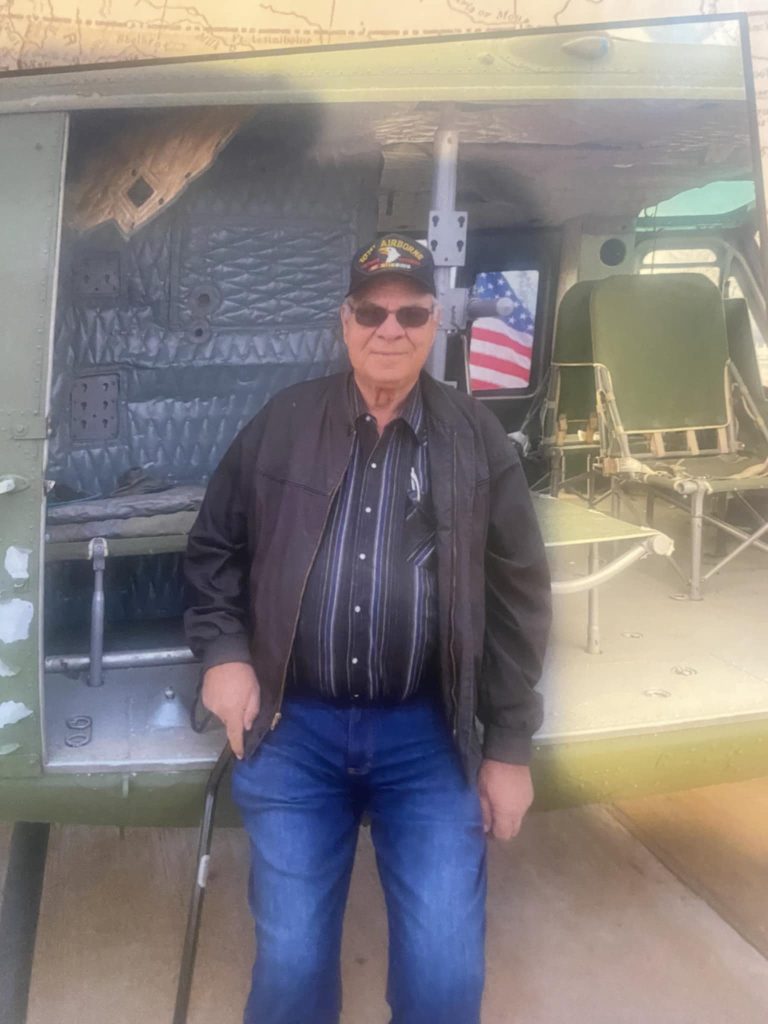
Larry Frazier was the crew chief on the next helicopter in line behind Mayberry and his crew. The Greeley, Colo., native enlisted to serve in Vietnam, joining on Sept. 4, 1968. Following basic training and helicopter repair school, Frazier arrived in Vietnam in March, 1969.
“Wayne was a terrific guy and a damn good door gunner,” Frazier said. “We got along well. He flew with me as my door gunner once in a while.”
Frazier watched as Mayberry landed the Huey under fire.
“We were all in a row taking turns as we got there, with mortars coming in. There were two landing zones and somebody was directing us where to go. It was a big mess for a while.”
The North Vietnamese had jammed American radio frequencies, making it impossible for the general in charge of operations to give instructions. Capt. Randy House, flight leader for the second platoon, took over the task of telling the pilots where to go while flying above Ripcord.
“We were spaced apart; when somebody landed they could load five or six people in 30-45 seconds,” Frazier said. “We assisted them to move out. When some were wounded it took a little time. But they were sure glad to see us.”
Frazier watched as Ackerman and Wasilk left the Huey and brought the wounded men aboard.
“They were in the right place at the wrong time,” he said. “They left with holes in the aircraft. They came out of there smoking and spitting. We went in and were taking off not too long after Wayne’s bird.”
Frazier’s helicopter, piloted by Dave Wolfe, also landed under fire, loaded a group of men, and then followed Mayberry back to Camp Evans.
“They were lucky to get back,” he said. “We landed nearby and went up and looked at the aircraft and then we were off and about for another load of guys.”
Wolfe didn’t realize until they were on the ground that his Huey had also taken some serious hits.
“I went to open his door, and it had a hole in it so big you could use it for a window,” Frazier said. “I told him he had built in air conditioning. When he got out and saw it he was shocked.”
BRASS, PRESS, RED CROSS
Wasilk was involved in several other memorable flight missions, including flying Gen. William Westmoreland and newsman Dan Rather. The helicopters were also often assigned to fly Red Cross girls and nurses from hospital ships to base so “the big wigs could have girlfriends for the evening.” The crew members would have to get out of bed around 11 p.m., fire up the choppers, and fly the ladies back to the ship.
“We were nasty,” Wasilk chuckled. The helicopters had no doors, so they would fly in such a way that the draft made the girls’ skirts blow up in the air.
“Those Red Cross girls were so excited to get on that bird to fly. But we were flying across the water and had no life jackets in that chopper. I never ever told them, but I always thought, ‘if something malfunctions, you’re going to be ate by the sharks.'”
Wasilk flew with Captain Mayberry “99 percent of the time. He was one hell of a pilot, and we were pretty tight.”
On one mission, a bullet went right into the co-pilot’s heart, and he died instantly.
“He just slumped right over,” Wasilk said. “Mayberry had to pull him off the sticks.”
Seeing this, Wasilk decided he needed to learn to fly, just in case he ever needed to take over the controls and bring the chopper down.
“Our AC took us out on the flats and put us in the seat to learn us to fly. I probably wouldn’t have brought it down the nicest, but it would have come down,” he said. “We always said that if things could get nasty they could and they did. We never knew what was going to happen and if something did, I was going to be in command of that sucker, not the other way around.”
RETURNING
Wasilk had hit his head pretty hard during the Ripcord landing, and after a time started having seizures. When he returned to the states, he was sent to a hospital in Minneapolis.
“I almost got in a fight that day,” he said.
A shell-shocked World War II veteran in the ward was making noise, and an orderly threw a rag at the man.
“If you don’t shut up, I’m going to shove this rag in your throat,” the orderly threatened.
“I told him the only place that rag was going was in his mouth,” Wasilk said. “The way they treated people you wouldn’t believe it. I told them they had five days and then I was leaving. And I did.”
Wayne Wasilk and Marlys Gilbertson married in 1974.
“When they talk about PTSD, the one person that they neglect to give credit to was the wives that took care of us,” Wasilk said. “You do not know how much that lady put up with, and I told her that many times. She’s the one I had by the neck many times in the middle of the night for nightmares. It took five years for that to wear off.
“But she always said, ‘I knew that before I married you, I read your whole health record before we started dating.’ She worked at the clinic in Webster.”
Marlys passed away in 2007. Wayne still farms with his son, but they sold the dairy herd three years ago.
“I’m still plowing ahead,” he joked.
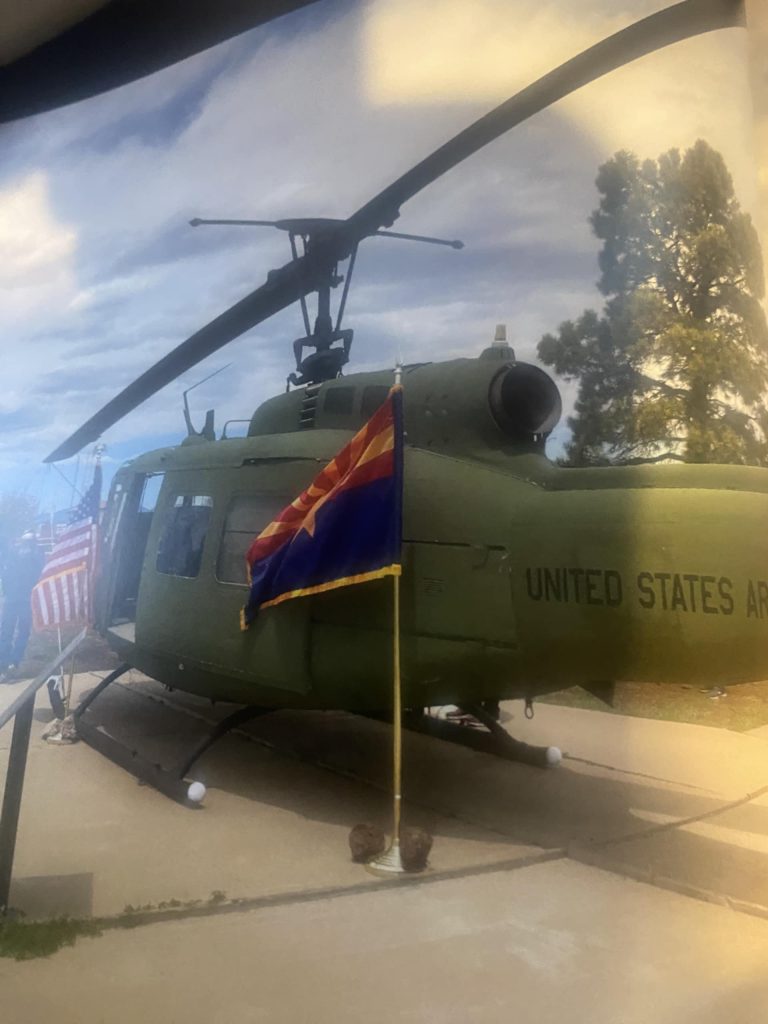
A chance meeting with Amy Jo Reiner eventually brought Wayne back to his “bird.” The helicopter so severely damaged during the Ripcord extraction eventually found a home with the National Guard at Fort Navajo, Ariz.
“They weren’t going to fix it,” Wasilk said. “It was done.”
Reiner had gotten involved with the Honor Flight for her husband’s grandfather, a World War II veteran. Reiner met Wayne while she and her husband were fishing at Waubay, and, albeit a bit reluctantly, he shared some of his experiences in Vietnam.
Fascinated, Reiner dug deeper.
“I knew there were some helicopters from that timeframe that they have restored,” she said. “I just so happened to see a picture of this one and got some history on it.”
Reiner traveled with Wasilk for an Honor Flight trip to Washington, D.C.
“When we were at the wall there were names of people mentioned in the book about Ripcord,” Reiner said. “Wayne was telling what had happened to these people because he was there. The honor flight people that surrounded him were literally all in tears.”
Reiner also took Wasilk to Fort Navajo to get reacquainted with his “bird.”
Wayne had never expected to see the Huey again. Seeing her again was like seeing her for the first time.
“‘She made it,’ I thought. They didn’t junk it after all. She sits out there at Fort Navajo and she flies.
“I’d second guess that girl myself, though,” he joked. “I know what she went through.”
Author’s note: Tom Marshall’s article “Rescue from FSB Ripcord” (https://www.phoenix158.org/) was a source of valuable information for this article. Marshall served as an Army helicopter pilot with the 101st Airborne and the 4th Infantry Division at An Khe in 1970-71.