Harris transparency proposal on for costs good, price controls bad
Volpe
CHICAGO — As Democrats gather here for their national convention, a prominent professor of agribusiness has said that Vice President Harris’ call for transparency on food prices is a good idea, but that price controls, which she has not explicitly called for, are a bad idea.
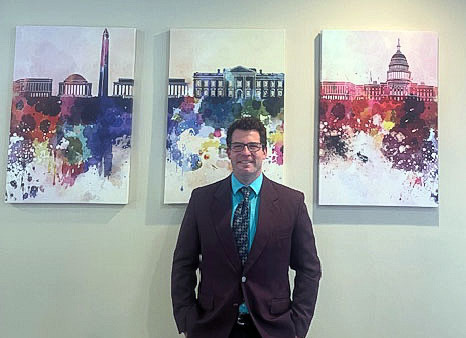
“I welcome Vice President Harris’ call for greater transparency in food price formation and strategy,” said Richard Volpe, who teaches courses on food retail and supply chain management, transportation and logistics, and data analysis at California Polytechnic University in San Luis Obispo, Calif., in an email today.
Volpe continued, “So much of the inflation puzzle is a black box to consumers, with wholesale prices and other upstream costs completely unobservable.”
“Food price inflation has cooled but food prices themselves have not come down, and consumers understandably want to know why. Food companies throughout the supply chain — particularly manufacturers but also wholesalers, distributors, and retailers — can and should do a better job of explaining and even demonstrating that this is largely a function of slow-moving external factors and not the pursuit of profits and executive compensation.”
But Volpe added that Harris’ “proposal is currently light on details surrounding the mechanisms by which price gouging would be monitored, measured and reined in.”
“Price controls are not a good idea and, in my view, will almost surely do more harm than good in the food supply chain if implemented,” Volpe said.
“It is easy to envision how price controls can lead to shortages for foods subject to cost increases, as well as a variant of the ‘waterbed effect,’ whereby retailers are forced to increase prices on those foods not affected to recoup losses for foods with price constraints.”
Volpe also noted, “The vice president’s proposal does not explicitly call for price controls, but a strict limit on price gouging would result in constraints on the prices retailers can charge for certain foods. Food prices are the subject of many moving parts, most of which take place upstream in the food supply chain and retailers have no control over.”
“Therefore, I can see this being problematic and intractable for retailers in this current era of volatile commodity, energy and transportation costs.”
Volpe’s email followed an interview conducted in Washington before Harris made her speech on economics last week in which she talked about companies engaging in “price gouging” and her pledge to discourage that.
In that interview, which was arranged by FMI-The Food Industry Association for which Volpe consults, he said that consumers can buy food fairly cheaply if they watch what they buy and concentrate on private label goods rather than name brands and foods that require preparation.
If consumers take those steps, “the wave of inflation can be significantly less painful,” Volpe said.
But he said a lot of people are still buying “higher mark-up goods that are prepared to eat” and other items such as bacon, even if the prices are up
“The narrative around household spending is driven in part by experiential, quality conscious shoppers,” he said, noting that before joining CalPoly he was on the USDA Economic Research Service team that forecast food prices.
In the interview, Volpe said that consolidation is not the major reason groceries are more expensive.
The “pain points” in the food industry that consumers don’t see start with transportation and continue with severe weather and labor costs.
Volpe noted there is a shortage of drivers and the average of long haul drivers “has hit 60.”
New drivers are demanding higher wages and so are existing drivers, he said.
Labor is short on farms, but also in independent supermarkets, Volpe said. In some cases, he said, managers are cleaning up spilled milk and cut meat because the store is short staffed.