Labor issues drive ag technology use
Labor-RFP-020926
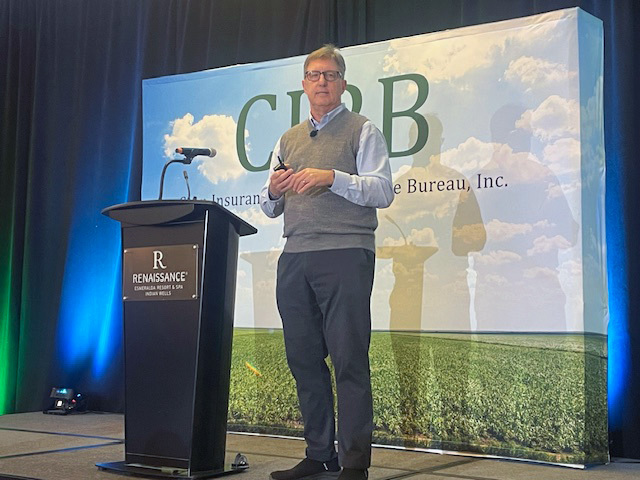
INDIAN WELLS, Calif. — Farmers are using more and more technology because “we don’t have anyone to work for us anymore,” Willie Vogt, a Minneapolis-based writer and technology observer, told the Crop Insurance and Reinsurance Bureau annual meeting here today.
Vogt, the former executive director of content and user engagement for Farm Progress, said farmers are already using more automation and autonomous machines than they realized.
In a survey of current ag tech developments, Vogt noted that emerging technology includes both developments in software, which he describes as seeds, crop protection products, fertilizer and biologicals, and hardware, a term he uses for equipment and data collection.
Bayer has 8,000 acres of seed development property in Hawaii and they now use drone dogs as security robots in those fields because they get attacked, he said.
Automation, Vogt said, is the term for a machine performing functions on its own while the operator is present, while autonomy refers to a machine performing a function without an operator present.
Vogt said:
- Most of the autonomous machines in agriculture are used in high value-added crops, he said. Farmers can often add autonomous technology to tractors they already own.
- Autonomous grain handling machines will improve farm safety because at present people die each year handling grain.
- Artificial intelligence can interpret data, increase its impact and increase accuracy on long-term problems.
- There are now lasers that can identify weeds and decrease the need for herbicides by 60% to 80%.
- There are now genetically modified plants that “flouresce” to signal disease, allowing farmers to treat the disease at an earlier stage and allowing farmers not to spray when it’s not needed.
- Drones are easier to use in spraying because they are more available than planes, he said. Drones also allow spraying without compacting the soil.
- Electrification of tractors is possible, but used mostly in smaller spaces such as orchards.
- Tractors could be run on solar energy, but the question is how big the panels would need to be to provide the energy.
While there are still issues of broadband service in the United States, he said, “the ubiquity of cellular phones in developing countries is astounding.”
Farmers of all ages need to be ready to adopt technology, he said.
Landlords may start judging farmers on whether they are using the latest technology.
“If you aren’t using technology and your neighbor is, who will get the land?,” Vogt asked.