Nebraska’s Concordia University launches program incorporating land, livestock and faith

Concordia1
Concordia University, a four-year small Christian university, is flourishing with three fairly new specializations in agriculture science, ag education and agribusiness, as it approaches its landmark 130th year in Seward, Neb. Ag education is their newest major, after launching a year ago. The ag program began four years ago. They take a unique approach, as students learn animal, plant and food science in their curriculum while earning a four-year degree.
“Employers wanted a general understanding of agriculture, and we take a hands-on active learning approach with a Christian foundation and perspective,” said Kimberly Clark, PhD., assistant professor of agriculture science, Concordia University in Seward County.
Concordia University was founded in 1894. Clark said Concordia and the University of Nebraska-Lincoln are the only universities that offer four-year degrees in Nebraska. Two-year ag programs are available across the state.
All of Concordia University’s full-time undergraduate students receive financial aid.
“Concordia does a great job of making sure our students are equipped to come to our school,” Clark said.
THE STUDENTS
Freshman Kailyn Paul, majoring in ag education at Concordia University is one of 60 students in the program. Although she didn’t grow up on a farm, Paul has a passion for animals. After getting her first rabbit in 2015, she breeds them now and has 17. Her family has raised poultry since 2016.

Immersed in a bachelor of science degree program, Paul plans to be an ag teacher.
“I see ag, as an ecosystem, and you can’t have the animal side without the agronomy side, and I like how everything connects together. With the education side, I like working with kids and I really like academics,” Paul said.
Concordia University senior Kaden Peters from Wood River, Neb., highly recommends the ag science program at Concordia.
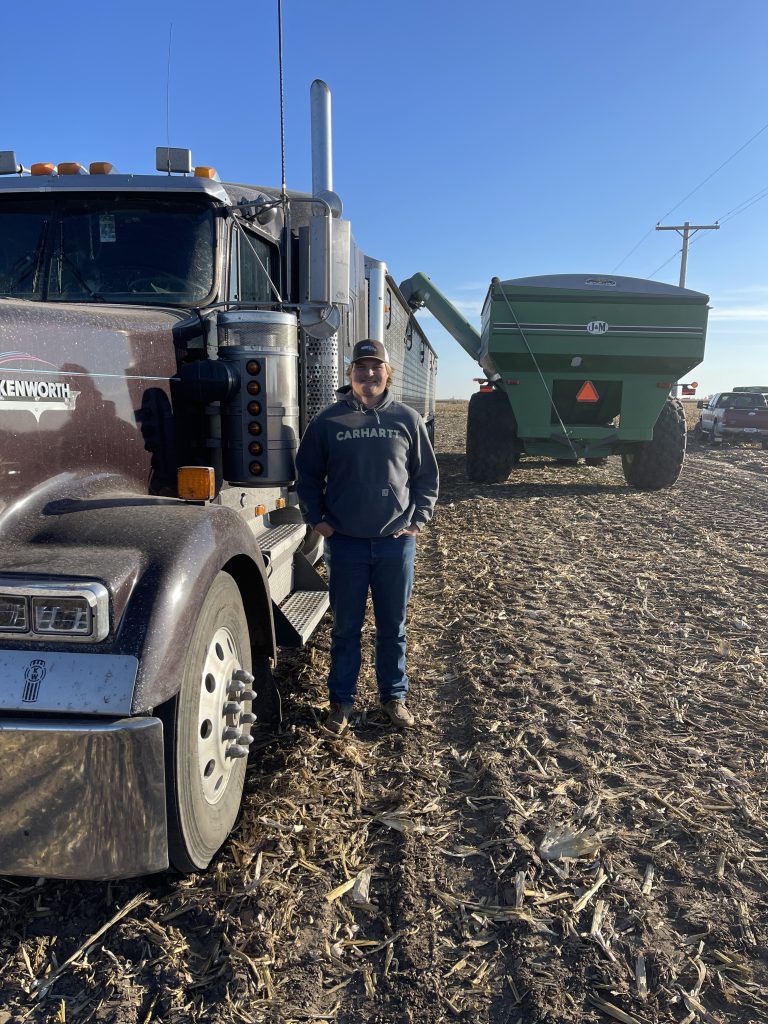
“It’s been an awesome experience. I’m excited for my future in ag.” He grew up on a corn/soybean operation. His dad also has a commercial hauling business, and encouraged him to learn the latest technology.
After getting a scholarship in academics and in football in 2020, Peters has played football at Concordia University for three years, but stopped after getting hurt a couple of times.
He took his dad’s advice.
“Technology isn’t like it used to be with my dad. He didn’t go to college, and he told me it’s necessary to be successful. Back when he farmed with my grandpa, he said it used to be pretty simple stuff with fertilizer application. As time goes on, ag became sampling systems and genetic testing and you need the background in college to help run a successful farm,” Peters said.
FAITH AND AG
Incorporating faith with agriculture helps their students learn about their world, and themselves, Clark said.
“If we look at the Old Testament in Genesis, everything about agriculture is in Genesis which is kind of the foundation I lead with, that agriculture is present from day one,” Clark said, adding, “God and the Christian faith are such an integral part of attending Concordia, and students who study agriculture at Concordia are better stewards of the Earth and care for the land and livestock, as God intended.” This understanding guides them to make key decisions in agriculture, Clark said, and most students graduate from Concordia with a stronger relationship with God and a deepened understanding of the Bible.

“I really wanted a faith-based community, and I also got a scholarship on the track team,” Paul said. “A lot of factors all came together to make Concordia my top pick. With the ag program here, there’s a very good relationship between professors and students, and there’s a lot of hands-on experience, so I’m learning all the steps that go into specific ag processes.”
Both of these students and many others have family members who also went to Concordia. Being a smaller school also attracted them to Concordia University.
“We have a 15:1 student to faculty ratio so our classes are small,” Clark said. “The students enjoy working with local farmers, ranchers, and agribusinesses on coursework, part-time work and through internships. Our priority is giving students hands-on, real-world experience.” They have visited farms, the Department of Agriculture, Neogen Genetics and Great Plains Beef in Lincoln which features certified Piedmontese beef.
After graduating in December, Peters plans to go back to the farm and do commercial trucking. He’ll have his degree to diversify, if needed.
He says everything just came together for him at Concordia.
“As a faith-based school, I come from a very heavy Christian background installed in me, Sunday school and church. I don’t think a lot of bigger schools do it, but incorporating Christianity and ag in the classroom — you can use it together to move forward, and Concordia offers a great way to acknowledge your faith,” he said, adding, “In the past three years, I’ve learned more about my faith than in my entire life, and that’s been great.”
This year, Concordia also started the Uzziah Ag Scholars program (biblical reference) for students who want to focus on academics and supplement it with additional leadership and community service skills.
“This major is one of the three ag majors with the extra experience of focusing on off-campus opportunities, including volunteering in elementary schools, reading ag books to classes, going on farm tours and agri-businesses,” Clark said.
The university also offers an agribusiness concentration for students whose primary major is business and who take 16 credit hours in agriculture-specific courses (including Marketing of Commodities, Farm and Ranch Management, and Domestic and international Ag Issues) which all ag students at Concordia also take.
“Concordia is doing some great things related to agriculture,” said Clark. “I just love being in a small classroom setting, where I can interact with students, it helps me be a better teacher. We’re able to prepare students for the real world and all the opportunities we can offer them.”