Senators pledge to protect USDA water programs in farm bill
Hagstrom Report Follow
Water-RFP-072423
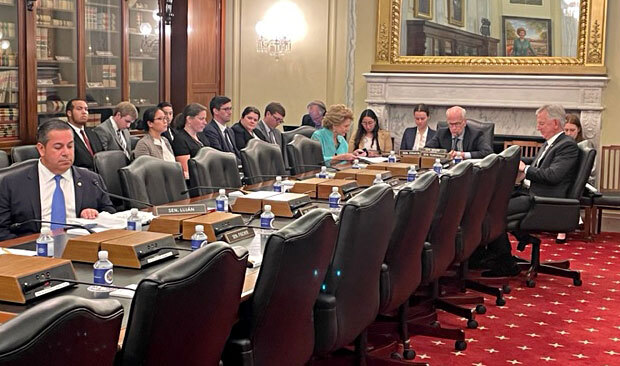
At a Senate Agriculture Rural Development and Energy Subcommittee hearing Wednesday, senators pledged to protect and maybe add to Agriculture Department rural water and waste programs, while witnesses said more help is needed for private wells and planning for extreme weather and emergencies.
Sen. Peter Welch, D-Vt., subcommittee chairman, said he wants “to seek new funding and protect what is there.”
Sen. Tommy Tuberville, R-Ala., noted that many people in Alabama, particularly in the Black Belt, rely on “decentralized” water and waste systems and that he wants to make sure residents relying on private wells “have access to resources.” He also said Congress should look for ways to “modernize” water regulation USDA.
“We must find the delicate balance between updating and maintaining critical infrastructure, treating water to safe levels, preparing for natural disasters and cybersecurity threats, and maintaining a fiscal budget. I believe this committee can find that balance,” Tuberville added.
Sen. Ben Ray Lujan, D-N.M., pointed out that the colonias — communities along the U.S.-Mexico border that often lack safe drinking water and waste systems — are often unincorporated, and he asked, “How can USDA programs better catch them so they don’t fall through the cracks?”
Sen. Cory Booker, D-N.J., said he and Sen. Shelley Moore Capito, R-W.Va., plan to introduce a bill to expand the rural decentralized water system program they put in the 2018 farm bill.
Catherine Coleman Flowers, director of the Center for Rural Enterprise and Environmental Justice in Huntsville, Ala., said that though the program “allows funds to be used to cover the cost of decentralized wastewater system warranties of at least five years, Congress should go further. When advanced treatment systems fail, manufacturers, contractors, and government entities can blame residents for failures, absolving those who supplied and installed the system of all responsibility. Creating an adequate and fair system of accountability through a warranty requirement is vital to ensure working sanitation for participating households. Congress should require that all sanitation systems funded through this program carry a manufacturers and installers’ warranty for a minimum of 10 years. It is critical that systems installed in peoples’ homes — often in remote locations — be reliable.”
Robert White, who testified on behalf of the Rural Water Association, said the system of circuit riders to provide technical assistance on the USDA programs must be maintained for the programs to succeed.
Tuberville and Sen. Cindy Hyde-Smith, R-Miss., said that rural water agencies are also facing labor issues due to retirements, and White said an apprenticeship program will graduate its first apprentice this year.