USDA announces commodity-specific Farmer Bridge crop payment rates
Hagstrom Report Follow
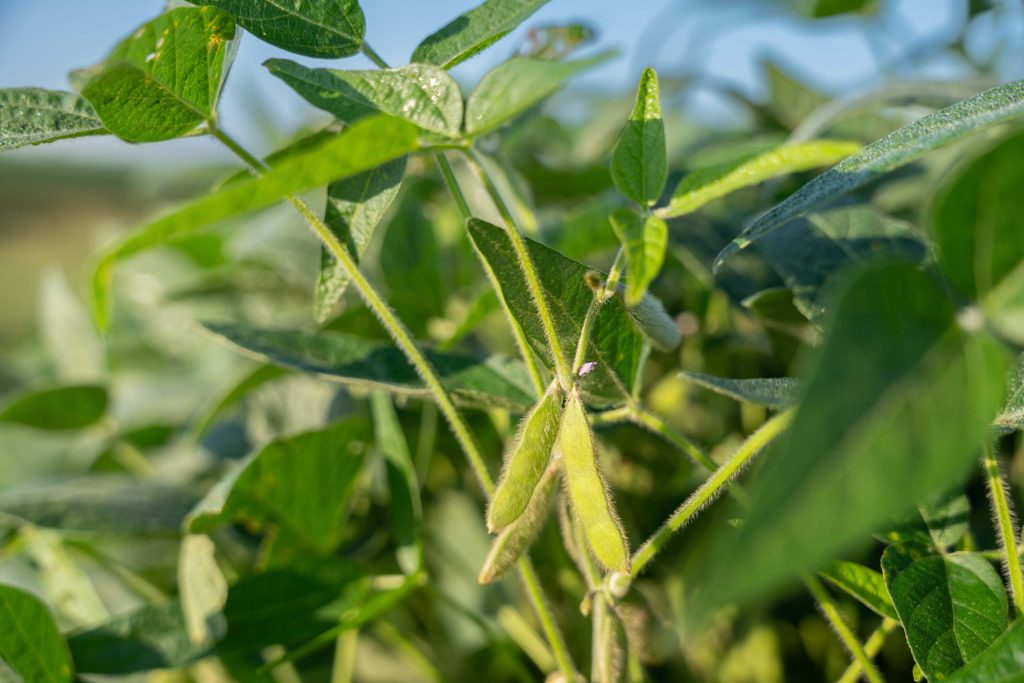
Agriculture Secretary Brooke Rollins this afternoon announced the eligible commodity per-acre payments for listed crops in the Farmer Bridge Assistance Program (FBA).
“Farmers who qualify for the FBA program can expect payments in their bank accounts by Feb. 28, 2026,” said Rollins.
Below are the payment rates for the FBA-eligible commodities that trigger a payment (per-acre payment rates):
- Barley: $20.51
- Canola: $23.57
- Chickpeas (Large): $26.46
- Chickpeas (Small): $33.36
- Corn: $44.36
- Cotton: $117.35
- Flax: $8.05
- Lentils: $23.98
- Mustard: $23.21
- Oats: $81.75
- Peanuts: $55.65
- Peas: $19.60
- Rice: $132.89
- Safflower: $24.86
- Sesame: $13.68
- Sorghum: $48.11
- Soybeans: $30.88
- Sunflower: $17.32
- Wheat: $39.35
FBA payments are based on 2025 planted acres, Economic Research Service cost of production, and the World Agriculture Supply and Demand Estimate Report. Double crop acres, including all initial and subsequently planted crops, are eligible. Prevent plant acres are not eligible.
All intended row crop uses are eligible for FBA except grazing, volunteer stands, experimental, green manure, crops left standing and abandoned or cover crops.
Crop insurance linkage is not required; however, USDA strongly urges producers to take advantage of the new risk management tools provided for in the One Big Beautiful Bill Act to best protect against future price risk and volatility. The OBBBA federal crop insurance improvements include expanding benefits for beginning farmers and ranchers, increasing coverage options, and making crop insurance more affordable.
Of the $12 billion being provided by the Commodity Credit Corporation Charter Act, up to $11 billion is being directed to eligible row crop producers, and the remaining $1 billion of the $12 billion in assistance is reserved for specialty crops and sugar. Timelines for payments to producers of these crops are still under development and require additional understanding of market impacts and economic needs. Producers, including specialty crop producers and stakeholder groups, can submit questions to farmerbridge@usda.gov.
The National Cotton Council said, “The FBA rate for cotton of $117.35 per planted acre offers critical support to growers as they navigate current market conditions and production costs.”
NCC also said it continues to advocate for effective long-term solutions that enhance the demand for U.S. cotton, such as the Buying American Cotton Act (S.1919) introduced by Sen. Cindy Hyde Smith, R-Miss.
USA Rice said the payment rate of $132.89 per acre encompasses long grain and medium grain, including temperate japonica, short grain and sweet rice.
“The down payment of $132.89 per acre provides hope that Washington understands how challenging rice farming is right now in the United States,” said Fred Zaunbrecher, Louisiana rice farmer and chair of the USA Rice Farmers Board. “However, more help is needed in this farm economy. According to recent estimates, rice farmers are projected to lose, on average, $364 per acre in 2025, the second highest of the FBA-covered commodities. It is imperative that when lawmakers return in the new year, they work with USDA to provide an additional layer of economic support to ensure farmers can put a crop in the ground and realize the improvements made to ARC and PLC, which will come into effect in the fall of 2026.”
“While the rates announced today do not come close to making wheat farmers whole for the per-acre losses experienced in 2025, the $39.35 per-acre payment for planted wheat will help lighten the blow of a challenging year,” said National Association of Wheat Growers President Pat Clements.
National Corn Growers Association President Jed Bower said, “While this financial assistance is helpful and welcomed, we urgently need the administration and Congress to develop markets in the United States and abroad that will provide growers with more long-term economic certainty.”
American Soybean Association President Scott Metzger, an Ohio farmer, said, “ASA is grateful to the Trump administration and USDA for recognizing the economic losses farmers are experiencing, but due to significant trade losses this year, the payment rate for soybeans will likely not be enough for soybean farmers to keep their operations financially solvent as we move into the next planting season. While the assistance provides some relief, farmers need strong, reliable markets to guarantee the long-term success of the U.S. soybean industry. We urge the Trump administration to focus on immediate, achievable actions which will support domestic soybean markets, including finalizing policies that create a preference for soy-based biofuel feedstocks through the 2026-2027 Renewable Volume Obligations, robust biomass-based diesel volumes, and 45Z Clean Fuel Production Credit tax guidance. Reliable markets depend on policies that grow demand, strengthen rural economies, and provide certainty for the next generation.”