Wildfire mitigation planning begins amid mountain pine beetle outbreak in Front Range forests
Fires2-RFP-010526
Colorado State Forest Service experts joined Gov. Jared Polis on Monday, Dec. 15, to announce increased wildfire mitigation and other efforts to protect Colorado forests and communities amid a mountain pine beetle outbreak that is killing trees, which could fuel extreme fires along the Front Range.
“The forests now showing expanding beetle activity sit adjacent to Colorado’s most populated communities,” Colorado State Forester Matt McCombs said at a news conference. “They overlap with areas at high wildfire risk and are visible along major transportation corridors like I-70 and U.S. Highway 285. These landscapes also protect critical watersheds, infrastructure and recreation opportunities that are foundational to Colorado’s economy and quality of life.”
After speaking at the news conference in Evergreen, Polis signed an executive order to establish a task force that will develop forest protection and wildfire mitigation strategies. McCombs will co-chair the task force with the executive director of the Colorado Department of Natural Resources and the director of the Colorado Division of Fire Prevention and Control.
“Colorado has long been a leader in forest health and fire mitigation efforts, and this is no exception,” Polis said. “As the latest outbreak of pine beetles begins to take shape along the densely populated Front Range, we are taking an aggressive approach to boost tools and partnerships to help protect our communities, forests and key water sources, and equipping homeowners with the resources they need to better protect their homes. I am grateful to our local partners, foresters and leaders across sectors for helping us take action on this issue.”
BEETLE ACTIVITY
Recent aerial mapping by the Colorado State Forest Service showed pockets of beetle activity that could expand rapidly under warm, dry conditions, McCombs said. At the same time, the Colorado Climate Center at Colorado State University just recorded one of the warmest Novembers on record.
In addition to wildfire and emergency management professionals, the Mountain Pine Beetle Ponderosa Outbreak Task Force will include representatives from local government, utilities, conservation organizations, nonprofits and the recreation, housing, and timber and milling sectors. The task force was created to improve collaboration on fuel mitigation, protect watersheds and utility infrastructure, plan for reforestation and forest health, and explore uses for beetle-kill wood, among other objectives.
In the early 2000s, the mountain pine beetle devastated lodgepole pine on more than 3 million forested acres, changing the landscape in Summit, Grand, Eagle and Routt counties in northwestern Colorado. Beetle-killed timber contributed to the two largest wildfires in state history, the 2020 Cameron Peak and East Troublesome fires.
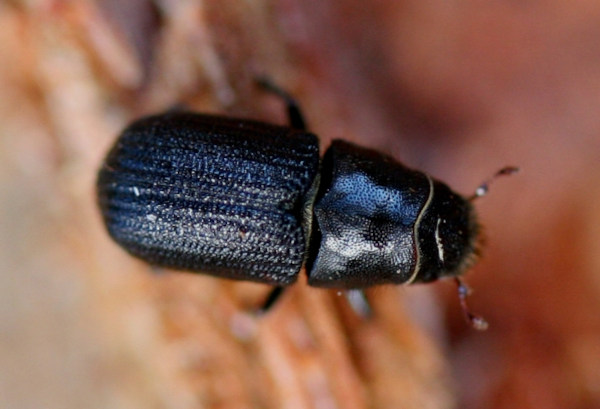
This time, the native insect is attacking Front Range ponderosa pine forests that mostly escaped the prior mountain pine beetle epidemic. In unmanaged areas, these forests are dense, stressed by drought and warmer temperatures and increasingly vulnerable, McCombs said.
DEAD TREES
Beetle-killed trees dry quickly and drop their needles, and fallen trees accumulate as heavy downed fuels that can feed extreme fire behavior. Dead trees that remain standing or pile up on the forest floor also pose hazards for recreators and firefighters and alter fire behavior in ways that make suppression more dangerous and less effective.
Colorado State Forest Service scientists and foresters are actively monitoring the spread of the current outbreak through aerial surveys with the USDA Forest Service. The state forest service facilitates state-funded programs that help communities reduce fuels, protect infrastructure and prepare for the wildfire conditions caused by insect outbreaks. The agency also provides direct assistance to thousands of Coloradans with forest health issues every year.
“This is not just a forest health issue,” McCombs said. “It is a public safety issue, a water quality issue and a recreation and economic issue. And it is a challenge that demands action before impacts accelerate.”
The Colorado State Forest Service will release the 2025 Forest Health Report in March that will show the latest locations of mountain pine beetle outbreaks from aerial surveys and provide analysis.
Information about the mountain pine beetle and a 2024 map of the outbreak can be found at https://tinyurl.com/2sn3r99t.
WHAT YOU CAN DO
- Know the signs of a mountain pine beetle infestation and take action to reduce the spread on your property.
- Support forest management. Thinning, prescribed fire and timber removal are tools that reduce future wildfire risk, protect watersheds and reduce the impacts of insect outbreaks.
- Prepare your community through home hardening, defensible space and neighborhood wildfire mitigation projects.
Established in 1955, the Colorado State Forest Service is a service and outreach agency of the Warner College of Natural Resources at Colorado State University. Headquartered in Fort Collins, the agency provides staffing for the Division of Forestry within the Colorado Department of Natural Resources.