Wyoming Stockgrowers, Woolgrowers and Forest Service rendezvous in the Bridger-Teton

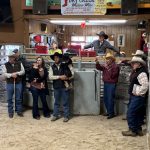
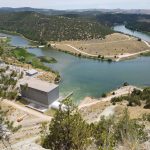
The Wyoming Stockgrower’s Association hosted their annual summer forest tours where attendees, including Wyoming Woolgrowers, discuss grazing issues followed by a meeting. This year’s WSGA/WW/Forest Service Rendezvous was in the Bridger-Teton National Forest in western Wyoming.
Jim Magagna, WSGA executive vice president, began hosting the event six years ago and said this year’s turnout included regional staff from Denver and Ogden, every forest supervisor in the state, and Chris French, deputy chief of the National Forest System for the USDA Forest Service from Washington, D.C., as well.
“We had some really good, meaningful discussion, everyone felt pretty positive,” Magagna said. “Not that we don’t have problems to solve, but that our communication is good.”
He said communication with the Forest Service in Wyoming has a history of strength, with four annual meetings including a winter update to the Joint Agriculture Committees.
“We’re more challenged not by the Forest Service staff that we sit down with, but by the myriad of regulations that control what they can do, particularly the NEPA (National Environmental Policy Act) analysis that overwhelms everything,” he said. “If they don’t do it and do it thoroughly, then every decision gets challenged in court and it’s frustrating.”
A NEPA Review Process is required of federal agencies to consider the potential environmental consequences of their proposals, to consult with other interested agencies, to document the analysis, and to make this information available to the public for comment before the implementation of the proposals. Magagna said the process to complete a NEPA analysis is prohibitively complex, the Forest Service lacks the resources to complete the analyses in a timely manner, and it’s simply not a priority.
ALLOTMENTS DISCUSSED
One of the topics discussed specific to the Bridger-Teton was approximately 34 vacant allotments or allotments in forage reserves.
“We’ve been struggling for years to get those opened up,” he said. “Most of those were sheep allotments and people got out of the business or something. But, there are some people who would like to have some of them. Some of them would lend themselves to cattle as well and the process has just been nightmarish because the NEPA that has to be done.”
Several area sheep producers spoke to officials, communicating their desires to expand their sheep operations if they were able to secure the allotments that would allow it. Most of the allotments are on the Wyoming Range, including allotments used by Magagna when he ran sheep in the area about 18 years ago.
“The other factor is in a lot of these cases, environmental conservation groups have paid permittees to give up their permits, and even though those are private contract that should not influence what the Forest Service does, it creates an expectation about people in those organizations that the allotments won’t be grazed anymore,” he said. “Then, when you try to reactivate them, they’re at the table complaining and objecting.”
In that part of Wyoming, a perennial topic of concern is the relationship between domestic and big horn sheep populations. Magagna said under the Wyoming Big Horn Sheep Plan, the Darby Mountain big horn sheep herd on the Wyoming Range is defined in state statute as a non-core native herd, meaning the herd exists at its own peril.
“If disease is transmitted because of domestic sheep, it’s unfortunate but so be it,” he said. “We would not remove domestic sheep to protect that particular herd of bighorn. But, under the existing forest plan, which is now up for revision, that herd of bighorns is protected and we’ve not succeeded at this point to get the Forest Service to amend their plan to drop those protections.”
Magagna said the state’s range sheep industry has seen a tremendous decline in the past 25 years. Today, there are approximately 340,000 head of breeding ewes whereas the state boasted nearly 6 million head in the 1940s.
“There are certainly still people dedicated to the business who want to expand to accommodate the next generation of their family members,” he said. “In the last few years, we’ve seen some significant recovery of lamb prices and a meaningful increase in consumer demand for lamb, so we do see some opportunity.”
Magagna said the potential for the voter-mandated closure of Superior Farms, a meat packing facility in Denver, would impact Wyoming sheep growers by creating a scenario that isn’t driven by a decrease in consumer demand, but simply makes it impossible to continue in the business. If there were an opportunity to replace that processing capacity in Wyoming, he said that would be welcomed.