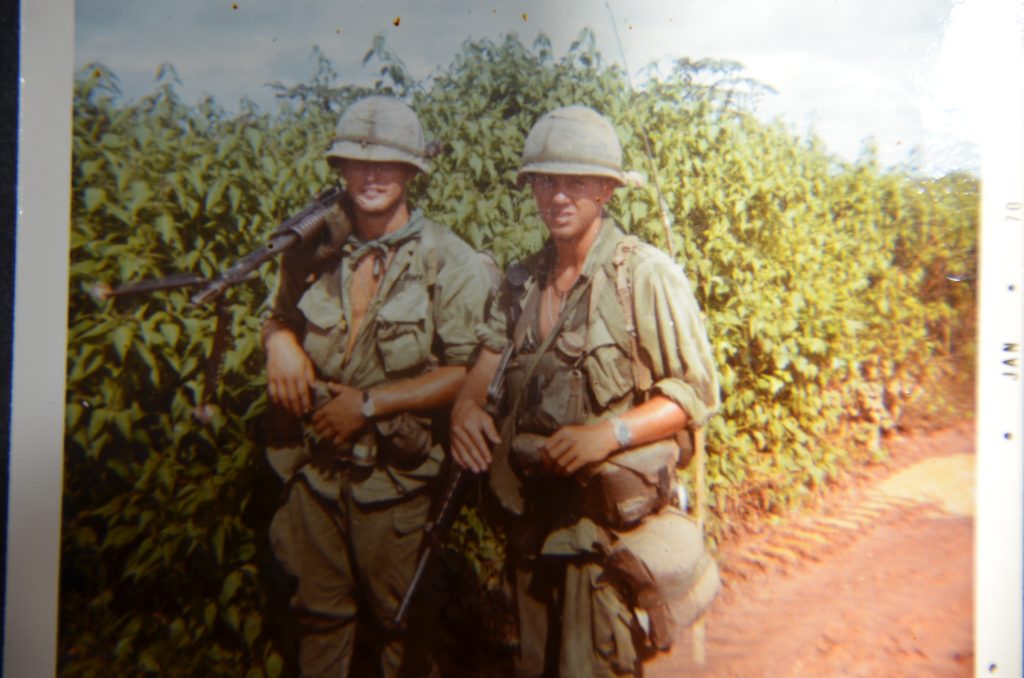
A moment of peace in the midst of war: Vietnam, Christmas, 1969
Christmas-RFP-122925
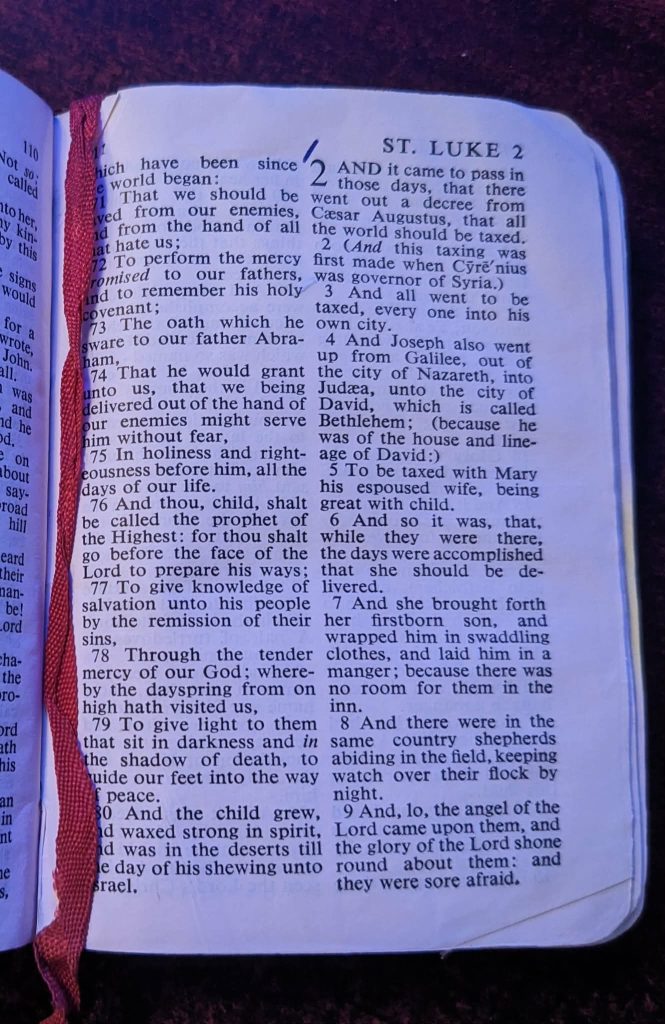
And the angel said unto them, “Fear not: for behold, I bring you good tidings of great joy which shall be to all people. For unto you is born this day in the City of David a Savior, which is Christ the Lord. And this shall be a sign unto you: ye shall find the babe wrapped in swaddling clothes and lying in a manger.”
And suddenly there was with the angel a multitude of the heavenly host praising God and saying, “Glory to God in the highest, and on earth, peace, good will toward men.”
— Luke 2:10-12
Delve into the experiences of those who served in Vietnam, listen to their stories, and you’re far more likely to hear about the sounds of gunshots, exploding mortars and grenades, and incoming helicopters. You will hear about fear, conflict and confusion, ghastly wounds, death and destruction, and how ordinary people faced these circumstances with courage and commitment. “On earth, peace, good will toward men” are not generally the first words used to describe the Vietnam War.
But for a few men, for a few moments, Christmas Eve of 1969 did hold these quiet words of hope.
Henry Mohagen, pastor of the Free Lutheran Church at Reva, S.D., and a native of Grafton, N.D., arrived in Vietnam in July of 1969. He received his draft letter in February 1969 and reported to Fort Lewis, Washington, where he did his basic training and Advanced Individual Training (AIT).
“A lot of people think AIT means infantry,” Mohagen said. “In my case it was infantry, but it is not necessarily always referring to infantry. They were gearing everyone for war, as infantry you knew you were going to Vietnam.”
Not much war news had reached the Grafton area.
“I really didn’t know much about the war,” Mohagen said. “I remember when I was a senior in high school, and one day we had a substitute teacher. Our family knew her, she taught Sunday School at church. She had our history class, and that day she walked around the room and looked at all of us and said, ‘You boys realize that you could very likely go to Vietnam. This war is escalating.’ That was in 1967, and that was the first realization I had that it was a possibility.”
Mohagen recalled that in 1968, a young man from Grafton was killed in action in Vietnam. Spc. David LaTraille was a paratrooper.
“In Vietnam, there was no front, so to speak,” he said. “It worked in World War II when they dropped guys behind the lines, but in Vietnam there were no lines. The enemy was everywhere. He got killed in one of the few jumps they made.”
No one in Mohagen’s immediate family had served in active duty during World War II. His father, Roy, had gone to California and gotten a job at Lockheed, building P-38s.
“They didn’t guarantee a deferment for building airplanes, but he did get a war exemption. He did eventually get drafted but it was later and then the war was over,” he said.
Although there was not a strong military background in Mohagen’s family, there were deep roots of faith. After World War II ended, Roy Mohagen returned to his hometown of Grafton with his wife and two young children. There they farmed and raised cattle, and Mohagen served as a lay pastor at the Lutheran church.
Mohagen was the third and youngest child in the family, and grew up helping on the farm. He graduated from Grafton High School in 1967, and did a variety of jobs, including driving a gravel truck and working at the Grafton Post Office.
LANDING IN VIETNAM
When he left for Vietnam, Mohagen carried with him a pocket sized New Testament, a confirmation gift from his aunt and uncle. He landed at Bien Hoa, at the 90th Replacement Division, one of 10,000 soldiers per week arriving for active duty assignments. Most, like Mohagen, were “just kids.” Getting off the plane, he was struck by the temperature and the odor.
“Talk to just about any Vietnam vet and they will talk about the awful smell when you first got there, the sweltering heat and the smell,” he said. “You would come to Bien Hoa, then they would say you’ve got to catch a plane or whatever to some other part of the country to get to your headquarters. I had orders for the first infantry division.”
The new arrivals were assigned menial tasks, such as filling sandbags, for a period to get acclimated.
“It was on a hot, sandy beach and might have been kind of a nice place for a vacation if it wasn’t so hot,” he said.
Mohagen was assigned to the second battalion of the 16th infantry rangers. He worked with a squad of 10 to 12 men, sometimes with two squads or with the whole platoon, which was made up of three squads.
“Search and destroy was what they called us,” he said. “To start with, we pulled security along roads where mine sweepers had to come every morning. There was one main road, Highway 13, and mine sweepers would start at both ends. After they would meet in the center then the convoys would run.”
The mine sweepers would go on the road with metal detectors, and Mohagen’s squad would be out away from the road pulling security for them.
The next nine and a half months Mohagen, or “Mo” as he was often called, spent his time in the jungle.
“The training was all geared toward guerilla-type jungle warfare,” he said. “You couldn’t tell who your enemies were. We had both VC (Viet Cong) and NVA (North Vietnamese Army); the NVA all had uniforms but the VC didn’t. They just looked like any other farmer, you couldn’t tell them apart.”
Mohagen and his squad would be helicoptered out into the jungle, dropped off, and given instructions. The men carried food for five to seven days along with any other supplies they required in 100-pound packs. Two men per squad were ammo bearers, one carried an M-60 machine gun, others were responsible for radios and other equipment such as a “thump gun” — an M-79 grenade launcher.
After a period of time, helicopters would come pick them up and take them back to a fire base to get resupplied.
“They would continually have an infantry unit in the fire base as security,” Mohagen said. “We’d be in there maybe a couple of days, get a shower, resupply, then we would be helicoptered out.”
They didn’t get in to a fire base every five days.
“The longest we were out in the jungle without a clothes change or anything was 30 days. That was probably the longest; our clothes were just rags. Generally every five to seven days we would get in and get resupplied.”
Thanks to the dense jungle, Mohagen never knew for sure where they were. Most of these patrols were within the Iron Triangle, an area in South Vietnam which lay roughly between Saigon and Cambodia.
“We were up toward Cambodia and there were not many villages around,” Mohagen said. “We weren’t supposed to go into Cambodia but we may have; I had no idea where I was at.”
August, September, October, November. Mohagen made occasional notes in the back of his Bible, which he kept in a tobacco pouch to keep it dry.
“Psalm 23.”
“Aug. 7 — First firefight.”
“I thank the Lord for watching over us.”
ENEMY CONTACT
The men never knew when they might make contact with the enemy, and if it would be minimal or serious when they did. Their orders told them which direction to go, but didn’t specify what they might find when they reached their destination or what they might run into along the way.
In the night, the men might see rockets being launched and then try to go find the spot where the enemy had fired them off.
“It was usually unsuccessful, If we would find anything it might be a couple of sticks they set together to shoot a rocket off. It was amazing what damage they could do with so little.”
Often the squad found themselves crossing swamps, where they picked up ringworm and leeches. They were constantly on the lookout for poisonous snakes as well as enemy soldiers.
“They say there are 31 species of snakes in Vietnam and 30 are poisonous,” Mohagen recalled.
One night they were trying to set up camp in “an awful place.” As they were clearing an area to sleep, their South Vietnamese guide, Rien (pronounced “Wren”) told Mohagen to stop where he was.
“Here he came with a machete, and I’m thinking ‘what are you going to do?’ He threw it, ‘Whop!’ Right by my foot. Here there was a snake there, it was highly poisonous and I would have died if it had bitten me. They were not like a rattlesnake that will tell you they’re there.”
The South Vietnamese army sometimes provided guides for the Americans.
“We called them ‘Kit Carson scouts.’ Rien was a good guide and a good guy. The Viet Cong had killed his family.”
Although opinions on the Vietnam War, then and now, vary widely, Mohagen and his platoon felt they were a positive presence for the people of that area.
“The sentiments were that we were doing some good for the locals,” he said. “Whether it amounted to anything or not I don’t know.”
Mohagen’s first assignment was carrying ammunition. He quickly moved up to carrying the machine gun.
“I carried the gun for nine and a half months in the field,” he said. “An M-60 weighs 25 pounds. Between myself and the two ammo bearers we carried about 1,000 rounds. The M-60 would fire 500 rounds per minute. If you do the math, that’s 2 minutes of sustained fire. But they were pretty good about keeping us resupplied.”
Often it was a matter of waiting to hear gunfire before you knew where the enemy was, Mohagen recalled.
“Someone said, ‘They would shoot one round at us and we’d shoot a thousand back’ and that’s about the way it was.”
The squad camped in the jungle at night, finding what cover they could, setting an ambush every night, and digging in for a little bit of protection.
“Normally we didn’t set up till after dark in case we were being watched,” Mohagen said. “When I say we dug in, it wasn’t foxholes like they had in World War II. We carried some empty sandbags and would fill them.”
Often they would set up a Claymore mine with a trip wire a little distance from where they slept.
“It had the explosive on the back side and BBs the size of a fingertip on the other side. One night we set up on a dike in the rice paddies. In the morning we went out and it was turned around. When you see that, the hair stands up on the back of your neck. They knew where you were at and didn’t have to do much to get you to set it off and blow yourselves up.”
When the helicopters came to fly Mohagen’s squad out to resupply, they would radio them to “pop smoke.”
“You would set off a smoke grenade of red smoke or yellow smoke, and then the helicopter would call the color. If we told them what color we were using, the enemy would probably hear on the radio and set off their own smoke to lure the helicopter. One time, they couldn’t find us; they said we were in the wrong spot.”
It took three days for the pilots to locate the men on the ground.
“We got into some thick jungle and hid,” Mohagen said. “I was sick with a high fever, but we kept going. They finally found us, and next morning early we had to get to a good spot for them to pick us up. We found this big trail, which was spooky anyhow, it was probably one of their resupply trails. We could have been in Cambodia.
“They came in and picked us up and took us out. It was a hot landing zone. [A hot landing zone = under enemy fire.] It was strange, we had been hiding right there in that area and hadn’t made contact in the whole time they were looking for us. If we would have had contact we would have really been in trouble because they didn’t know where we were.”
Although Mohagen didn’t learn this until later, the confusion was caused because his squad had initially been dropped off at the wrong location.
“The days ran along, full of boredom and terror both. In the fall of ’69, we’d had some kind of tough going. On Thanksgiving Day they flew us out a hot meal, the only one we had for the whole time. They brought metal containers, cookies, mashed potatoes, gravy, turkey, cranberries, everything.”
As soon as Mohagen had a little bit of seniority, he always tried to get the last watch in the morning.
“If somebody’s in trouble you’ve got to go in to help,” he said. “One of the scariest jobs we did was going in to try to get to another group of soldiers who were in a bad spot. They dropped us off the helicopter, and you know there’s enemy between you and them and you have to get there without your guys shooting you.
“We got dropped off and made a beeline for where they were at. We could hear shooting, but it got dark on us and we had to stop. We had no idea if there was a trail anywhere or where anybody was. We just set up for the night in a triangle so we could give effective fire in any direction.”
Mohagen had the dawn watch, and as soon as it started to get light, he saw movement.
“The NVA was leaving,” he recalled. “I woke up my ammo bearers, and they each would pass word on down line and wake up whoever was next.”
Orders came to blow the ambush.
“So we did,” Mohagen said. “But one of the guys didn’t wake up the guy next to him. He woke up to realize guys were shooting past him. It was a rude awakening for him needless to say.”
Later that day, one of the ammo bearers got shot in the head. The metal of his helmet deflected the bullet just enough that it didn’t go straight through. There was not enough room for the Med Evac helicopter to land, so they lowered a jungle penetrator to lift him out.
“An RPG hit a tree right next to me and knocked the air out of me, but when I checked myself, there were no holes, so you just keep going,” Mohagen said. “I don’t even remember if we ever made contact with ones we went in to get. What had happened, was that these guys were getting low on ammo too. But it was to our advantage to leave. I counted at least 60 NVA go by, and we were maybe 20 of us.”
During the dry season, they didn’t have to put up with rain, but then, just like someone turned the switch, it went to the rainy season and rained every day.
“We dusted off [flew them out for medical care after they were wounded] a number of guys,” Mohagen said. “Most of the time we never heard how they did. With the machine gun you didn’t get involved in a lot of that. When they were picking them up with the helicopter, I was out pulling security with the machine gun.”
THE CHRISTMAS STORY
Mohagen’s squad had gone to a fire base to resupply right before Christmas.
“They normally flew us out, but that time they had us hike out of the fire base on Christmas Eve,” he recalled. “We tried to set up that night, and we can see helicopters, we can see tracers shooting each way, up and down.”
As they sat in the jungle, someone started talking about how they had spent Christmas Eve back home.
“We were just kids, I was 20 years old, not even 21 yet. They were telling stuff they would do, and not always the good stuff.”
“‘Hey, Mo,’ someone said. ‘What did you do for Christmas Eve?’
“I said, ‘Well, generally Christmas Eve was when we opened our gifts as a family, but prior to that, a lot of times if we’d been in our Christmas program, as kids we would recite our pieces.
“‘My dad would read the Christmas story, but reading is really not the right word, he would open the Bible and then he would recite it.
“Then somebody said, ‘Why don’t you do that for us?’
“‘Well,’ I said, ‘I can’t recite it, but I can read it.’
“But you have got to be kind of quiet out there in the jungle at night, and you don’t want to have light around when someone is likely to see it and shoot at you. I needed a light to read, so I got underneath a poncho with a flashlight and read the Christmas story to those guys.”
The men could hear the firing while Henry read the old, familiar words:
“For unto you is born this day in the City of David a Savior, which is Christ the Lord. And this shall be a sign unto you: ye shall find the babe wrapped in swaddling clothes and lying in a manger.”
And suddenly there was with the angel a multitude of the heavenly host praising God and saying, “Glory to God in the highest, and on earth, peace, good will toward men.”
Everyone was pretty quiet when he finished.
It is impossible to know what went through the minds and hearts of each man who listened to the Christmas story read that night. There was not peace on earth, nor goodwill between men in the jungles of Vietnam. The irony of the words was likely not lost on any of them as they heard the sounds of war, louder than the quiet voice of the reader. But I do not doubt that the story of the Light of the World, hidden under a poncho and only illuminated by the beam of a flashlight, touched the heart of each one who leaned in close to listen.
Author’s note: Mohagen continued serving his country in Vietnam until September 1970. He returned to Grafton, N.D., where he met and married Linda Moberg. They ranched in Montana and Minnesota before purchasing a ranch near Towner, N.D., where they raised their family. After serving as a lay pastor, Mohagen was ordained as a pastor with the Free Lutheran Church. The couple served churches in North Dakota before Henry took a call to work as a missionary pilot in Alaska. In 2004, they received and accepted a call to the Free Lutheran Church at Reva, S.D., where they currently serve. Their family, which now includes five great-grandchildren, continues the tradition of reading the Christmas story on Christmas Eve every year.