Water shortage cure — Millets
Never in human history have so many lived in water-limited environments. Never in human history has water waste been concentrated on such few crops.
Transition to drought tolerant millets is not only prudent — ancient people considered it necessary. Why were drought-tolerant millets developed on several continents over 10,000 years ago? Food.
Tired of foraging daily, our ancestors selected and collected the best grassy seed heads of millets to store and eat when no other food was available.
Their results?
Based on necessity, extremely healthy grains which grew and matured in a narrow rain-fed season were easily stored for travel or winter. Millets produced seed even during droughts.
Anticipation of famine, drought hardy millets placed in pottery or grain storage remained viable for decades.
Millets are gaining attention in the U.S. food industry and health-conscious consumers. Farmers and ranchers are looking for grains and forages to produce on ever-shrinking water supplies. Changing cropping systems can save far more water than a toilet flushing every other use.
Two world studies found food production used 87.1 percent of global water use; industries used 9.6 percent and domestic use only 3.4 percent.
Where do we need to conserve water? Agriculture.
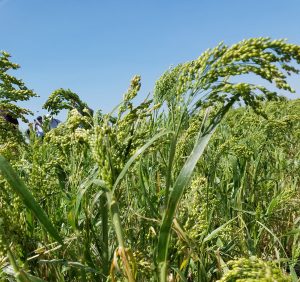
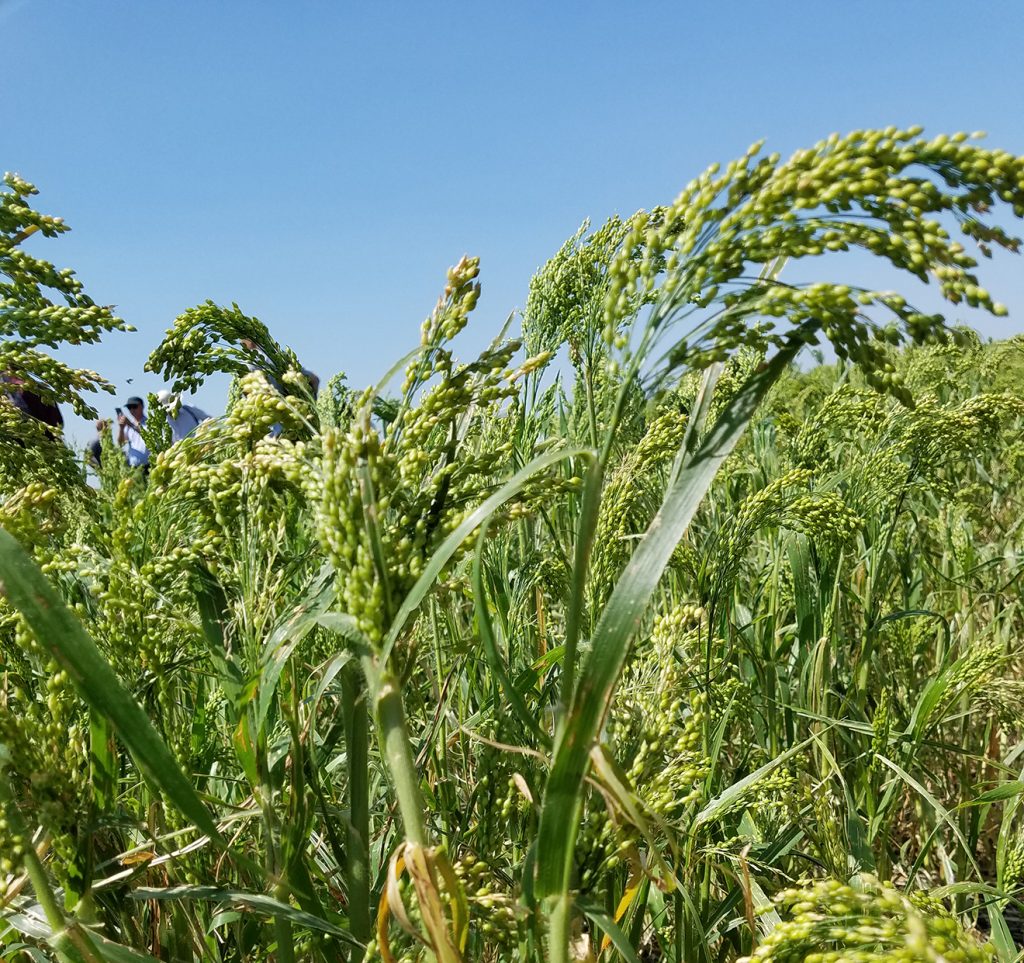
Proso millet cooked, baked and processed, for example, can substitute for rice. Proso has a better dietary portfolio and twice the protein while using the same rice cooker. Plus, there are a million acres of various millets already produced annually in the U.S. — most used as wild bird food and forages. Birds and cattle know what’s good for them and humans.
Rice uses about 300 gallons of water per pound of grain produced. Proso millet uses only about 127 gallons per pound of grain. Rice needs irrigation. Proso does not.
One hundred percent of U.S. rice production is irrigated but only 1.2% of U.S. proso millet grown for seed and grain is irrigated.
Slight crop rotation shifts can half water use, and possibly save humanity’s dietary foolishness. About 400,000 acres of proso are grown annually for grain in three states, Colorado, Nebraska and
South Dakota. Millions of wheat and corn acres can be rotated with proso millet in most states.
For 2026, the North American Millets Alliance announced two proso varieties specifically for the food industry. A University of Nebraska-Scottsbluff waxy (amylose-free starch) proso and a conventional variety, DLG317, has been food-tested and released by Dryland Genetics.
Shallow rooted proso only needs about 4 inches of precipitation to generate its first pound of grain. Wheat needs 5 inches whereas corn needs about 9 inches.
The U.S. Department of Agriculture identified millets’ low water requirements in 1913 when the Bureau of Plant Industry published bulletin 284. “Of the crops which produce grain, millet and sorghum consume about one-half the amount of water required by oats, barley and wheat ….”
American’s drought-prone, water-short southwest irrigates about a million acres of alfalfa a year.
Can forage millets replace alfalfa forage? Absolutely.
When water is limited, is it ludicrous to irrigate alfalfa for forage?
In five U.S. southwest states (Arizona, California, New Mexico, Nevada and Utah) ground water, natural lakes, and dammed rivers are drying up. Some consider that area is in a 1,000-year drought. Yet, they irrigate about a million acres of alfalfa annually.
Alfalfa, a perennial, needs moisture year around to survive in the U.S. southwest. Whereas millets, like high protein, leafy pearl millet, can be planted each year and cut multiple times only when moisture or irrigation water is available with millet forage easily stored for later feed use.
The same 1913 USDA publication stated, “… Millet produces almost four times as much dry matter with the same amount of water as alfalfa ….”
Can we afford to waste water on water-hungry forages, like alfalfa?
When can water-wasting rice and alfalfa be exchanged for consumer-healthy millets? In 2026.
Wietgrefe has been involved with millets, primarily proso, most of his life. For 30 years, he has been a certified agronomist, researched proso millet in the U.S., Mongolia, and Turkey, and has written two books on millets. Previously Wietgrefe was a U.S. Department of Agriculture certified grain grader and certified millet seed conditioner. He is a board member of the North American Millets Alliance. Wietgrefe has six patents, degrees in agricultural business and economics, and has authored 11 books.