America | Garrett Dwyer: A perspective forged in service
Callie Hanson Saults Follow
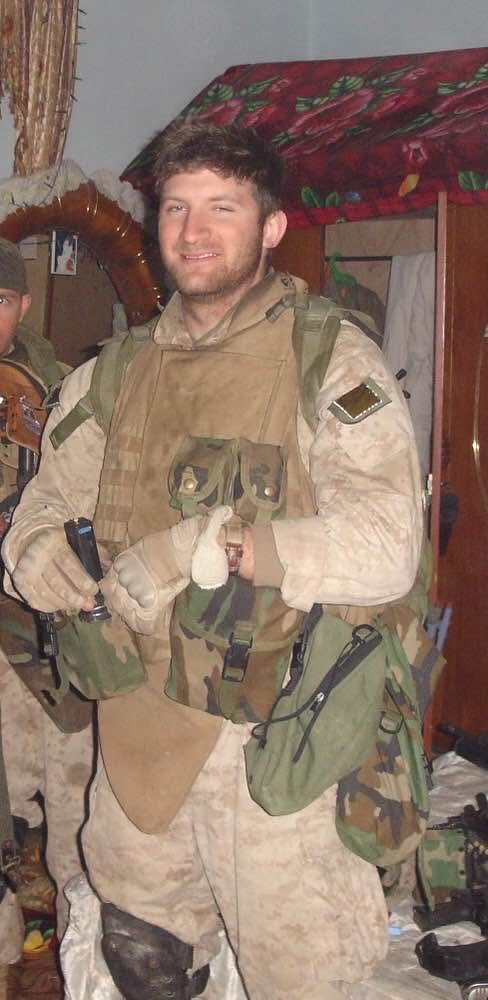
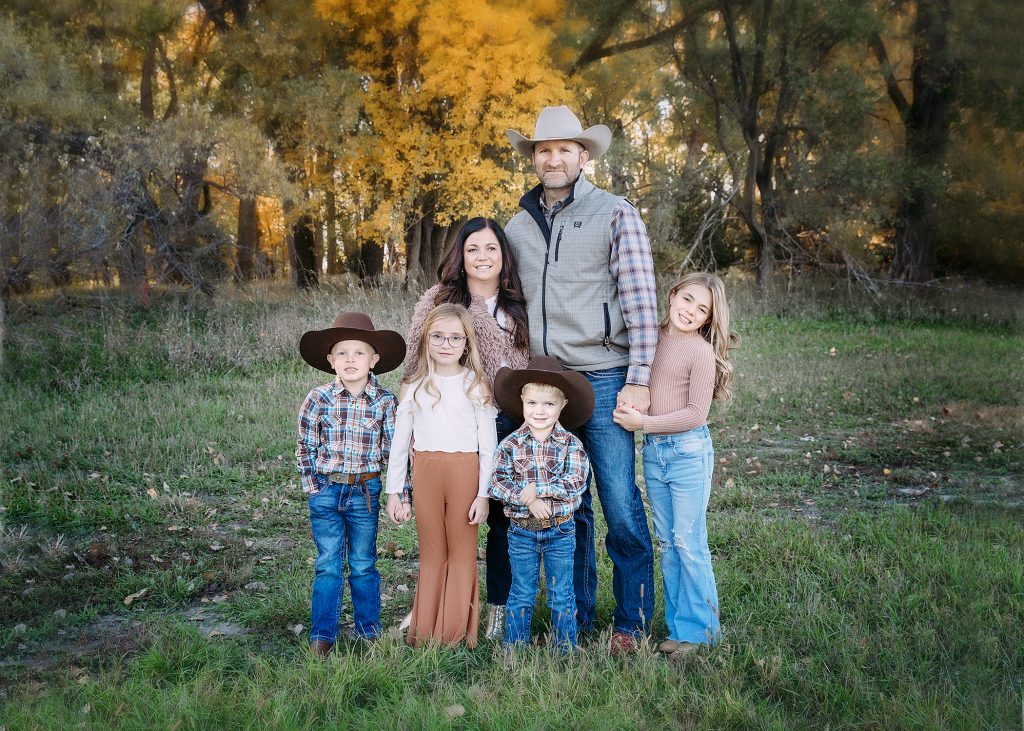
Fifth generation Bartlett, Neb. rancher Garrett Dwyer felt a call to service at just 16 years old as he watched the 9/11 terror attacks unfold. Dwyer would go on to enlist in the U.S. Marine Corps in 2004 where he would first go to Camp Pendleton before serving tours in Okinawa, Japan and later Ramadi, Iraq.
“The biggest thing was 9-11. I was a sophomore in high school at that time, and I remember very vividly watching the planes crash into the towers,” he said. “The whole school was glued to the TV watching all that. Seeing that, you just feel a sense of duty that you need to go help out the cause.”
“My first deployment was to Okinawa, Japan, and then my second deployment was to Ramadi, Iraq, in 2006 to 2007. I was in the infantry, so I was in the thick of things there in 2006 and 2007 in Ramadi.”
Dwyer’s service ended in 2008 and he returned home to Nebraska, like many other veterans, he struggled to transition back into civilian life. Dwyer used his GI Bill to enroll in college at Nebraska College of Technical Agriculture to study agriculture production, but struggled to connect with other students, who were mostly fresh high school graduates with very little experience.
“That was a really rough time for me,” he said. “Granted, I had just gotten out of the Marine Corps and then went right into school and it was a big culture shock for me going from the Marine Corps and that type of lifestyle, then getting thrown in with kids that were 18 years old. That transition was real tough for me.”
Dwyer explained those years as bittersweet, but some of the toughest of his life. However, this season of life introduced Dwyer to the Farmer Veteran Coalition.
“That whole part was probably one of the roughest times of my life, but it also introduced me to the Farmer Veteran Coalition, and that ended up being something I really needed at that time,” he said. “Networking with other veterans going into agriculture really helped me out.”
During his time with the organization, he served on its board of directors, traveled to Washington, D.C., and advocated for veterans in agriculture alongside other former service members from across the country.
“It was something I kind of needed at that time,” Dwyer said. “It was a really good experience.”
In 2010, Dwyer returned home to Bartlett with his eyes set on stepping back into the family operation. This would prove to be a process as his parents had rented out large sections of the family land and taken a step back from agriculture, leaving Dwyer to start nearly from scratch. Over the last 16 years, he has worked to expand the ranch, improve infrastructure and modernize equipment while navigating drought, volatile markets and the day-to-day realities of ranch life.
“It has definitely been a process. Obviously, we’ve been through floods, and we’re still in a drought. It’s just been kind of tough times. But with these high-priced cattle, it’s crazy where the industry is at right now as a whole.”
Even through the difficult moments, Dwyer said lessons learned in the Marines continue to shape how he approaches ranching today and his everyday perspective. His experiences in an active war zone often times serve as a foundation to keep his perspective in check.
“The thing I take away the most from the Marine Corps is the work ethic,” he says. “I’ve been in terrible situations before, so when things get hard on the ranch, I look back and think, ‘Well, it’s not quite as bad as that.’ It keeps me working harder.”
Dwyer admits he is not immune to the overwhelming nature of ranching.
“Days are overwhelming sometimes. You feel so far behind and don’t know how you’re going to get everything done, but it gets done somehow,” he said. “You’ve got to be a self-motivated individual to work on a ranch,” he said. “There’s days that are overwhelming, but it gets done.”
His time in agriculture has also sparked innovation. After enduring a brutally cold Nebraska winter with little natural protection for his cattle, Dwyer designed portable windbreak systems to better protect livestock during winter grazing and calving. Today, he sells multiple models of the windbreaks.
“I hauled cows 40 miles from home where there was absolutely no cover — nothing but rolling hills and cornfields,” Dwyer said. “We had a real bad open winter that year where the wind blew for days, and it was like negative 30 degrees actual air temp. It was just bitterly cold.”
Watching his cattle endure those conditions sparked an idea.
“My cows hunkered down behind this little hill, and I don’t think they came out for three days except to get water,” he said. “I’m a one-man show, and I thought, ‘There’s got to be a better, simpler way to haul some sort of windbreak out to these cows.'”
That experience led Dwyer to design portable windbreak systems that can quickly be transported and deployed without additional equipment.
“The windbreak that I designed is on a 24-foot trailer. You can pull it with your truck, haul it down the road, go out to the cornfield and open it up,” he said. “It’s just a quick, fast, portable way to get protection to your cows.”
Since developing the first model, Dwyer has expanded the concept into multiple designs, including a windbreak feeder capable of holding round bales while also providing shelter for livestock.
“Basically, from end to end, you’ve got about 70 feet of protection with hay right there for the cows if it snows,” he said. “Then I also have one without the feeder that expands out to 120 feet. They’re very well built, sturdy and just great to have during winter grazing and calving.”
While ranching remains his primary focus, Dwyer said he has slowly begun building the business alongside the family operation.
“I just started a couple years ago, so I’m slowly building the brand and trying to get these things out to farmers and ranchers,” he said.
While Dwyer continues looking toward the future — paying down debt, improving the operation and preparing for inevitable market downturns — he said one of his greatest hopes is keeping the family legacy alive.
“I am the fifth-generation rancher to come back here,” he said. “If my kids want to come back, they’d be the sixth generation. I’d sure like to see that.”