Analysts: Sugar consumption down, industry in decline
Sweeteners-RFP-030226
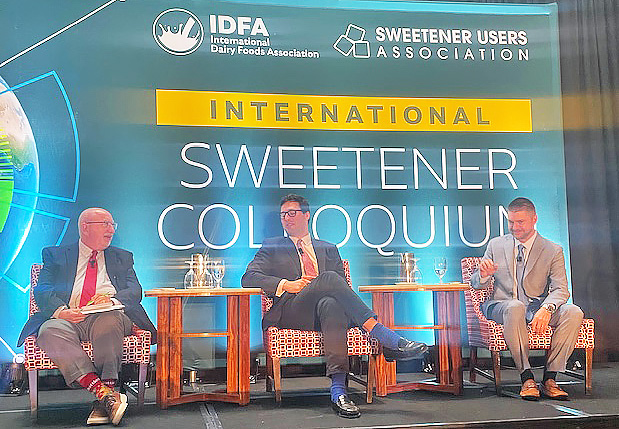
CHAMPIONS GATE, Fla. — World sugar consumption is down and the sugar industry is in decline, with the use of GLP-1 weight-loss drugs a factor, key industry analysts said here Monday at the International Sweetener Colloquium, an annual gathering of the sweetener users in this town near Orlando.
Vincent O’Rourke, the trade and market analyst for C. Czarnikow Sugar Inc., and Jeff Dobrydney, the senior vice president of JSG Commodities, both pointed out that the price of raw sugar is only 14 cents per pound, half of what it was a year ago when it was 28 cents.
O’Rourke emphasized the point by noting that his company, which has been in the sugar trading business since it was founded in London in 1861, now sells more tapioca and other products than it does sugar.
“Czarnikow realizes sugar is not the driver for growth. Customers are looking at new products, new recipes and new mixes. That is where we grow as a company,” O’Rourke said. “If we are changing, the world is changing.”
To further emphasize what is happening, O’Rourke said that in his own household his wife is buying cottage cheese and other products to use as substitutes for sugar in making cookies.
(Asked by moderator Ron Sterk how the cookies taste, O’Rourke said that store-bought cookies are better.)
In the past, sugar consumption has grown along with the population and increases in income, but that is not happening, O’Rourke said.
WEIGHT LOSS DRUGS
Studies show users of GLP-1 drugs consume 40% fewer calories and change what they buy, O’Rourke added. Sales of yogurt and fresh produce are up while sales of alcohol, desserts, juices, candy and many other products have gone down, he explained.
One reason the changes are happening around the world is that social media trends now transfer quickly from the United States to other countries. India has the largest number of Instagram users, followed by the United States, according to a chart O’Rourke showed.
“Hot recipes don’t contain sugar,” he explained. The top recipes on social media in 2025 were hot honey, cottage cheese, sweet potatoes and a beef bowl, he said.
There is also a “second-hand Ozempic effect,” he said. If the person taking the weight-loss drug is also the primary food buyer for the household, that changes what everyone in the household eats and the portion sizes, he added.
The trend is only likely to intensify because the patent for Ozempic will expire in Brazil, which will make it possible to sell it as a generic drug.
Speculators who bet that the price of sugar will go down now dominate the market, O’Rourke and Dobrydney said.
Sugar mills had avoided selling, but eventually had to sell, bringing the price briefly below 14 cents, they said.
The low prices are having implications throughout the world.
India has been exporting less sugar than expected because world prices are so low. But sugar consumption is also down there, which may make more sugar available for export.
Thailand has improved crop this year, but cassava which compete with cane fields for acreage has a better price.
European sugar production is down.
Brazil’s crop is estimated at 40 million tons, but the country uses sugar for both food and ethanol. If the price of gasoline goes down, then more cane is likely to be used for food.
Indonesia and China are the most important importers, O’Rourke said. Indonesia is putting emphasis on domestic food security, he said. China’s domestic production is rising, but it is still expected to import a substantial amount of sugar.
Dobrydney also explained:
- When the dollar falls in value against other currencies, as it has, investors usually shift to commodities, but this time the “safe haven” is metals, not agricultural commodities.
- Tariffs, inflation, interest rates and geopolitical risks are also affecting investments.
- Investors don’t like the back and forth on tariffs,
- Other soft commodities are also lower. Cocoa, which was at high prices a year ago, is down 50% and coffee is down 18% while sugar is at five year lows.
“We are not only in an inflection point, but a new world in sugar prices,” Dobrydney said.