Colorado, upper basin entities call for ‘durable,’ supply-driven management of Colorado River in federal comment period
ColoradoRiver-RFP-030926
Following the Colorado River Basin states’ failure to reach an agreement, the future of the river and management of its two critical reservoirs now rest in the hands of the federal government.
Entities across the basin are still weighing in, with Colorado and upper basin representatives pushing for durable, long-term and supply-driven rules to govern the reservoirs’ future, according to new comments submitted to the U.S. Bureau of Reclamation.
For over two years, the upper and lower basin states have been going back and forth over the post-2026 operations of Lake Powell and Lake Mead, which have widespread implications for the approximately 40 million people, seven states, two counties and 30 tribal nations that rely on the river as a water source. The current operational guidelines for the reservoirs were set in 2007 and expire this year.
In January, the U.S. Bureau of Reclamation, which operates the two reservoirs, released its own draft of options and gave the seven states until Feb. 14 to reach an agreement on their own. However, the deadline came and went, as both basins dug in their heels on topics like cutting water use, available water supply and more.
FORGING AHEAD
Without a consensus, the bureau will forge ahead and attempt to finalize a plan that meets the needs of all seven Colorado River Basin states by Oct. 1. Following the National Environmental Policy Act, the Bureau’s menu of options released in January was open for public comment until March 2.
The agreement will govern how the bureau operates Lake Powell and Lake Mead, particularly under low reservoir conditions; allocates, reduces or increases annual allocations for consumptive use of water from Lake Mead to the Lower Basin states; stores and delivers water that has been saved through conservation efforts; manages and delivers surplus water; manages activities and makes cuts above Lake Powell and more.
The state of Colorado, Upper Colorado River Commission, the Colorado River Water Conservation District, the Southwestern Water Conservation District and several Front Range water providers were among those that submitted comments, asking for the bureau to finalize an agreement that legally fulfills all water rights while making bold and sustainable changes that align with the hydrologic reality of the river.
“The Colorado River has changed dramatically over the last two decades, and our operating rules need to change with it,” said Becky Mitchell, Colorado’s water commissioner and lead negotiator in the post-2026 operations, in a statement. “The current rules have not done enough to protect Lake Powell and Lake Mead, and it’s clear that a future management framework must better respond to today’s reality. Colorado’s comments provide constructive, legally grounded recommendations to bring the system into balance.”
Allocation of the Colorado River’s water supply is driven by a 1922 compact agreement, which divided the river into an upper and lower basin.
Colorado, New Mexico, Utah and Wyoming comprise the upper basin. These states rely predominantly on snowpack for their water supply, which is divided based on a 1948 Upper Colorado River Basin Compact. The Lower Basin states — Arizona, California and Nevada — rely on releases from Lake Powell and Lake Mead for their water supply.
DROUGHT CONDITIONS AND SNOWPACK
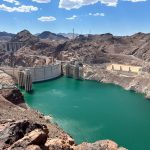
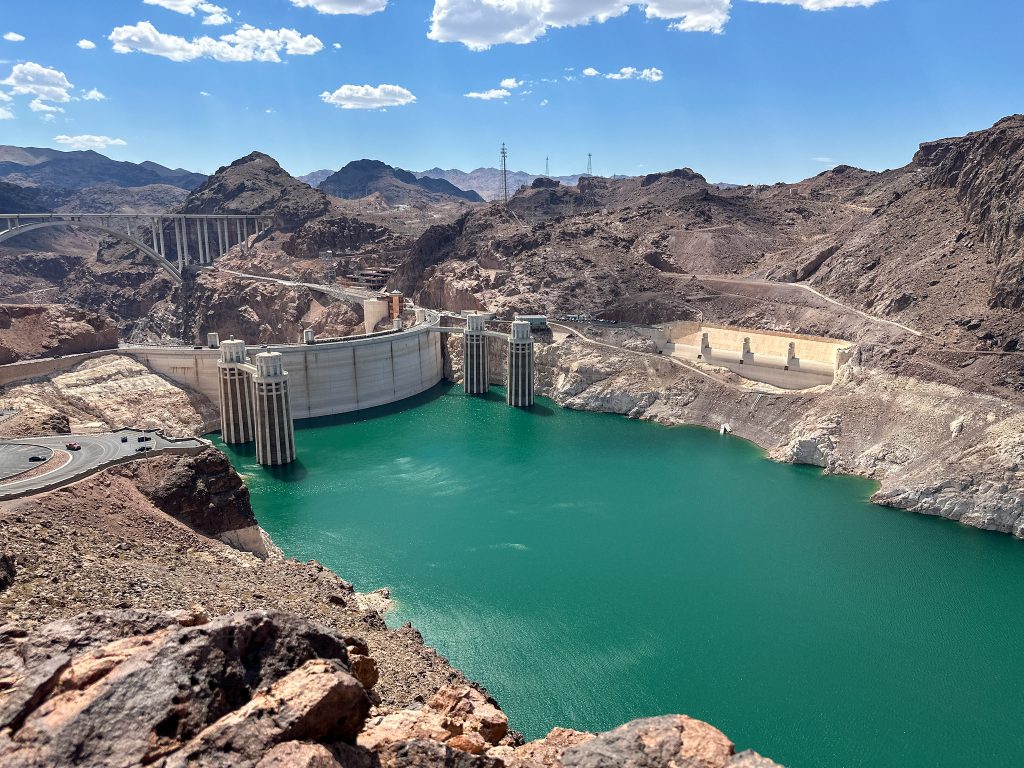
Since the reservoirs’ current operational guidelines were set in 2007, the Colorado River Basin has experienced deepening drought conditions, declining inflows to the reservoirs and shrinking storage in Powell and Mead. As of March 1, Lake Powell and Lake Mead were 25% and 34% full, respectively.
As the upper and lower basin states sought to reach a consensus on the post-2026 guidelines for the reservoirs, disagreements were rooted in where cuts needed to be made to deal with these worsening conditions. Through the deadline for consensus, the Lower Basin states offered up some cuts and pushed for basin-wide water use reductions.
The Upper Basin states, however, have pushed back, claiming they already face natural water shortages driven primarily by the ups and downs of snowpack. In February, the upper division said this winter’s critically low snowpack will result in natural reductions “greater than 40% of the proven water rights” across the four states.
In the draft, the Bureau recognizes that with “critically low storage in Lake Powell and Lake Mead, significant hydrologic variability and the anticipation of drier future conditions,” an agreement must strike a balance between “potentially profound impacts of water-delivery reductions” and “the need to maintain reservoir storage.”
The latest Upper Colorado River Commission and Colorado comments to the Bureau of Reclamation called on the federal agency to root the post-2026 guidelines on what the river actually supplies.
In its comment, the state of Colorado said that the “failures of the current set of guidelines developed in 2007 have driven the current crisis on the Colorado River.”
“We can no longer rely on the management strategies of the past to solve the challenges of the present and future,” said Lauren Ris, director of Colorado’s Water Conservation Board.
“With reservoir conditions increasingly precarious, the path forward must reflect one simple reality: The river is small. Policy must follow hydrology,” read a joint letter from the Front Range Water Council, Colorado River District and Southwestern Water District. “Colorado has been living with a smaller river for more than two decades. … We absorb hydrologic shortages without compensation, without delay and without debate.”
The Front Range Water Council includes Aurora Water, Colorado Springs Utilities, Denver Water, Northern Colorado Water Conservancy District, Pueblo Water, Southeastern Colorado Water Conservancy District and the Twin Lakes Reservoir and Canal Co. — all of which rely on transmountain diversions from the Colorado River for their water supply.
“The solution is to reduce use to match supply — not to mask imbalance by shifting risk upstream,” read the joint letter.
Andy Mueller, the general manager of the Colorado River District, which is a governmental entity representing water resources in 15 Western Slope counties, said that if the basin wants to “move out of crisis response mode, every proposal must begin by reducing consumptive use in the Lower Basin by this amount every single year before discussing shortages.”
Among the River District’s 13 recommendations to the Bureau, No. 1 is prioritizing the “hydrologic reality over predictability for Lower Basin users,” arguing that focusing on predictability maintains the lower division states reliance on “steady reservoir releases” and would “perpetuate the current systemic imbalance and operational bias that favors” water users in those three states.
DRAFT IMPACT STATEMENT
The bureau’s draft environmental impact statement offers five options — including a required “no action” alternative and four others — that represent a broad range of operating strategies. These have been described as a menu of possible options, with a final agreement expected to incorporate elements of multiple options.
In its response, the Upper Colorado River Commission offered technical evaluations of each option, all of which it claims have deficiencies.
Generally speaking, the commission argues that the draft relies “on several assumptions that exceed federal authority, has flawed modeling assumptions including the injection of fictional water, omits critical Lower Basin use data, misapplies the Long-Range Operating Criteria (operational rules for the reservoir developed in 1970), and inconsistently treats Upper Basin and Lower Basin operations.”
The state of Colorado wrote that “none of the proposed alternatives has the requisite combination of sufficiently robust and feasible operations consistent with current legal authority under the Law of the River,” which it said are anchored by the 1922 and 1948 river compacts.
The state asked that the bureau’s final environmental impact statement include “alternatives that reflect the reality of available supply, adequately assess and impose shortages in the Lower Basin to sustain storage and protect operations at Lake Powell and Lake Mead,” and fit within the river’s legal framework.