USDA to develop ‘One Farmer, One File’ with Palantir
One-RFP-030926
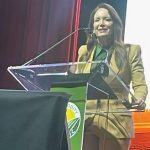
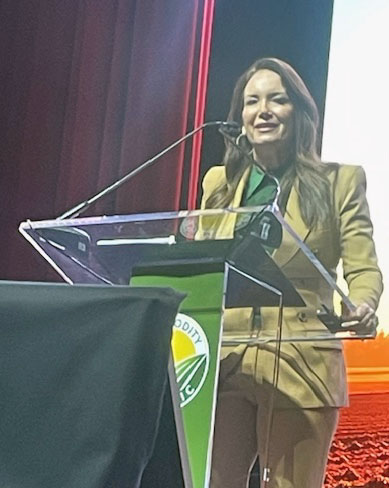
SAN ANTONIO — At the Commodity Classic here Thursday, Agriculture Secretary Brooke Rollins announced that USDA is establishing a “One Farmer, One File” technology system “to create a single, streamlined record that follows the farmer — no matter where they go in the USDA system.”
Rollins said the effort will allow USDA to “retire 1,000 contractors” but she did not provide details on how the new unified computer system will be created or who will do the job. A USDA spokesperson confirmed to The Hagstrom Report today that the system will be developed with Palantir, the artificial intelligence and data company co-founded by Peter Thiel, an important supporter of President Trump.
Government websites in December reported a Palantir contract with USDA.
Palantir has said it can revolutionize government computer systems, but concerns have also been raised that its system can be used for government surveillance.
Farmers have long been concerned about the privacy of their information, particularly with private companies.
Several past administrations have announced attempts to bring together USDA’s computer systems that have been siloed among the Farm Service Agency, the Natural Resources Conservation Service and the Risk Management Agency, but have failed.
“Every single day at USDA, our focus is on making life easier, more profitable and more rewarding for the American farmer,” Rollins said in a speech and in a news release.
“Our government for the people by the people should be modern, efficient and respect taxpayer dollars. This modernization of old, duplicative, wasteful systems has one goal in mind, improve our customer service so the people we serve are able to farm and feed America and the world,” Rollins said.
“‘One Farmer, One File’ prevents our farmers from duplicating tasks while increases their productivity and time in the field.”
USDA added, “The ‘One Farmer, One File’ initiative is part of a broad modernization effort to unify all FSA, NRCS and RMA systems. This uniformed system will retire legacy systems and remove agency silos. USDA began work on this system in 2025 and plans to greatly advance the effort in 2026. USDA anticipates completing the project in 2028.”
Rollins said the effort has begun with the enrollment in the Farmer Bridge Assistance program, but that the process is only beginning.
“We will completely transform USDA’s IT [information technology] systems within two years, not two decades,” Rollins said in her speech.
In her speech Rollins also reassured farmers that those who prefer to go to FSA county offices to complete their paperwork will be able to do that.
“FSA offices will stay open. You will have someone to help you. This is not a mandate to digitize. People who want in person services will have those options,” she said.
Several farm groups praised the initiative.
American Farm Bureau Federation President Zippy Duvall said in a news release, “Today’s announcement is welcome news to ensure farmers quickly receive the information and resources they need.”
“At a time when farmers are facing a tough farm economy and rising pressures, we all count on USDA to deliver the programs and support that will keep our farms moving forward,” Duvall said.
“Farmers and ranchers need to make every dollar and every minute count on the farm, and having an easier system to navigate USDA programs will free up farmers for the work of growing our nation’s food, fiber and fuel.”
National Association of Wheat Growers CEO Sam Kieffer said, “NAWG welcomes Secretary Rollins’ launch of the ‘One Farmer, One File’ initiative. Farmers run complex family businesses and time is one the most precious commodities on their farm. USDA’s effort to create a single, streamlined record is welcome news that will save farmers time, better inform business decisions, and hopefully improve program delivery.”
American Soybean Association Vice President Dave Walton, an Iowa farmer, said, “ASA applauds Secretary Rollins for the rollout of the ‘One Farmer, One File’ Initiative at our 30th annual Commodity Classic.”
“Farmers rely on USDA’s support and technical assistance more than ever, but we also know firsthand how time-consuming paperwork and duplicative reporting requirements can be. The efficiencies implemented through this initiative will help reduce that burden and save precious time that can be spent in the field,” Walton said.
National Cotton Council Chairman Nathan Reed said, “This streamlined approach across the Farm Service Agency, Natural Resource Conservation Service, and Risk Management Agency will allow cotton producers to spend less time on redundant paperwork and more time focused on their fields. It’s an investment in efficiency that directly benefits the productivity of U.S. cotton farmers.”
In the rest of her presentation, Rollins followed the lines of previous speeches. She blamed the Biden administration for farmers’ problems, citing higher business costs and lack of trade agreements.
She praised the trade agreements and frameworks of agreements that the Trump administration has negotiated, but did not mention the tariffs that farm leaders have blamed for lost markets due to retaliation from foreign countries.
Rollins noted that the deficit between agricultural exports and inputs has fallen from $50 billion to $41.5 billion during Trump’s first year in office.
She also said input prices have come down, although DTN/Progressive Farmer wrote in an analysis that several economists said during the Commodity Classic that input prices have not come down.
Rollins also appeared to recognize that many farmers are experiencing economic problems.
“One year later won’t declare victory, but we have made great progress,” she said.
She said Elon Musk had helped “take us” into the 21st century early in 2025 and that she had made sure USDA returned to a “farmer first policy.” She also said the food stamp program — officially the Supplemental Nutrition Assistance Program — is “ripe with fraud.”
Rollins also touted the administration’s deregulatory agenda, which she released on a visit to a farm earlier Thursday.
Rollins said in both her speech and at a news conference that she hopes to be back next year to report on progress on the commitments she has made.
She said she has made so many TV appearances in order to take the message to a broader public that “there is no freedom unless we are able to feed and fuel ourselves.”
She cited the Texas resistance to Mexican troops at the Alamo in San Antonio was a signal that “Americans don’t retreat.”
Asked at the news conference if she worried that the ad hoc payments are causing costs to go up and keeping marginal land in production, Rollins said it is important to support farmers and not compromise the food supply but that “We have to get to the bottom of this very, very quickly.”
She said that is why Trump has called on the Justice Department to investigate companies that may be raising prices.