Dust to Apples: The Colors of the Eastern Plains
Art3-RFP-032326
Melody Epperson understands the invaluable role art plays in promoting understanding. A lifelong artist, Epperson has undertaken countless artistic endeavors exploring themes such as memory, women’s rights and family. Recently, she’s undertaken a new challenge: representing agriculture and the settlement of the plains on canvas.
Epperson hails from a family that homesteaded in Colorado in the 1920s, but was forced to move on when the Dust Bowl hit. In an effort to reconnect with her agricultural roots, she began a project that’s taken her to farms across Colorado’s eastern plains.
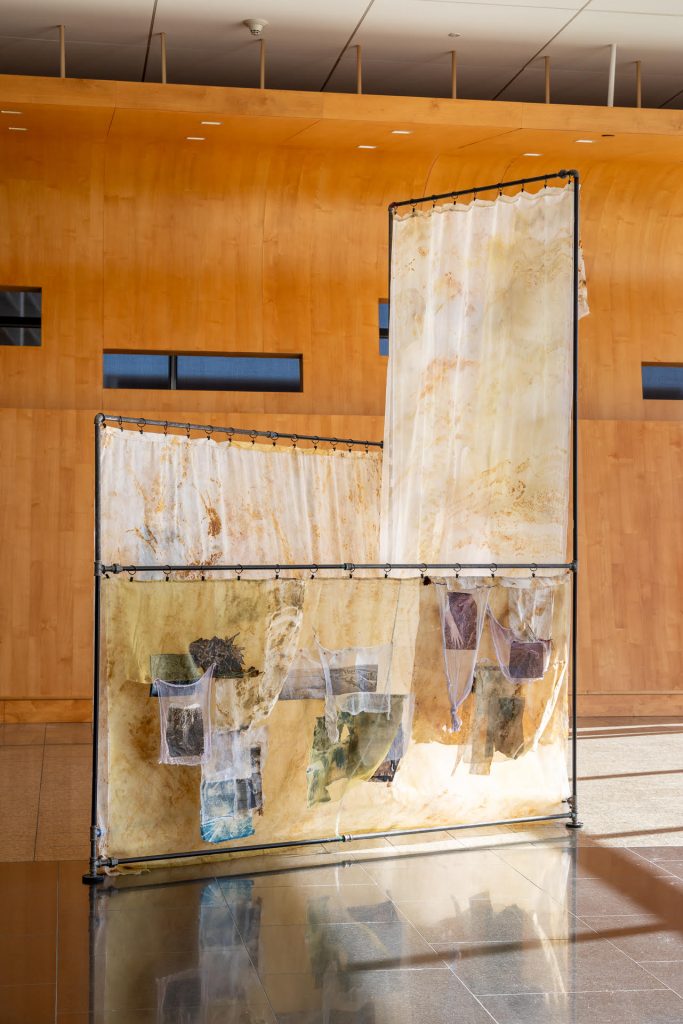
Dust to Apples: The Colors of the Eastern Plains is the culmination of years of effort. Named after her family’s transition from wheat farming to bartering for apples in the wake of the Dust Bowl, this exhibit showcasing agriculture in eastern Colorado is on display at the Adams County Government Center in Brighton, Colo.
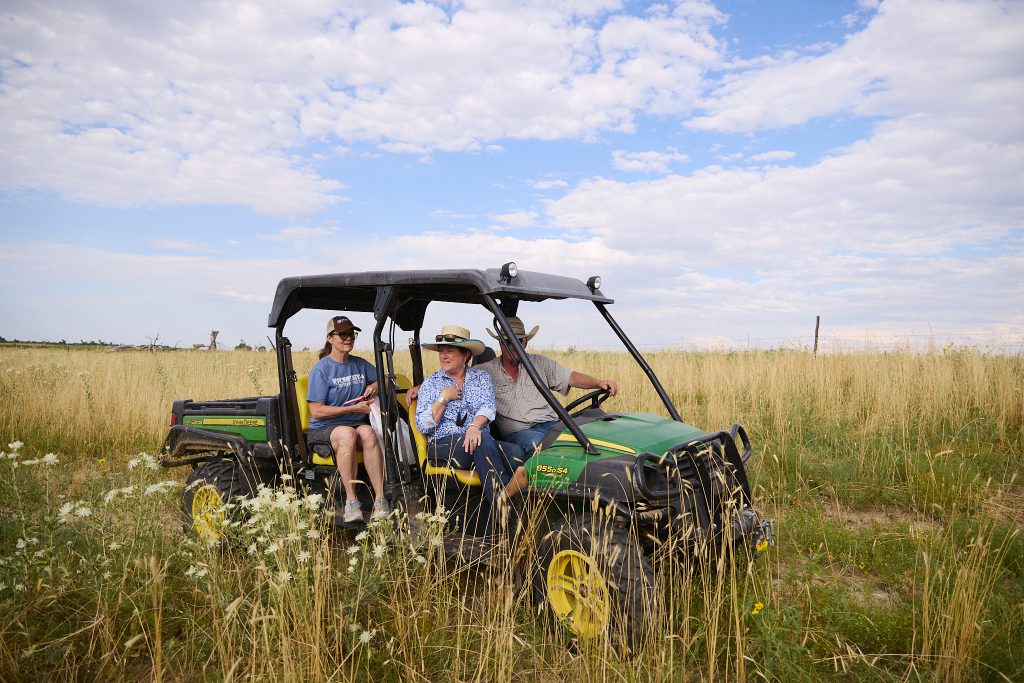
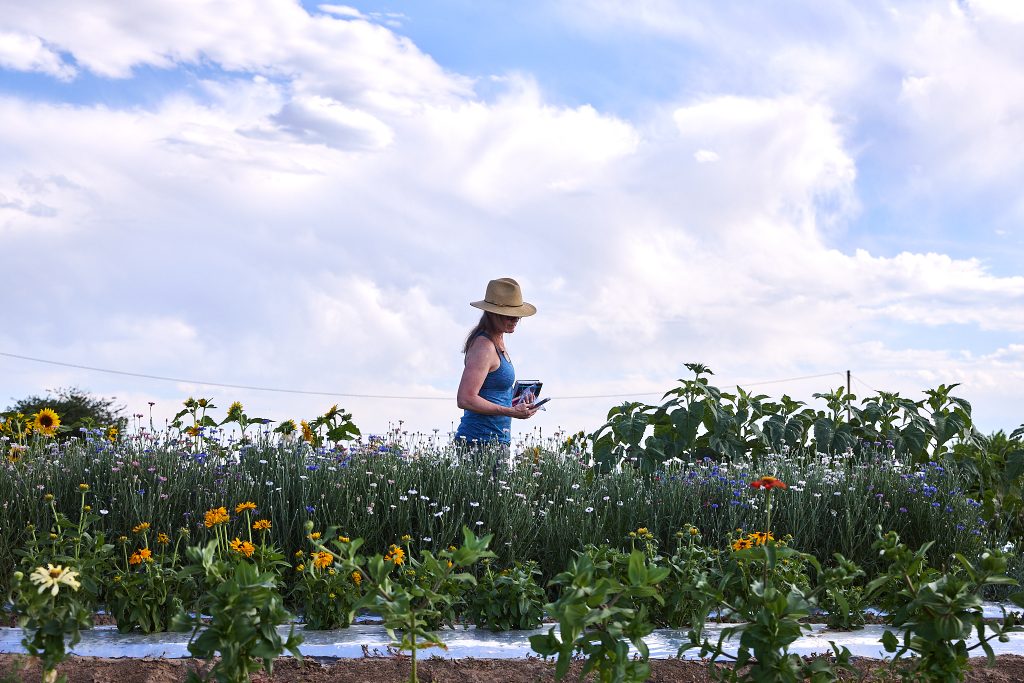
Over the last two years, Epperson has worked with farms across Colorado’s eastern plains. Berry Patch Farms, Red Daisy Farm, Flying B Bar Ranch, LazyB Acres Alpacas and Sakata Farms were all stops on her circuit to understand her own farming heritage and capture the essence of agriculture in the Mountain West.
At each stop, Epperson collected materials to take on the unique challenge of creating her own pigments for her art. This process is the cornerstone of the Dust to Apples project.
“I harvested all kinds of material that I turned into pigments, and then I use those pigments in a variety of ways,” Epperson shared. These materials include rust from old farm machinery, prickly pear fruits, ashes and even dirt.
Identifying materials that would turn into the vibrant pigments she uses in her paintings took a lot of trial and error as well as collaborative effort.
“The ink world is connected to the dye world, so I went to a lot of those resources,” she said.
Learning what plants created what shades and what additives could alter the outcomes gave her a strong foundation to begin her own investigation into the colors of the plains.
Epperson would visit with the farmers at each of her stops and get their opinions on what she could find on their land that might become an interesting pigment.
“It was just sort of hunting for color.”
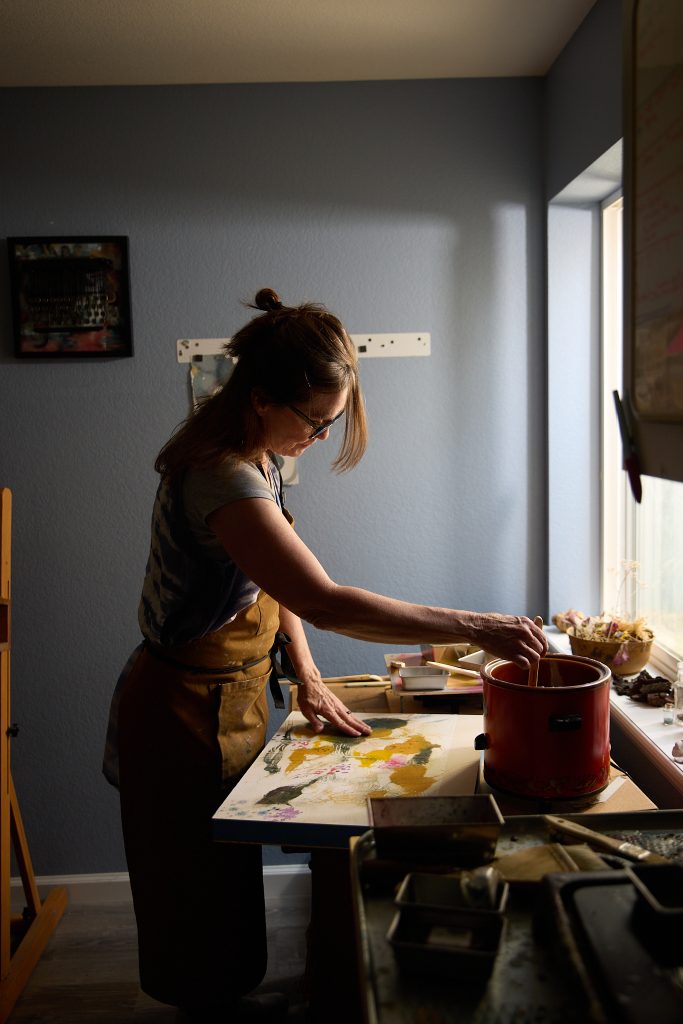
She explained that converting the materials to ink is relatively straightforward. After collecting her starting materials, she simply adds water and heat. After steeping the materials and straining off the initial matter, the mixture eventually cooks down into the intense hues she combines with wax to form her artistic medium.
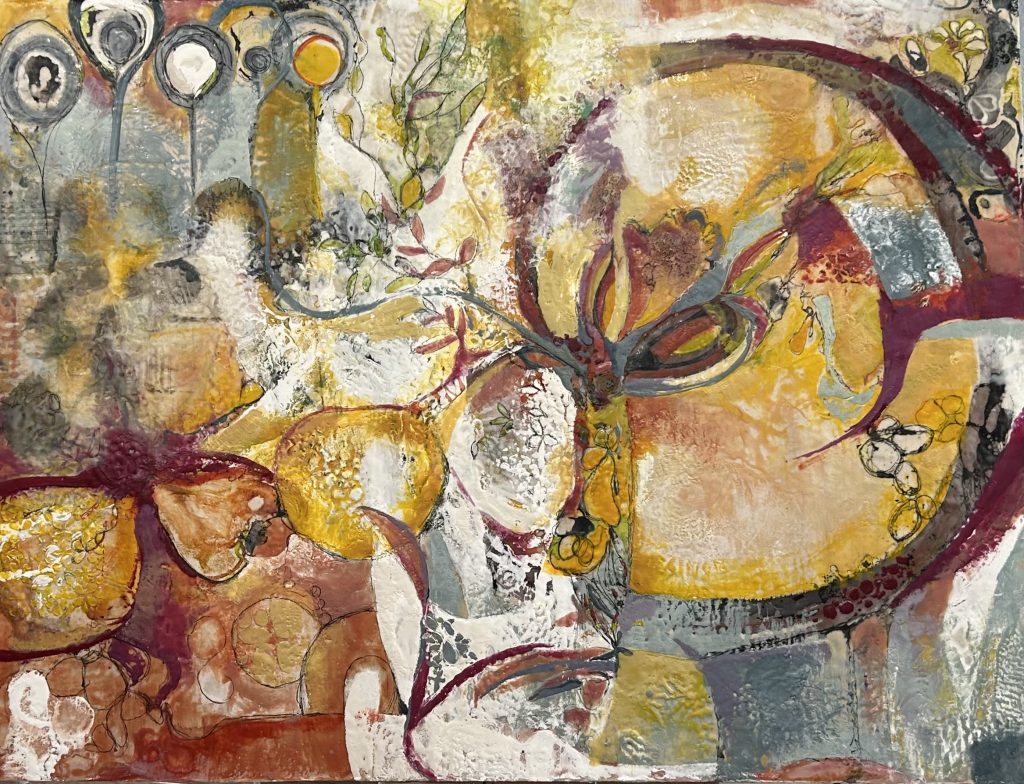
For her Dust to Apples exhibit, Epperson has used an encaustic painting technique. This intensive process means that she used heat to fuse her pigmented wax to a substrate, rather than brushing oil paint onto a canvas.
She explained that this technique adds an additional layer of depth to the exhibit.
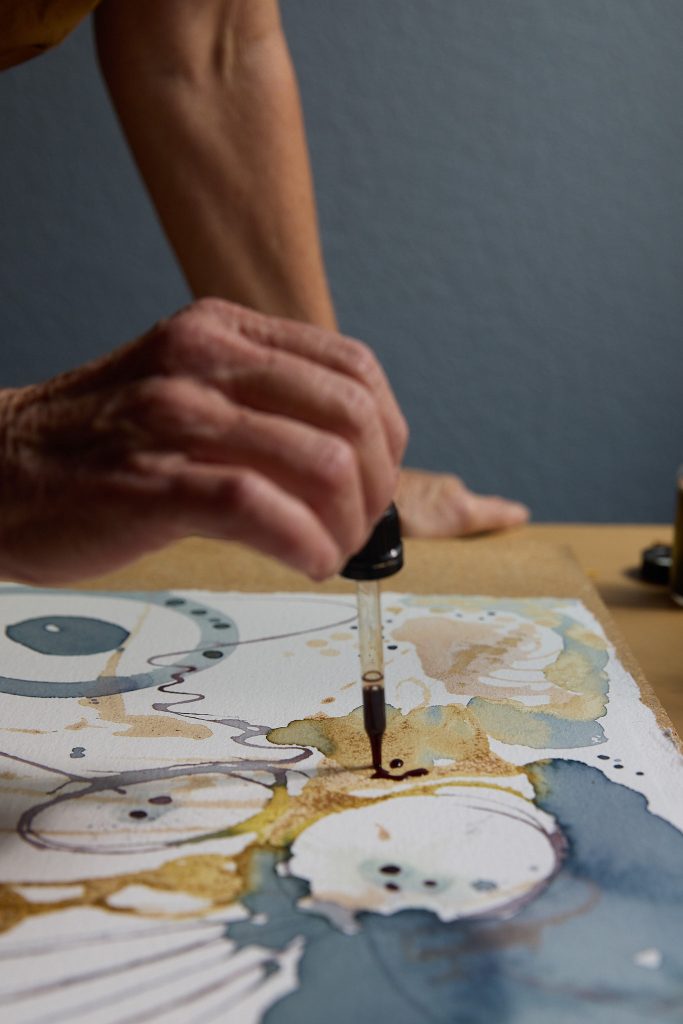
One aspect of this project was creating a painting every week for a stretch of 20 weeks to document seasonal changes that occur in the plants she used to create her pigments.
While this series was documented in watercolors, her encaustic techniques helped Epperson capture the concept of change in a different way for her other features.
One of the unique properties of natural inks compared to manufactured pigments is that they’re sensitive to the environment — exposure to light and oxygen have a pronounced effect.
“They transform with time, and time is part of this story, too,” said Epperson. This medium is part of what has made this endeavor so special to Epperson.
“I embedded some of those inks and other matter collected from the farms into those paintings, and it’s all sort of an investigation into my own family as well as collectively our general story about how we are becoming much more detached from agriculture through generations,” she shared. “My interest was to go investigate that theory because I think it’s a pretty common story for the Western expansion, but also to investigate how I as an artist can reconnect to the land and re-engage with that conversation.”
This installation investigates each of those elements, as well as the history of the region and Epperson’s own family. It also provided her the opportunity to forge new relationships, something she views as a highlight of the experience. Connecting with agriculturalists (and their animals) across the state has proven to be an invaluable experience for her.
“One of the places I went to was an alpaca farm, and I just fell in love with the little alpacas, especially the babies,” she shared with a laugh. Her travels also took her to her great-grandparents’ homestead in Springfield, now farmed by an entirely different family.
“I had tons of people helping me out. I could never have done it alone,” she said.
One key individual in this process was Jimena Peck, an Argentine photographer currently based in Denver. Through her work focusing on rural communities in Latin American and the Western United States, she caught the eye of the Adams County Cultural Arts Department.
Peck was hired to document Epperson’s creative process from start to finish, offering deeper insights into the rural communities Epperson worked closely with for this exhibit.
Several of Peck’s photos are on display alongside Dust to Apples’ crown jewel: a 10’x8′ triangular sculpture that dominates the lobby of the Taza Gallery and Coffee House within the Adams County Government Center.
The two worked closely together to create a showcase that brings the Western lifestyle to life for a population that’s become vastly disconnected from the agricultural world. Both of their works can be viewed at the Government Center in-person through March 31, or at the featured website https://adamscountyculturalarts.shorthandstories.com/dust-to-apples/#group-section-Alchemy-X8VfSfb8ai.