Fur Ban Petition Advanced to Rulemaking by CPW Commission

FurBan-RFP-030926
The Colorado Parks and Wildlife Commission voted on March 4 to advance a petition to prohibit fur sales. This vote came just after Mark Vieira, CPW Carnivore and Furbearer program manager, presented CPW staff’s recommendations for furbearer management. Despite the recommendations made by the agency’s own biologists and wildlife managers, the professional input from the agency’s attorneys and law enforcement personnel, and the written recommendation by Director Laura Clellan to deny the petition, the commission advanced the petition to rulemaking on a 6-4 vote.
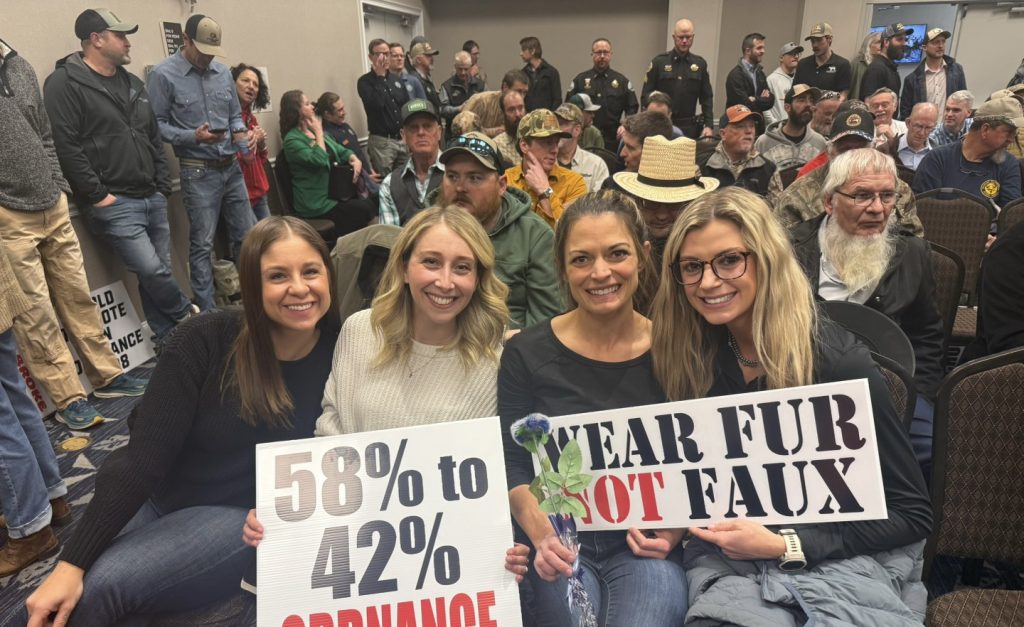
The petition was brought forward by Samantha Miller, a senior carnivore campaign manager with the Center for Biological Diversity, formerly of Cats Aren’t Trophies. In an online meeting on Feb. 25, Miller urged proponents of the petition to attend the CPW Commission meeting in Denver.
“This will probably be a two-meeting process,” Miller said. “What we have been directed from the governor’s office is ‘don’t let us be shown up in Denver. The next meeting will be in Grand Junction, but you guys are in Denver. Don’t let them show you up in Denver.’ Everyone needs to show up.”
A representative for the governor’s office, after being sent Miller’s video, told The Fence Post Magazine:
“While the Governor didn’t have a position on the petition and doesn’t take positions on petitions, and Colorado Parks and Wildlife staff recommended opposing the petition, we are committed to working with stakeholders to craft a rule that supports sportsmen and women while conserving and restoring furbearer species in Colorado. The governor believes that the outdoors are for everyone including hunters and anglers who are a key part of funding and benefiting from the important work of CPW.”
CPW is a type 1 agency, which should absolve it from political interference from the governor’s office.
At the commission meeting, Viera detailed the results of the furbearer stakeholder group, the current management updates, and the staff recommendations to inform the commissioners’ votes on the citizen petitions.
Viera said in 1996, voters prohibited bodytrap and foot hold traps and that resulted in a significant reduction in harvest and a functional limit on fur harvest in the state. He compared it to pond fishing with handlines and prohibiting anglers to use a rod or poles.
Viera also offered the 2024-25 furbearer harvest estimates including beaver take on both private and public lands. Since 2021, sportsmen must have a Furbearer Harvest Permit or Furbearer License for take and those numbers inform the harvest estimates. Viera said marten harvest, for example, prior to 2021, was estimated between 400 and just over 2,400 marten. After the harvest permit and licenses began being used, the harvest numbers are significantly more precise.
RECOMMENDATIONS
Viera detailed the recommendations from the stakeholder group consisting of agriculture producers, sportsmen, animal welfare organizations and wildlife conservation advocates. He said wildlife conservation advocates include non-consumptive stakeholders and should also include hunters and trappers whose license fees and excise tax money, advocacy, and on the ground management contributions all support CPW’s furbearer management. There are seven recommendations for changes to the current furbearer management program in the 87-page report developed over months of stakeholder discussion. Recommendations surrounding education include expanding hunter, trapper, and general public education regarding furbearers, the development of a coyote friendly communities program, and to reconvene the stakeholder group. He said the coyote friendly community recommendation is met through the work of nongovernmental organizations or NGOs and CPW will encourage it to continue but not recreate it.
Recommendations centered on biological data collection and harvest management include population surveys, mandatory checks, and harvest limits. He said to fill the regulatory gap perceived by some, the agency recommended a daily bag limit for all 17 furbearer species of 15. He said this is unnecessary but does meet some requests by stakeholders concerned by social science.
In all, he said the furbearer harvest program is regulated and highly restricted; statewide harvest for surveyed species is far below the most conservative estimates of allowable harvest; CPW has numerous monitoring, research, and data collection initiatives for furbearers; and the Furbearer Stakeholder Engagement Process recommendations and new draft regulations strengthen program and close perceived regulatory gap.
Commissioner Jay Tuchton said nuisance take under Colorado Department of Agriculture authority granted by Title 35 isn’t collected and may be more significant than assumed. There was opportunity to voluntarily gather the nuisance take under the staff recommendations.
According to a letter from Roberta Sakata, acting commissioner of agriculture, there is a conflict in the petition with the authority granted to agricultural producers under Title 35.
“The petitioned ban also presents a potential conflict with the separate authority given in Title 35, administered by the Colorado Department of Agriculture, to agricultural producers, their
employees, and agents to control depredating animals. See C.R.S. 35-40-101(2)(c). That
provision specifically states that the license requirements of Section 33-6-107(9) shall not apply.
Id. Subject to clarification from the Department of Agriculture, the Division interprets this to
mean that agricultural producers, their employees, and agents do not need a small game license
to transfer, possess, trade, barter, or sell the pelts or hides of these nine mammals, if taken
under this Title 35 authority. We confirm that the CPW staff’s interpretation, as articulated in this footnote, is consistent with the CDA’s own interpretation of Title 35 of the Colorado Revised Statutes. We appreciate the attention paid to aligning the application of these separate authorities.”
The petition seeks to ban the sale, barter, or trade of furs from furbearers except handtied fishing flies, felt hats, and fur for scientific research, education or museum collections. However, under state statute, a landowner or his or her employees may hunt, trap, or take a variety of animals, including furbearers, without securing a license to remedy damage to crops, real or personal property or livestock. That take does not inform CPW’s estimates and are under the authority of CDA and not the rulemaking authority of the commission.
THE OPPOSITION
In a social post, United Houndsmen of Colorado said, “What then transpired during the commissioners’ discussion and vote on the petition was nothing short of an absolute clown show that was painful to watch. These same people that are voting on wildlife laws, did not know the current furbearer regulations, it was obvious they did not listen nor watch CPW’s own furbearer program manager and former biologist give a program update complete with population numbers, harvest numbers, sustainable mortality rates, and a plethora of other pertinent information. Six of the 10 commissioners had one thing on their mind — ramming through their ideological opinion and to hell with science, logic, legality, or the will of the public they supposedly represent. And by a vote of 6-4, they voted to adopt the fur ban petition.”
UHC president Kody Lostroh, said Viera’s presentation was comprehensive and a demonstration of the expertise and quality of CPW staff.
“Yesterday was like watching the A Team, CPW staff, biologists, and wildlife managers give one of the most comprehensive updates and project management review presentations I’ve ever seen,” he said. “And then we got to watch the clown show happen afterwards. Nonsense, chaos, vague motions no one understood, no one knew what they were voting on. It was an embarrassment.”
The commissioners who voted for the petition were Jessica Beaulieu, John Emerick, Jack Murphy, James Tutchton, Eden Vardy (production agriculture representative), and Richard Reading. Lohstroh said it is strange watching the commission depart from their agency.
“They have hundreds of biologists and experts who have done a phenomenal job for a long, long time and we’ve seen a major shift away from trusting the science to wildlife management decisions being made by 10 or 11 appointed officials that have an agenda.”
Dan Gates, executive director of Coloradans for Responsible Wildlife Management, said there was no indication from the science-based wildlife managers that there is any problem with furbearer management in the state. CPW staff recommended denial of the petition, citing a lack of evidence that commercial fur sales are leading to unsustainable harvest levels. They also cited potential enforcement issues with proposed exemptions.
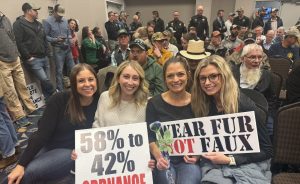
“It’s obvious to me that certain powers that be want certain things to go away, and it’s on us as sportsmen and women and ag producers to make sure that doesn’t happen,” Gates said. “We beat [Prop. 127] by 10-and-a-half points, and Ordinance 308, which is now dead and gone, would have done the same thing that’s being attempted now.”
Gates told Outdoor Life that Miller’s citizen petition was introduced to the CPW Commission in June, just a day before a furbearer working group commenced to provide recommendations on furbearer harvest.
“This is a travesty to the democratic process that guides wildlife management,” Gates said. “And it shows a complete disregard for science-based wildlife management.”