Mexican market and water, Canadian dairy issues at USMCA hearing
Mexico-RFP-021626
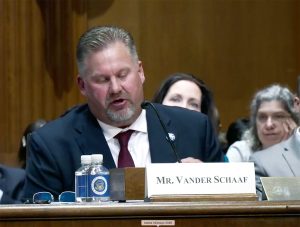
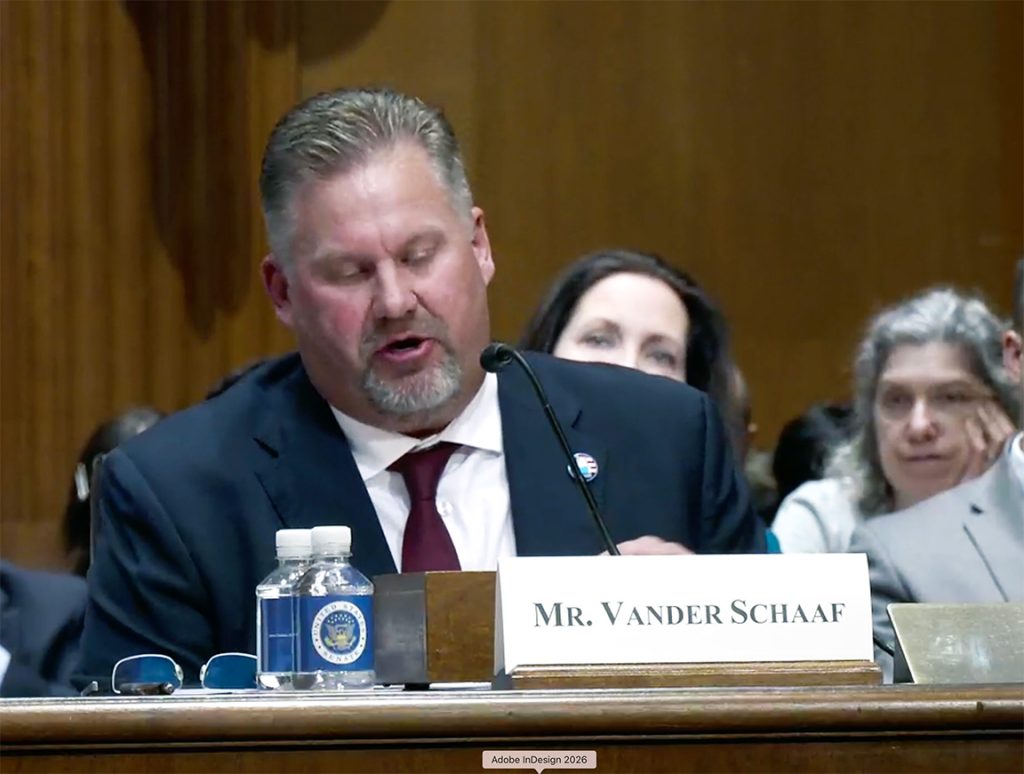
Mexico has become the most important market for U.S. dairy exports while access to the Canadian market remains frustrating, an Idaho dairyman testified Thursday at a Senate Finance Committee hearing on the U.S.-Mexico-Canada Agreement, which is up for renewal this year
Ted Vander Schaaf, an Idaho dairyman and member-owner of the Northwest Dairy Association, the cooperative that owns Darigold, said “USMCA is the cornerstone of U.S. dairy trade, providing stability in two major export markets for U.S. dairy products. Mexico and Canada together purchase nearly half of all U.S. dairy exports, making uninterrupted, fair access to these markets essential to dairy farm income, long-term business planning, and investment decisions across rural America.”
“For U.S. dairy, the continued access USMCA provides to the Mexican market is particularly valuable. Nearly $2.5 billion in U.S. dairy exports end up in Mexico each year as cheese, milk powders, whey proteins or a variety of other high-quality dairy ingredients.
“NAFTA and USMCA have provided the market access necessary to grow the market over tenfold when compared to NAFTA’s implementation in 1994. USMCA built upon that foundation by assuring continued tariff free access to our largest export market and important tools to forestall potential nontariff barriers,” Vander Schaaf said.
“U.S. dairy producers urge Congress and the administration to use the joint review process to address Canada’s shortfalls on its dairy market access and export discipline obligations, preserve strong and reliable access to Mexico, and ensure that USMCA delivers the full measure of intended benefits for American dairy farmers, workers and exporters.”
But Vander Schaaf added, “The review must include a commitment from Canada to administer the dairy TRQs in a manner that maximizes their use, including by extending quota access to a broad set of stakeholders throughout the supply chain and utilizing mechanisms to prompt quota fill throughout the year.”
The Agricultural Coalition for the USMCA, which represents more than 40 ag groups, pointed out that former House Ways and Means Committee Chairman Kevin Brady, R-Texas, who was influential in shaping USMCA during the first Trump administration, testified, “If your country was a successful company, and America is, and you had a business partner that was your largest customer by far, your biggest investor and most important supplier, would you scrap that partnership or strengthen it, especially as China prepares to pounce?”
President Trump has said he does not think the USMCA is important and that he is considering withdrawing from it.
“Today’s hearing made clear that USMCA is vital to the U.S. economy and an important economic engine for rural America,” said Bryan Goodman, a spokesman for the coalition.
“Renewing the agreement builds on the president’s success, and we encourage its extension due to the vast benefits to U.S. agriculture.”
Under questioning from Sen. John Cornyn, R-Texas, Brady said that the review process will offer an opportunity to push Mexico to comply with the 1944 Water Treaty.
Brady said, “This is an opportunity to work with the administration to make sure that their commitments are being kept, that this is being enforced across the board. It’s an opportunity to improve it as well, working with Mexico and Canada in a whole range of areas and making sure the agreement itself is working for Texas workers and manufacturers, farmers, and it is.”
In an opening statement, Senate Finance Committee Chairman Mike Crapo, R-Idaho, said, “Almost exactly six years ago, Congress and the President approved the USMCA. The Senate overwhelmingly endorsed the agreement 89-10, the most bipartisan vote ever taken in the Senate on a free trade agreement.”
“This demonstrates the broad support for trade deals that expand jobs, wealth and growth in the United States,” Crapo said.
“Six years later, we are now on the road to the agreement’s first joint review, where we can assess whether USMCA commitments deliver as intended.
“The answer is largely yes,” he said.
“USMCA propelled the United States to export $60 billion in agricultural goods to Canada and Mexico, which represents nearly one-third of all U.S. agriculture exports,” Crapo said.
Sen. Ron Wyden, D-Ore., said the Trump administration needs to enforce the USMCA.
“Since Trump took office last year, his U.S. trade representative has not begun a single enforcement case under USMCA,” Wyden said.
“It hasn’t even taken a first step. As a direct result, there are real and legitimate concerns about USMCA not living up to its promises. The biggest culprit is a president who is more concerned with settling personal scores than putting American workers and businesses first.
“If the executive branch won’t do its job, then Congress needs to take back its constitutional power over trade. I want Congress to have a bigger say on trade and tariffs, and on holding the executive branch accountable for enforcing trade deals,” Wyden said.