Onion seed thresher
Onion1-RFP-112425
Returned to the family after three-quarters of a century
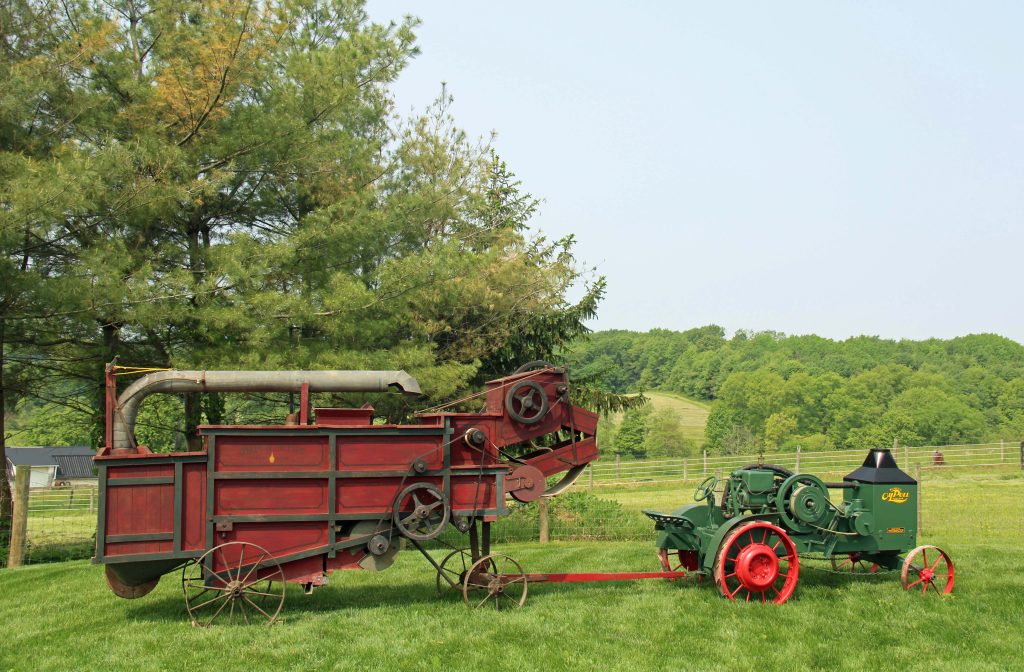
Delbert Miller learned that his wife’s great-grandfather had built a scale model working threshing machine. The well-preserved relic had changed hands several times before Miller was able to bring it back into the family fold. “It’s believed to have been patterned after a traditional grain threshing machine but in half-scale. I was finally able to acquire the thresher along with the scale model Rumely Oil Pull tractor that powered it. I bought both through a local auction in 2005,” Miller said.
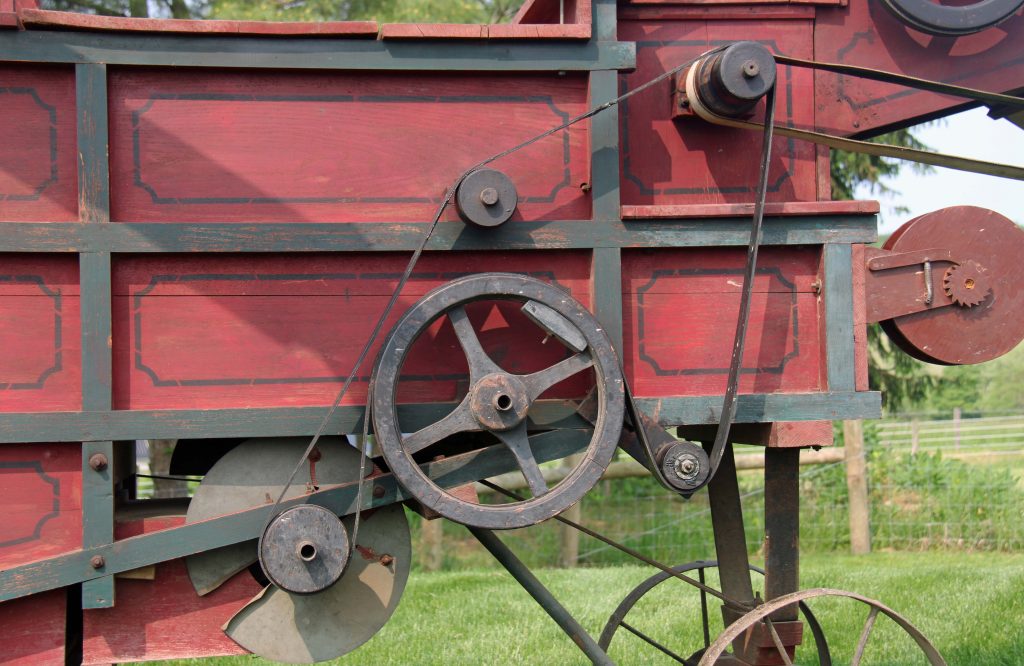
He continued, “Mose Raber who lived in Farmerstown, Ohio, built the threshing machine in 1931 in his woodworking shop. Coming from a wood shop, the thresher is predominantly wood. The pulleys and even the gears are wood. There are grease cups to lubricate the bearings. The wheels are steel, no doubt because it was made by an Amish builder. And rubber ties may have been difficult to locate for the machine in the early 1930s.”
Miller shared further that after Mose Raber built the threshing machine, he threshed seeds for some ladies in Farmerstown. Apparently, they produced onion seeds for their own use and some for resale. The thresher was only used a few years after it was built.
A brief review about growing onions for seed is appropriate before delving into the thresher and Rumely Oil Pull tractor.
COMMERCIAL ONION SEED PRODUCTION
Home gardeners generally use bulb sets or plants for their onion needs. Seeds are rarely, if ever used in the home garden.
As for commercial onion seed production, there are fewer than 1,000 onion farmers in the United States. Combined, California and Oregon produce roughly half of the onions in the United States.
From Oregon, the Jefferson County Seed Growers Association provided the following information about commercial onion seed production.
Onion seed production requires cool winters and hot, dry summers. This central Oregon region is considered ideal weather. Onions are a cool-season biennial, which typically require two growing seasons to complete their lifecycle.
Seeds are planted from late July to September if using the seed-to-seed method. Whereas using the bulb-to-seed method, planting is done in September to October.
In the right environmental conditions, an onion plant will form one or more flower inflorescences, which terminate in an umbel that contains several hundred seeds. The process of forming the inflorescences is called “bolting” and is undesirable for onions grown for bulbs but essential when growing onion seeds. For bolting to occur, the plant must go through a period of chilling (45-55 degrees F) for one month or longer, depending on the variety.
Onion seeds must be pollinated by flying insects, generally honeybees. Consequently, onion seed fields require separation by a minimum of 1½ miles to prevent cross-pollination. Seed maturity is reached by mid-June to August the following year when the seed is harvested.
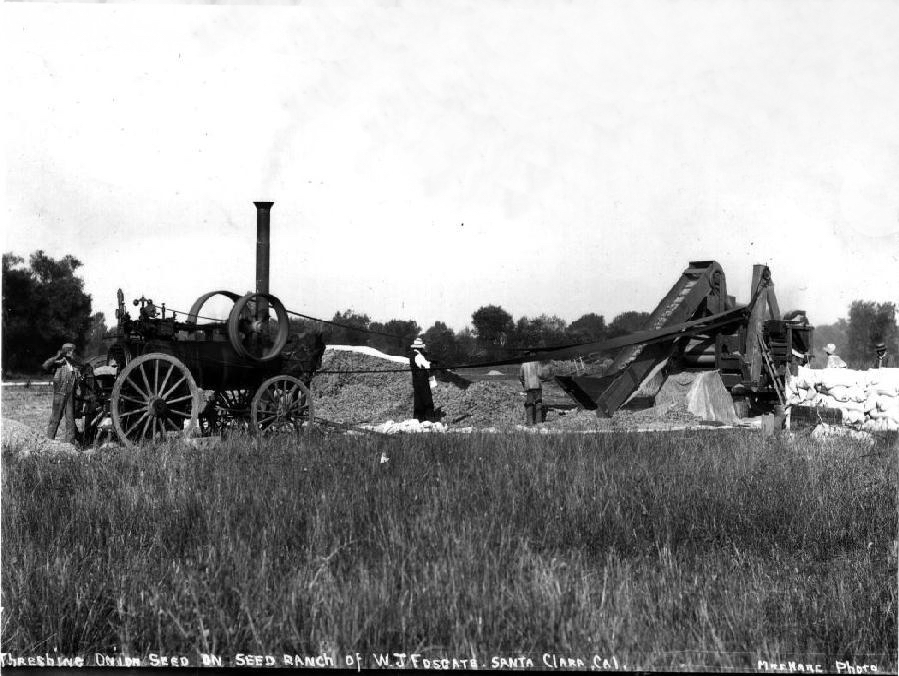
The fluorescence or umbel is usually harvested by hand, with about 6 inches of the stalk remaining. They are transported out of the field and dried on tarps for two to three weeks. After drying, the umbels are thrashed. Mechanization of umbel threshing is imperative to maintain seed quality. Following thrashing, seeds are taken to a seed company for cleaning.
Today’s onion threshing machines are more streamlined and mechanically efficient than the old bulky type the scale model was patterned after. Growers who produce small amounts of seed often use a water bath to separate the seed from the umbel. Onion seed dried to 6.5% moisture and stored under favorable conditions (40-60 degrees F) will last one to two years. Properly dried seed that is stored in a freezer will keep indefinitely.
MECHANICAL EXPERIENCE
Miller grew up in Becks Mills, Ohio, with limited farm experience. “Although I did not grow up on a farm, I helped make hay on my sister’s farm. As a hired lad, I also husked corn by hand for a neighboring farmer,” he said
“Several family members are involved with collecting and restoration of antique tractors and hit-and-miss engines. I enjoyed tinkering with Maytag, hit-and-miss engines, and a nine horsepower Case steam engine. My dad’s collection consists of Huber and Rumely Oil Pull tractors. I helped my son restore a Huber steam engine. Another son brought a John Deere Model B back to life that I helped with,” Miller said.
After completing his Amish education, Miller was a woodworker. That consisted of shop employment for a couple years and then a sawmill for 15 years.
In 1914, Miller and his wife, Miriam established a community store on their home property near Sugarcreek, Ohio. The store is patronized primarily by the Amish community drawn from about a five mile radius. The store offers shoes, household items like kitchen ware, laundry soap, and limited groceries, including bulk foods.
SCALE MODEL THRESHER
Miller readily admits to limited experience working around a threshing machine. “I don’t have any background experience with grain threshers. For demonstration purposes at the annual Doughty Valley Steam Days near Charm, Ohio, I provided a steam engine to power a threshing machine. Those with experience operated the threshing machine, however,” Miller said.
When Delbert learned about the onion threshing machine and Rumely tractor being offered through a local auction, he seized the opportunity. “After Mose Raber built the thresher, it was used for a few years. It then changed ownership several times outside the family. The cost for the thresher and tractor through the auction was $5,000. It was a reasonable price to get it back into the family,” he said.
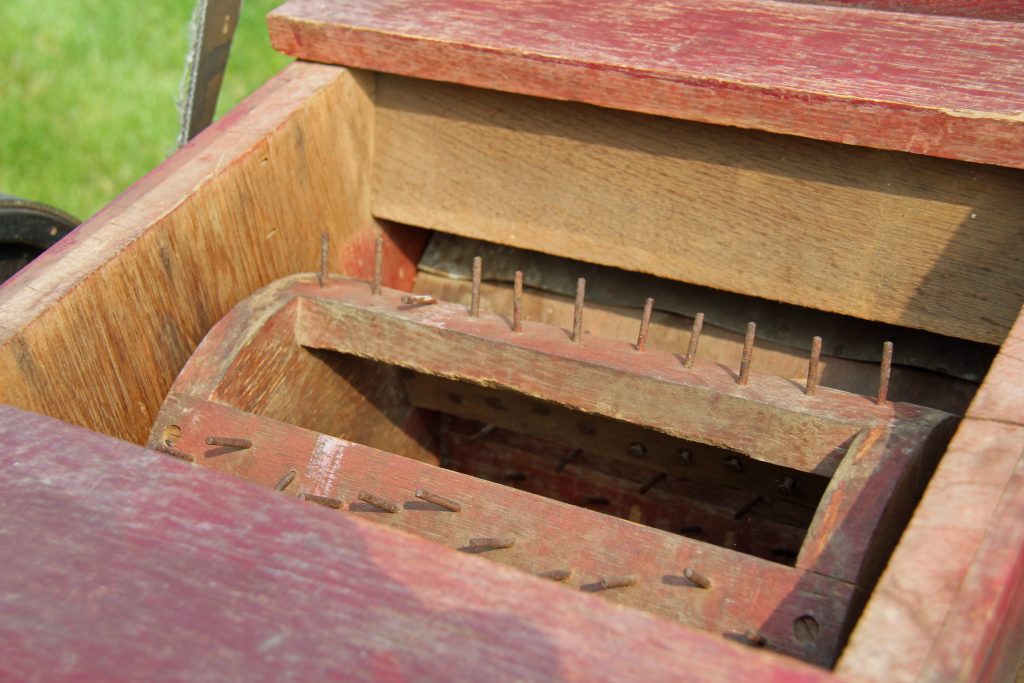
The thresher was well-maintained, consequently no restoration has been required. “The 12 x 21 thresher has good detail considering its all wood. There’s a main reel for the drive belt. The infeed table is hinged and folds back for transport. And for a couple handy tools, there’s even a wood box with a hinged cover for those,” Miller said.
Miller was anxious to demonstrate the scale-model thresher at the Doughty Valley Steam Days. He followed the basic steps noted above to grow onion seeds. “I planted some onions for seed production,” he said. “At maturity, I cut and hung them to dry. I replanted them the next year. The second year they grew those white puff ball heads or umbels that contained the seeds. I dried those tops and displayed them by the thresher during the Steam Days event to show people what the machine is designed to thresh.”
SCALE-MODEL RUMELY
The scale-model Rumely tractor was built by David and Daniel Raber in 1976. David was the son of Mose Raber who built the thresher. It is powered by a one-and-a-half horse International hit-n-miss engine. They bought the onion thresher through an auction prior to the tractor being built.
“When I bought the tractor, it was in running condition. It needed a facelift, however. I cleaned it up, repainted, and added new decals. Without regular operation, it’s not running as it should. With a little time, I hope to have it running at its fullest potential,” Miller said.
“Since I’ve been surrounded by family members with farm-related collectables, I caught the collector bug. I’ve gathered a few items, some of which have been restored. It’s become an enjoyable hobby, especially since agriculture history is being preserved. Hopefully, I’ll find time to do more in the future,” Miller said.
For those desiring more information about Delbert Miller’s onion seed thresher, he welcomes your contact at VM phone: (330) 852-0705 or email: millersfootwear@ibyfax.com.
Editor’s Note: Hendricks of Mansfield, Ohio, covers a vast array of subjects relating to agriculture. Email Hendricks at fwhendricks@gmail.com.