Rabobank: There’s an oversupply of everything
Oversupply-RFP-031626
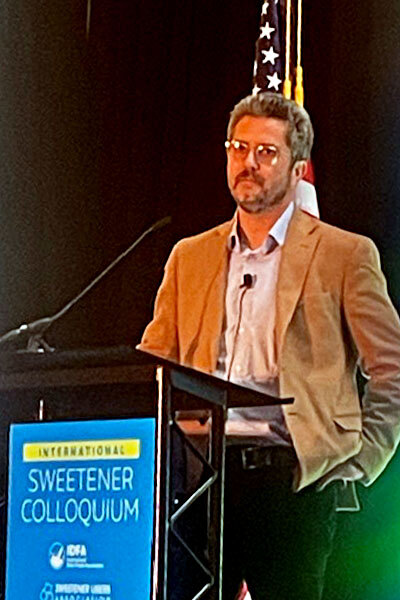
ORLANDO, Fla. — Commodity production around the world is so prolific that there’s an “oversupply just about everywhere,” Owen Wagner, a Rabobank senior grain and oilseed analyst focused on North American markets, said here last month at the International Sweetener Colloquium, a meeting sponsored by the Sweetener Users Association.
Speaking to a room full of soda and candy company executives on Feb. 25, Wagner said the current situation is “to the advantage of the people in this room” but not to farmers.
“There is no end in sight to Brazilian growth,” he said. Argentina, he said, has a record wheat crop, and rains for soybeans are “timely.”
While President Trump’s tariffs on Chinese goods have led the Chinese to buy fewer U.S. soybeans, the real issue in China is “the effects of an ageing, shrinking population.”
“The trade war is impacting agriculture directly and indirectly,” while markets do not see a resolution on trade policy, Wagner said.
In the United States, he added, “there isn’t a recession, but consumer sentiment remains poor and [consumers] don’t want to spend money on anything discretionary.”
Although House Republicans are trying to reach agreement on a bill to allow the sale of E15 nationwide all year, Wagner said Rabobank is looking at the impact “with a slightly skeptical eye” because “the infrastructure is not there” to sell E15 to consumers, and electric vehicles are “the winner” in California.
Due to the cost of fertilizer, farmers are more likely to plant soybeans than corn, he said.
“It is not an exaggeration that without direct payments, farms would go under,” Wagner said. But, he added, “these policies need to be designed carefully” because subsidy payments and crop insurance indemnities “perpetuate oversupply.”
He also noted that since 2008 farm support has no longer been counter cyclical and said, “This leads to inflation in land values and the price of equipment.”
“It’s good for people in this room that we are shifting more of the cost of production onto the taxpayer,” he added.
Government support is also keeping land prices up, he said.
“If you are a young farmer, cheaper farmland will help keep you in the game. A 10% reduction in Iowa land costs would reduce Brazil’s advantage,” he added.