Rollins, Pillen tour burned Sandhills

Nebraska Gov. Jim Pillen said recent rains have been welcomed in his home state, though more are still needed. He said the fires — six major blazes in all — that began March 12, sparked by something “electrical” in nature, that burned nearly 875,000 acres in the Sandhills were absolutely humbling.
“But yet in the same breath, it’s like there was divine province in it,” he said. “The Morrill Fire that burned almost 800,000 acres with a perimeter of 399 miles, which is kind of hard to conceive. That fire is on very fragile soil so the divine province of it was that it was so fast. It moved 70 miles in 12 hours, and the fire moved so fast, where windmills are the farm and ranches are in recessed areas and it burned out where the land went down.”
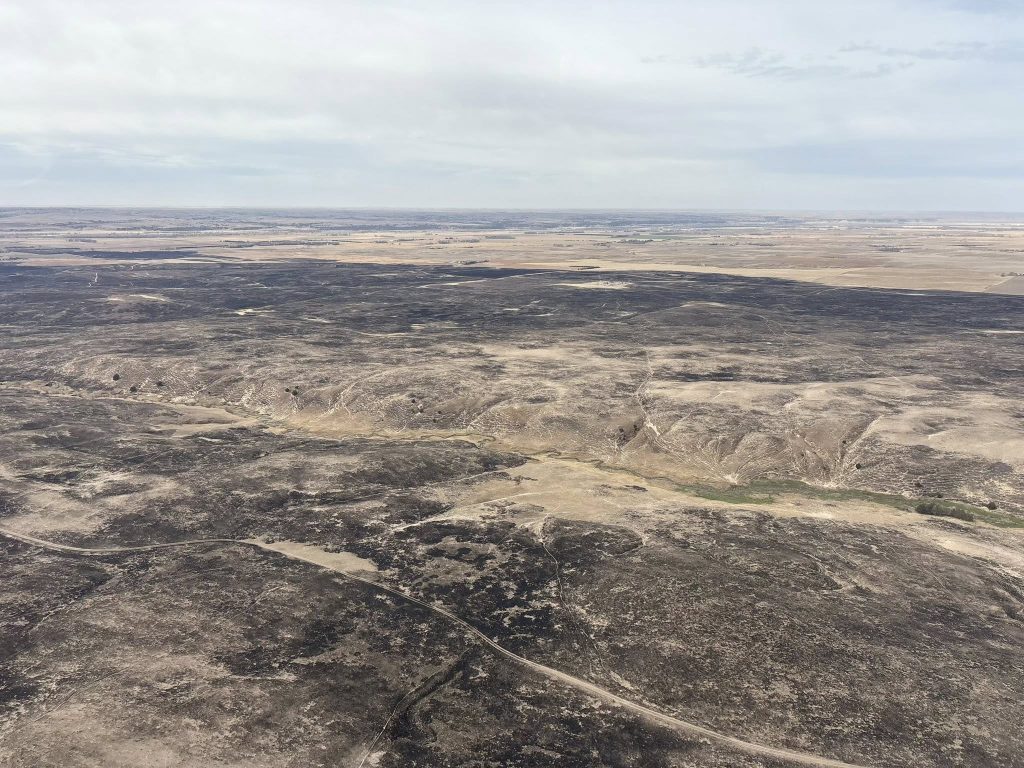
Pillen said there was virtually no loss of livestock, due in part to producers having them gathered near headquarters during calving season. Hay losses were also minimal as were structure losses.
“The tough part is it’s just black and black and black as far as the eye can see,” he said. “That is really daunting.”
AG SECRETARY TOURS
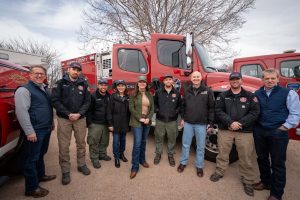
Pillen was joined for a tour of the area by Secretary of Agriculture Brooke Rollins and the fragility of the land was illustrated by the black areas replaced with blown sand.
Rollins said the USDA will look for ways to help ranchers and producers in the aftermath, including reducing regulatory burdens and deploying available federal programs where needed.
“We are going to be looking at every single opportunity to deregulate, to get the government off the back of these ranchers, to step in where it is needed,” Rollins said.

Rollins and Pillen were also joined by Nebraska Republican Sens. Deb Fischer, Pete Ricketts and Third District Rep. Adrian Smith.
“If we’re not able to do something immediately for these cattlemen, they will have to find new land in a different part of the state, or perhaps in a different state, in order to keep their herds growing and moving, and that is not what we want,” Rollins said. “We want to preserve this part of Nebraska with everything we can, with the generational ranches and cattlemen and women that are on it.”
He said most producers have hay for the short term but are facing pasture losses. He said Nebraska is working with the U.S. Department of Agriculture to speed up results from various farm programs.
“We have 70,000 center pivots in the state because of our aquifer, the largest, most sustainable aquifer in the Western Hemisphere,” he said. “There are some that are planting cover crops as we speak and then will be able to do a couple three crops under the pivot and keep the mama cows here and create forages instead of corn.”
CRP ACRES
There are also about 2.5 million acres in the Conservation Reserve Program and he said they’re working with the Farm Service Agency to “cut the red tape and get the bureaucracy out of the way” to allow CRP grazing.
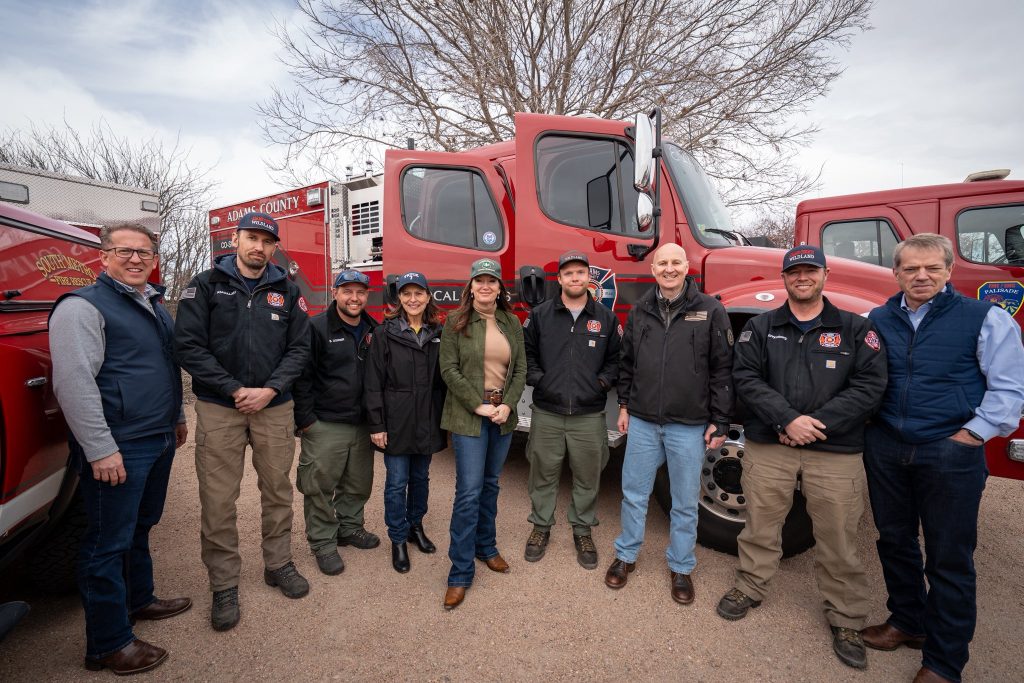
Pillen said state borders haven’t mattered when it comes to disaster response and that’s evident by the convoys of trucks delivering fencing supplies and other donations. He said the influx of volunteer firefighters who helped fight the flames were all vitally important.
“That has been extraordinarily emotional for me when I look our volunteer firefighters in the eye and see the exhaustion but the never give up attitude in what they do for their neighbors,” he said. “They’re the real heroes in this whole deal. We had firefighters from all over the state and we’re also proud of our National Guard. The darkest days brought the best of everybody out.”