Sugar growers give Shontel Brown, Stephen Vaden standing ovations
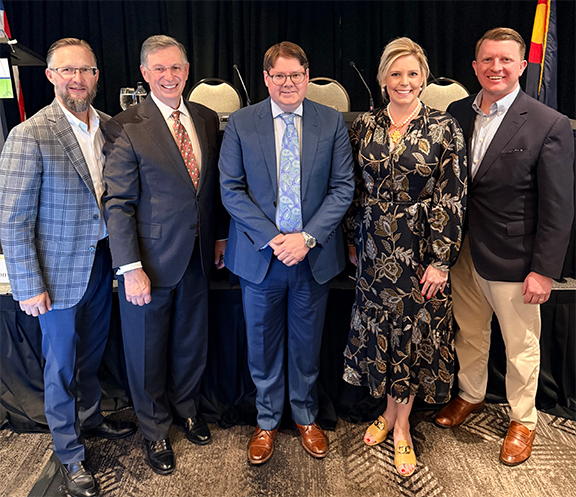
Vaden-RFP-081026
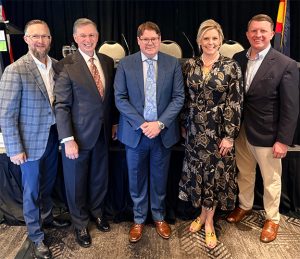
VAIL, Colo. — In a display that demonstrated the policy and political pressures facing American farmers in this election year, beet and cane farmers gathered here on Monday for the International Sweetener Symposium listened to Rep. Shontel Brown, D-Ohio, the vice ranking member of the House Agriculture Committee, and Agriculture Deputy Secretary Stephen Vaden, and gave each a standing ovation.
Brown and Vaden largely agreed on the negative impact of sugar imports on domestic producers, but took opposite positions on H.R. 1, the One Big Beautiful Bill Act that increased farm subsidies by taking budget authority from the Supplemental Nutrition Assistance Program.
H.R. 1 “did a terrible disservice” to SNAP, Brown said. “We shouldn’t rob one title to pay for another.”
Vaden said that the OBBBA was “something that Congress did that was actually good,” and pointed out that it contained many positive elements for sugar, led by higher sugar loan rates through 2031 and updated marketing allotments.
While farmers often give standing ovations to speakers at conferences, the standing ovation for Brown was unexpected because she represents Cleveland and was introducing herself to the growers as a candidate to become the top Democrat on the agriculture committee — and from her standpoint, hopefully chair — in the next Congress.
Brown is in line to lead Democrats on House Agriculture because Rep. Angie Craig, D-Minn., the ranking member on the committee, is a candidate for the Democratic nomination for the Senate in Minnesota. Brown would be the first Black woman to hold the position and her urban district makes her an unusual candidate for it. She has been making a series of speeches to agriculture groups to assure them of the seriousness of her approach to agriculture.
Brown told the sugar growers she has been meeting with farmers around the country, including beet growers in Michigan and cane growers in the South. She also noted that a sugar refinery in her district had closed within the past year.
“The global sugar market is one of the most distorted in the world,” she said. “We are at a tipping point. Over quota foreign sugar continues to flood our markets.”
Brown noted that she was one of 112 members of Congress who sent a letter to Trade Representative Jamieson Greer urging him to investigate foreign sugar production.
“Trade policy needs to be centered on American workers and production,” she said.
Trade policy should make it possible for industries in Cleveland to compete and the same should be true for sugar, Brown said, noting that China, Brazil and other countries have labor policies that “put American producers in an unfair position.”
Brown somewhat subtly criticized the Republicans in Congress and President Trump.
Farmers need “stable” policy, she said. There is a difference between smart trade policy and the “chaos” of the Trump administration’s use of tariffs, she said.
Brown said she hopes that Congress passes a farm bill this year.
But she also looked toward the future when the Democrats may be in the majority. If she becomes chair, Brown said, she hopes to bring the committee together on a bipartisan basis that reflects both regional and urban-rural unity.
“Whether in the north or the south the stories are remarkably similar,” she said, with generations of families and communities whose fate rises and fall with a crop. She noted that many issues facing urban and rural Americans are the same, pointing to the need for high-speed broadband as an example. She also cited cryptocurrency as an urban-rural issue, a policy over which House Agriculture has jurisdiction because it oversees the Commodity Futures Trading Commission.
She said she wants to make sure “we pass a farm bill that is comprehensive, durable and bipartisan.”
The coalition of farm, conservation and nutrition advocates that she wants to rebuild needs a full farm bill, not a one-year extension, she said. Noting that she grew up on the Supplemental Nutrition Assistance Program and that one in five households in her district are on SNAP, Brown said she wants policy that goes “from the farm gate to the farm plate.”
She said Craig had introduced a farm bill, and that she was proud to support it.
But she also noted that Rep. Austin Scott, R-Ga., who may become the top Republican on the Agriculture Committee in the next Congress, had been helpful to her.
When Craig chose her as vice ranking member, Scott told her that people must be beating down her door to talk to her.
But Brown told him that people didn’t seem so interested in talking to the “Black girl from Cleveland,” and that he encouraged people to seek her out.
If Brown becomes chair, her agenda would also include oversight of the Trump administration, which she said is cutting grants, canceling contracts, delivering reports that are tardy and incomplete, and cutting resources that farmers need.
After the members stood up as she left the stage, Brown told The Hagstrom Report she was both “honored and surprised,” but that she would continue her education by visiting Colorado State University to learn more about the sugar industry in the state.
Vaden, the luncheon speaker at the symposium, took many of the same themes as Brown, but said the Trump administration has done much more for agriculture and sugar growers in particular than the Democrats.
Vaden said the Trump administration’s concern is “What is the best policy result for the American farmer? We are the United States Department of Agriculture, not the global department of agriculture.”
Calling the One Big Beautiful Bill Act “something that Congress did that was actually good,” he said it contained many positive elements for sugar, led by higher sugar loan rates through 2031 and updated marketing allotments.
Vaden noted that the Trump administration has implemented the OBBBA and also distributed disaster aid to sugar growers. That includes $150 million in trade-related aid that USDA “had to fight for” because there were people “who did not want sugar to get any money.”
As of Monday, Vaden said, USDA had finalized agreements with all the sugar co-ops to deliver that aid. He also noted an additional $90 million in weather-related disaster aid has been provided.
Trade policy has not always favored sugar growers, but the Trump administration is determined to favor domestic production, he said.
Vaden said the Trump administration is giving minimal quotas to foreign sugar producers under current trade agreements and is using tariff policy to discourage imports.
“There is a commitment under this administration to put the finger on the scale for the American farmer,” Vaden said. He added that he is working with other cabinet officials, particularly in the Office of the U.S. Trade Representative and the Commerce Department “to support American sugar.”
Referring to statements by a panel of economists at the conference, Vaden said sugar faces “classic dumping” — selling goods to a foreign country at less than the cost of production.
“This is the classic situation why trade remedies exist,” he said.
He also said the administration is taking action on imported molasses from which sugar is extracted. The situation is the same as the vans imported with low tariffs because they were intended as vehicles for people. But the vehicles had “crappy” seats that were removed so they could be sold as work vans for plumbers and others. Ford got away with this policy for years, but later had to pay millions in fines for not paying proper tariffs, he said.
The new Dietary Guidelines for Americans say people should “eat real food,” and that means eating food grown by American farmers in the United States, Vaden said. There are fewer food safety problems if the food supply is domestic, he added.
But Vaden, who was present for the earlier morning sessions, was clearly annoyed at Brown’s comments on the Trump administration.
On Brown’s point that accountability is needed, Vaden asked the growers if they did not find it “odd” that the Trump administration had to distribute the payments for disaster aid from events in 2023 and 2024. The Biden administration, he said, was more interested in the race and gender of farmers than in weather disasters.
Brown did not discuss USDA’s reorganization or its plans to move more than half the 2,600 employees in the Washington, D.C., metropolitan area to hubs around the country. But Vaden said that USDA has three modern buildings in Fort Collins, Colo., where it intends to place employees while it closes the South Building in Washington that has $1.6 billion in deferred maintenance.
Although employees have left USDA during the Trump administration, Vaden maintained that the Biden administration planned to lay off 7,000 Forest Service employees and that the Trump administration had not followed through on that plan.
Vaden also asked the growers if their labor costs had gone down under the Biden administration, said labor costs had gone up, and said the Trump administration had taken action to reduce the cost of imported labor under the H-2A program.
Vaden praised the sugar growers for defending not only the sugar industry but for standing up for the chemicals they need for production and for the manufacturing jobs associated with it.
Jobs went away due to bad policy and they need to be restored or not lost, he said.
“You have punched above your weight” in defending chemicals, he said.
Praising President Trump for suspending duties on Moroccan phosphate fertilizer and noting that he has recently been “quiet” about competition policy, Vaden said that companies should not take “comfort” from that because he has been meeting with the Justice Department and the Federal Trade Commission about taking formal action against companies that do not provide products at appropriate prices to American farmers.
He also said he is opposed to the government aiding the conversion of farm land to nonagricultural purposes. In an interview, Vaden said he does not oppose solar energy or data centers but believes the federal or state governments should not weigh in on the decisions of private property owners on what to do with their land.