The fight for the heart of Wyoming: Why the ‘Wind Wall’ demands a cumulative review
The fight for the heart of Wyoming: Why the Wind Wall demands a cumulative review
Situated in the southeastern corner of Wyoming, the Laramie Mountain Range is far more than a landmark. It has long been a living corridor of ranching heritage, wildlife migration, open space and Wyoming identity. Stretching 125 miles from the Colorado border to the North Platte River, it has shaped generations of families from Tie Siding to Horse Creek to Chugwater. These communities have stewarded the land with a continuity that cannot be recreated once disrupted. Today, this entire corridor faces the possibility of becoming one of the largest industrial zones in Wyoming history — without any government body evaluating the full impact.
Wind developers often frame their projects as isolated proposals with limited effects. But the reality is very different.
In Albany County lies the 26,000-acre Rail Tie Project. In western Laramie County, the proposed Laramie Range Industrial Wind Project would span roughly 56,000 acres near Horse Creek. Across the county line, the proposed Chugwater Energy Project covers about 53,000 acres in Platte County. On paper, each developer promises “minimal impacts.” In practice, they connect directly, forming an unbroken industrial zone — what many now call the “Wind Wall.”
Stretching nearly 100 miles, these developments would create a continuous landscape of 600- to 700-foot turbines, transmission lines, substations, access roads and blinking lights. This is not a collection of discrete projects. It is a single, corridor-wide transformation, approved one piece at a time without any cumulative review of impacts on wildlife, ranching, emergency services, property values or Wyoming’s scenic character.
Our regulatory system, designed decades ago, is not equipped to handle industrial wind development at this scale. Evaluating each project independently, while ignoring its neighbors, creates blind spots large enough to threaten entire communities. Wyoming deserves better than a piecemeal process that treats enormous, interconnected projects as if they exist in isolation.
This is not an abstract debate. The consequences are immediate and profound.
Wildlife corridors collapse when turbine fields overlap across county lines. Pronghorn, elk and raptors cannot safely navigate a continuous array of spinning blades, service roads and fencing. Habitat fragmentation doesn’t stop at jurisdictional boundaries, and neither should impact analysis.
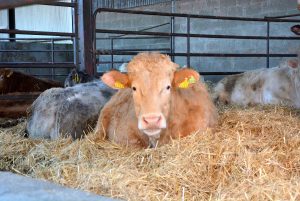
Ranching operations, many multigenerational, are disrupted by haul routes, dust, fire risks, and permanent infrastructure that alters how livestock are grazed and moved. For operations already navigating unpredictable weather and thin margins, added industrial pressure can be devastating.
Rural residents face the prospect of round-the-clock industrialization: towering turbines, blinking lights, substation noise, and years of heavy equipment during construction. None of these effects are fully evaluated when projects are reviewed separately, yet they become unavoidable when developments physically overlap.
We respect ConnectGen’s right to appeal the Laramie County Commissioners’ decision to reject their site plan permit. That vote followed months of testimony, data review, and careful deliberation. The commissioners concluded the project did not meet the standards needed to protect residents, infrastructure, and the rural character of the Laramie Range.
Their decision acknowledged a truth that cannot be mitigated: industrial development on this scale would permanently alter the agricultural landscape of Horse Creek and the broader corridor. Local residents offered informed, fact-based concerns grounded in lived experience. That civic engagement deserves respect, not dismissal, and must remain central as the appeal moves forward. We remain confident in the county’s decision and committed to constructive participation throughout the process.
Renewable energy has an important role in Wyoming’s future. The issue here is responsible siting. Wyoming should not be expected to sacrifice a 100-mile cultural and ecological corridor without receiving a cumulative review. No private company, regardless of where it is headquartered, should be allowed to transform entire landscapes without accounting for the full consequences. Industrial wind can be part of a balanced strategy, but not at the expense of Wyoming’s identity, wildlife, and heritage.
Wyoming needs one simple reform: a statewide cumulative-impact review before any additional large-scale industrial wind projects are approved. If the state will not require it, the people must. If regulators will not demand it, local communities must. If developers will not acknowledge it, courts and legislators must.
Wyoming’s landscapes are not disposable. Our heritage is not negotiable. And this corridor, from Tie Siding to Horse Creek to Chugwater, is worth fighting for. The battle ahead is not simply about turbines. It is about stewardship, scale, and the future of Wyoming’s open spaces.
And it is a fight we intend to win.
Volk is a fourth-generation Wyoming realtor with #1 Properties and has been a licensed real estate professional in Cheyenne for 30 years. She is married to Todd Dereemer. The Dereemers are one of Horse Creek’s founding ranching families, dating back 150 years. For six generations, the Dereemer Ranch has emphasized conservation, sustainable grazing and wildlife habitat protection. She serves on numerous boards, such as Visit Cheyenne, Cheyenne Regional Air Focus Team and Cheyenne Downtown Development Authority. She can be reached at (307) 630-5263 or WendyVolk@CheyenneHomes.com.