US-Argentine trade agreement allows increased beef exports to US
Argentina-RFP-021626
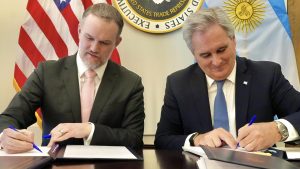
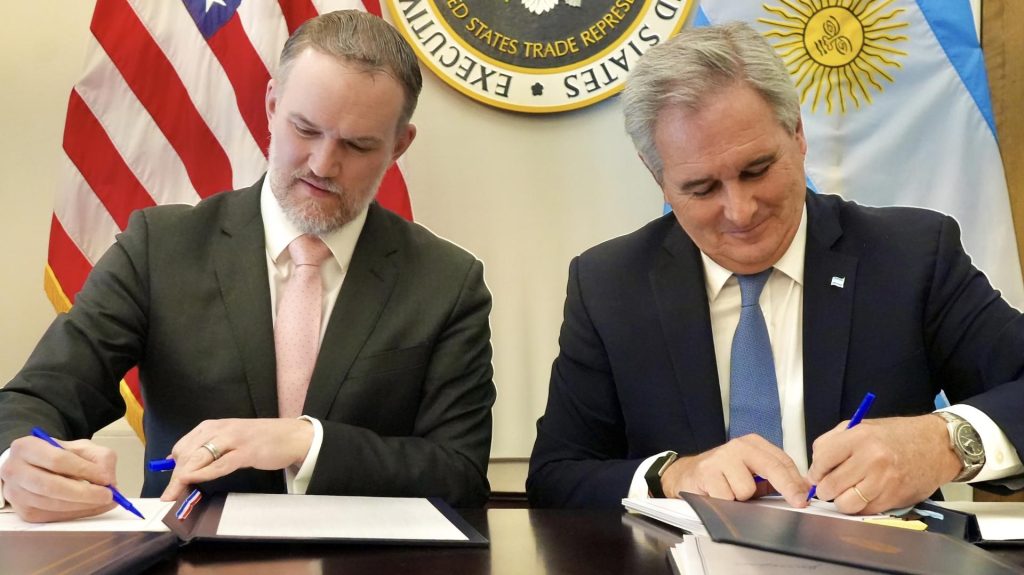
The Trump administration on Friday announced a trade agreement with Argentina that will allow Argentina to increase its beef exports to the United States.
The agreement allows President Trump and Argentine President Javier Milei to forge closer ties while also possibly reducing beef prices for U.S. consumers, analysts said.
The U.S. Cattlemen’s Association said in a news release, “According to details shared with industry stakeholders, the agreement establishes a reciprocal 80,000 metric ton quota for each country in 2026, allocated on a quarterly basis.”
“Argentina will be allowed to export up to 80,000 metric tons of beef to the United States in 2026 allocated as 20,000 metric tons per quarter,” USCA said. “This addition will not allow for rollover of unused quarterly volumes and is limited to lean beef trimmings only. The United States will be able to export up to 80,000 metric tons of beef to Argentina in 2026 under the same quarterly volume parameters, without a lean‑trim limitation on U.S. product.
“The new 80,000 metric ton quota is in addition to Argentina’s existing 20,000 metric ton tariff‑rate quota, which is not restricted to lean trimmings. As a result, Argentina could export up to 100,000 metric tons of beef to the United States in 2026 under all available quotas,” the group said.
U.S. Cattlemen’s Association President Justin Tupper said, “From the very beginning, USCA has been clear: a safe, secure, and resilient beef supply starts with a strong domestic industry. We must continue to focus on how we can rebuild our U.S. cattle herd.”
“Any trade agreement must be structured in a way that does not undermine U.S. cattle producers’ ability to compete and does not compromise the integrity of our supply,” Tupper said. “We continue to stress the need for tightened rules of origin and product limitations built into this agreement.”
“We are still deeply concerned about the origin and scale of these imports. Argentina is currently facing very tight cattle supplies, same as the U.S. A roughly 400% increase in access for Argentine product must be treated as a one‑time, measure of exception — not a template for routine quota expansions.
“USCA strongly urges the administration not to normalize this level of increase for Argentina or any other supplier, particularly when both exporting and importing countries are navigating constrained cattle inventories and heightened volatility. U.S. cattle producers — and U.S. consumers — deserve to know where their beef comes from. Trade policy and labeling policy must move together, not in opposite directions.
“While USCA remains opposed to the increase of imports from Argentina, we
appreciate the reciprocal nature of this agreement — U.S. beef producers will have equal access to the Argentine market, and the imports into the U.S. are limited to lean trimmings, not all beef products.
“However, while this is a reciprocal agreement, we must still measure against the economics and pen to paper realities U.S. producers are facing.”
“USCA stresses the need for rigorous inspection and transparent reporting as volumes increase.
“Transparency will be key,” Tupper added. “As imports from Argentina and other
countries increase, a close and continuous focus on inspection, disease status, and product integrity is non‑negotiable. The data must be clear and accessible to producers, processors, and policymakers alike. USCA will be watching this closely and engaging with USDA and USTR to ensure that U.S. consumers and cattle producers are protected.”
Sen. Deb Fischer, R-Neb., a member of the Senate Agriculture Committee, said, “Nebraska produces the world’s best beef. Instead of imports that sideline American ranchers, we should be focused on solutions that cut red tape, lower production costs, and support growing our cattle herd.”