Circana: Costs, then GLP-1 drugs, change food purchases
Consumers-RFP-030926
ORLANDO, Fla. — Consumers have changed their food buying habits because they are feeling economically stressed, and also because they are watching how much and what they eat by taking GLP-1 weight loss drugs and focusing on their wellness, a key market analyst said here last week at the International Sweetener Colloquium.
Executives from soda, candy companies and other makers of sweetener-containing products are worried about the impact of GLP-1 drugs that suppress appetites, but Carol Loeys of Circana, a market research firm, said that the primary driver in changing buying habits has been concern about costs.
In a presentation made by video due to the weather, Loeys said:
- More than half of consumers — 53% — remain extremely concerned about grocery prices.
- Accumulated retail price growth has outpaced inflation since 2019 and It has changed what consumers are buying.
- Tariff announcements caused a steep decline in consumer confidence, the steepest rate of decline in the shortest time period.
- Low-income consumers have already cut back to optimize price while middle-income consumers are starting to pull back on units.
- Due to artificial intelligence information online, consumers can get to what they want and are well informed, and they “are getting more efficient at pulling back.”
- Price inflation continues in packaged goods, while prices in fresh categories decline, with retail prices for chocolate, candy, beverages, meat, bakery and coffee increasing the most.
- Consumers have also changed their away-from-home consumption habits — eating while they are having “experiences” such as going to the movies as opposed to restaurants.
- Consumers still seek little luxuries as they trade down in discretionary spending.
- Consumers splurge on premium brands for indulgence, wellness and experiential value.
- The combined impact of affordability and wellness priorities pushes average food and beverage pack sizes down.
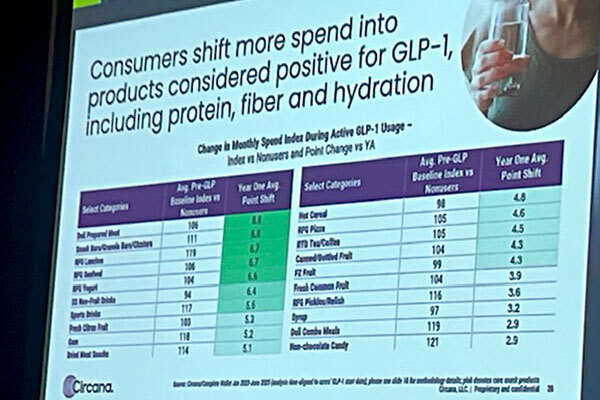
- Individual adults using weight-loss drugs reveal their journeys are about “lifestyle change.”
- Consumers also buy more cosmetics.
- The wellness movement encourages consumption of nuts, higher fiber grains like oats, barley and whole wheat, avocados, olive oil and vegetables while discouraging fried foods, spicy foods and fatty products.
- GLP-1 households now control 24% of food and beverage spending, but by 2030 will be 35%.
- Consumers want to control their sweetness by buying sugar-free products and adding sugar themselves.