Crawfords attend DC Fly-In in Washington
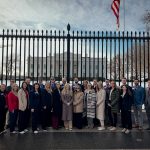
Rich and Alicia Robertson, owners and managers of Crawford Livestock Market in Crawford, Neb., recently had the privilege of attending the DC Fly-In in Washington, D.C. The event is organized by the Livestock Marketing Association, an organization they belong to that represents more than 80 percent of the livestock markets across the United States.
Markets from several states were represented at the Fly-In including Nebraska, Kansas, Texas, Pennsylvania, Oklahoma, Kentucky and Arkansas. Prior to meeting with lawmakers, participants attended meetings to prepare them to speak with the senators and representatives from their respective states about issues important to livestock markets and the agricultural industry.
During their time in Washington, Rich and Alicia attended a birthday dinner for Sen. Deb Fischer, R-Neb., where they had the chance to visit with Sen. Pete Ricketts, R-Neb., Rep. Mike Flood, R-Neb., and Rep. Adrian Smith, R-Neb. The next day on the hill they had meetings with all of those congressmen and women. In addition, they met with Sen. John Thune, R-S.D., Sen. Mike Rounds, R-S.D., Rep. Dusty Johnson, R-S.D., and Rep. Harriet Hageman, R-Wyo.
The Robertsons and a small group including a few other market owners as well as some LMA staff, also had the opportunity to meet with Agriculture Secretary Brooke Rollins. During that conversation they discussed the growing concern surrounding the screwworm and the importance of keeping it out of the United States. They emphasized how devastating an outbreak could be to the livestock industry and rural economies. The discussion also included many of the same key issues they had raised with members of Congress during the Fly-In.
Because Crawford Livestock Market serves producers from Nebraska, Wyoming and South Dakota, Rich and Alicia felt it was especially important to visit with leaders from all three states. Crawford Livestock Market truly operates as a tri-state barn, representing cattle producers from throughout the region.
ECONOMIC IMPACT AND ISSUES
During these meetings they discussed the vital role livestock markets play in both local and national economies. Across the United States, more than $35 billion worth of livestock is sold through livestock markets each year. In addition, a livestock market can stimulate more than $2 million annually in economic activity within the community it serves.
Several key policy issues were also discussed. One of those was the A-PLUS Act, which relates to the Packers and Stockyards Act of 1921. Currently, the law prevents livestock market owners from investing in or owning any part of a meat packing facility. Industry leaders believe livestock markets should not be restricted from participating in local meat processing simply because they operate a livestock market.
They also discussed animal disease traceability and the electronic identification (EID) tag rule related to animal traceability and animal health. The request was that lawmakers continue funding through the Animal and Plant Health Inspection Service within the United States Department of Agriculture to ensure that producers and markets have access to required tags without having to pay for them. Another important point was making sure mandatory EID requirements do not extend into the feeder cattle sector.
Labor reform was another topic addressed, specifically the H-2A visa program. Currently, livestock markets do not qualify under the program because they are not considered seasonal or agricultural production. This makes it difficult for markets to hire immigrant labor, even though livestock markets are a vital part of the agricultural industry.
The final topic discussed was transportation regulations. Specifically, ensuring that Electronic Logging Device requirements placed on over-the-road truck drivers are not reapplied to livestock haulers. Those rules can require drivers hauling live animals to stop and rest, potentially forcing cattle to be unloaded and reloaded, which can create additional stress and risk to the livestock.
Rich and Alicia said the conversations were met with strong interest and encouragement from the senators and representatives they visited with. They returned home both proud and exhausted, but grateful for the opportunity to represent livestock producers and rural communities while advocating for an industry that plays such an important role in agriculture and local economies.
For the Robertsons, the trip was also a reminder of how important livestock markets remain to rural America. Crawford Livestock Market has served the region for decades and continues to be a place where producers from Nebraska, South Dakota and Wyoming come together to market their cattle. The Robertsons said they were honored to share the story of livestock markets and the communities they support, and they remain committed to continuing that work both at home and on behalf of the industry.