Fertilizer panel: No short-term solutions to high prices
Fertilizer-RFP-051826
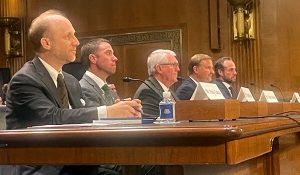
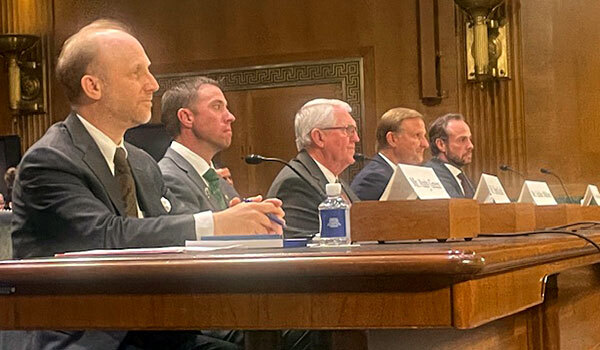
The Senate Agriculture Committee held a hearing to try to come up with “solutions for a reliable and affordable supply of fertilizer,” but neither members of the committee nor a panel of farmers and industry experts proposed any ways to lower fertilizer prices in the short run.
Kentucky Farm Bureau Federation President Eddie Melton said, “Congress should act now on additional financial assistance while long-term measures are put in place.”
In an opening statement, Senate Agriculture Committee Chairman John Boozman, R-Ark., said, “This isn’t a simple problem to address as fertilizer is not a single, uniform input. Nitrogen, phosphate and potassium, commonly referred to as N, P and K, present a complicated picture of global supply chains that have been affected by the war in Ukraine, trade disputes that have resulted in countervailing duties and the recent conflict in the Middle East.”
Boozman praised the Trump administration for its attempts to address the high fertilizer prices by waiving the Jones Act, refocusing the Fertilizer Product Expansion Program and adding phosphate and potash to the critical minerals list.
Several witnesses said farmers need more transparency about fertilizer supply and pricing. Boozman noted after the hearing that the issue of transparency “came up repeatedly” and said he would “work with USDA on getting farmers additional information.”
But Democrats and members of the panel noted that prices have risen, especially since the Trump administration began the war with Iran and the Strait of Hormuz has been closed.
In her opening statement, Sen. Amy Klobuchar, D-Minn., ranking member on the committee, noted that, while fertilizer prices are now “astronomically high,” they were high before the war started. Klobuchar blamed Trump’s tariffs that the Court of International Trade has ruled illegal and the concentrated ownership in the industry. She noted that she has introduced, with Senate Majority Leader John Thune, R-S.D., the Fertilizer Price Transparency Act to create a mandatory price reporting structure at USDA, and, with Sen. Roger Marshall, R-Kan., the Homegrown Fertilizer Act.
Lawmakers repeatedly asked Fertilizer Institute President and CEO Corey Rosenbusch for his views on the countervailing duties on fertilizer from Morocco, but Rosenbusch said his organization has no position on the issue because his members are divided on it.
Rosenbusch also noted that fertilizer flows to the countries that are willing to pay the highest prices and that several countries, including India, buy fertilizer at high prices and then provide it to farmers at low, subsidized prices. China, the largest producer of fertilizer, is now restricting exports, and Russia is too, Rosenbusch said.
Boozman asked Rosenbusch if there should be a government reserve for fertilizer, but Rosenbusch said a reserve would be difficult because fertilizer is hard to store.
Andy Green, who served as the Agriculture Department senior adviser for fair and competitive markets in the Biden administration, said he is optimistic that the Trump administration will take action to improve the supply of fertilizer in the long run. Green praised the administration for continuing the USDA Fertilizer Expansion Program started under the Biden administration and for launching investigations into the fertilizer industry.