Food industry expects MAHA campaign without scientific standards
MAHA-RFP-030226
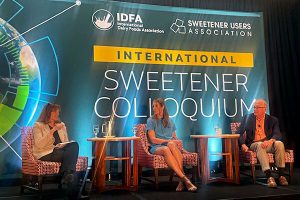
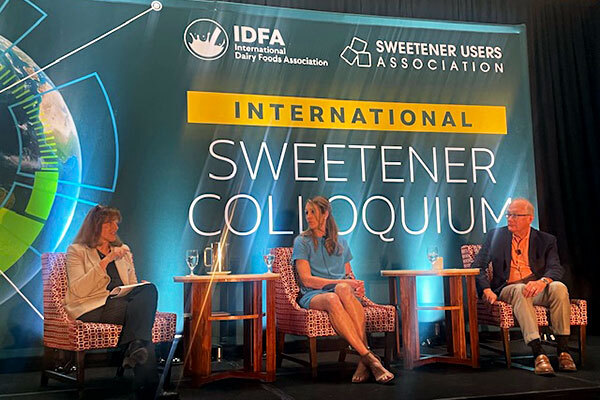
CHAMPIONS GATE, Calif. — The Make America Healthy Again movement led by Health and Human Services Secretary Robert F. Kennedy Jr. is expected to mount “a massive communications effort” against ultaprocessed foods, including those containing sugar, during this midterm election year, a key sugar industry official said here on Tuesday.
Kennedy, who has already said “sugar is poison,” is likely to focus on sugar because it is a simple message, Courtney Gaine, president and CEO of the Sugar Association, which represents the industry on scientific matters, said at the International Sweetener Colloquium.
“It is really easy to regulate sugar. You can get easy wins for sugar,” Gaine said as she and others discussed the impact of the MAHA movement.
“The narrative is: The government and food industry have hurt people,” Gaine said. The campaign is designed to create distrust, she added.
Roberta Wagner, a former Food and Drug Administration official who is senior vice president for regulatory and scientific affairs at the International Dairy Foods Association, noted that MAHA started as a political action committee (PAC) when Kennedy dropped his presidential run and endorsed Trump to make sure that Kennedy’s health-focused policies continued in the Trump campaign.
Kennedy has appointed MAHA allies in HHS subagencies, and he is working with Agriculture Secretary Brooke Rollins, who, in turn, has appointed Ben Carson as a health adviser and Patrick Penn as deputy undersecretary for food, nutrition and consumer services.
MAHA did contribute to Trump’s victory, Wagner said. But there is “tension” between Trump’s inclination toward deregulation and reducing the size of the federal workforce and budget, and moving the MAHA agenda, she said.
There has been very limited rulemaking and guidance out of the federal government, so state legislatures move in to fill the void, Wagner noted.
Rather than use traditional policymaking through regulations and comments on those regulations, the administration is making policy by convincing companies to make voluntary commitments such as cutting out certain dyes in foods.
Wagner said there is no official definition of ultraprocessed foods, but she said she believes “this administration has already defined” the term through its rhetoric about packaged foods with colors and added sugars.
Wagner, who works for the dairy processors, noted there are contradictions surrounding dairy. The dietary guidelines favor dairy because it is nutrient dense but they oppose flavored milk, which contains sugar. At the same time, President Trump signed a bill allowing schools to serve whole milk including flavored milk, she said.
Wagner said the administration is developing a proposed rule that would mandate the submission of Generally Recognized as Safe notices for human and animal food ingredients, rather than the current system under which companies declare ingredients safe, and is taking that effort very seriously.
The administration is also serious about requiring 10 regulations off the books for every regulation they add, Wagner said. FDA has taken 52 regulations off the books, which means they can add five, she added.
Randy Green, an industry consultant who moderated the panel, noted that when Vermont proposed a law to regulate foods with genetically modified foods in 2016, Congress passed a federal preemption measure, but said he believes at that time the food industry was “stronger then.”
Both Gaine and Wagner noted that Kennedy’s standards are not based on science and said policy should be based on science.