Hearing on Nebraska voluntary brand inspection bill: Most say ‘keep it mandatory’

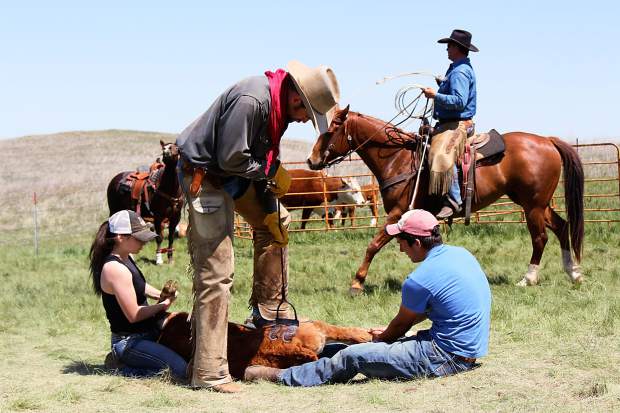
The Nebraska unicameral Agriculture Committee heard testimony Feb. 17, 2026, on a bill that would replace mandatory brand inspection program with a voluntary one.
Sen. Ben Hansen, a chiropractor from District 16, which is located on the eastern side of the state, outside of the brand inspection area, introduced LB 1258 to eliminate mandatory brand inspection. A fiscal note attached to the bill forecasts that the voluntary inspection under the Nebraska Department of Agriculture would see an immediate revenue shortfall of $3 million due to feedlots and packing houses no longer being inspected. Costs of inspections would also likely increase due to the fact that future brand inspections would be provided by “independent contractors” paid at a rate of $31.84 per hour. According to the fiscal note, revenue generated by brand registrations and inspection fees would only partially offset the salary, benefit and operating expenses to the Department of Ag.
“For these reasons, the Brand Inspection and Theft Prevention Cash Fund alone would not be able to provide the necessary funds for the department to perform the duties set out in LB 1258,” the fiscal note read.
LB 1258 appears to allow “any documentation or other satisfactory evidence of ownership” to be considered proof of ownership for livestock, and removes the “physical inspection” language in the law.
LB 1258 would also allow the state to contract with brand inspectors rather than employing them, and appears to allow “any documentation or other satisfactory evidence of ownership” to be considered proof of ownership for livestock, and removes the “physical inspection” language in the law.
The testimony on Tuesday was overwhelmingly opposed to the bill. With 160 comments opposed and 18 in favor, the hearing continued for several hours.
IMPACT ON RANCHERS
Sen. Tanya Storer, a Cherry County rancher and former Brand Committee member has serious concerns with the bill. She said that several members of the committee exhibited a disrespect for the cattle producers who traveled to the capitol to explain how the elimination of mandatory ownership inspection would negatively impact their livelihoods.
She also pointed out that many agricultural groups and others who are often at odds found common ground in their concern for the bill.
“If you looked at all of the organizations standing shoulder to shoulder in opposition to this bill, it would be a no-brainer to say that LB 1258 is a no-go,” she said. The Livestock Marketing Association (representing livestock auction markets), Nebraska Farm Bureau, Nebraska Farmers Union, Independent Cattlemen of Nebraska, Nebraska Cattlemen, state bankers association and the Nebraska GOP and Nebraska Association of County Officials all spoke against LB 1258.
The controversial nature of the bill, combined with the alliance of agricultural groups opposing it and the fiscal note tied to it should be a death sentence for the bill, Storer said.
“It’s common knowledge this year that anything with a fiscal note and anything extremely controversial is dead in the water,” she said.
Steve Scholz, who feeds cattle and operates a cow-calf operation testified against the bill, acknowledging that mistakes are made and, as with any program, there is always room for improvement.
“The program is needed,” he said. “It’s not a perfect science. The quality of the employees is what makes the difference between a good or great program. That’s why we need to be sure it’s funded. So we have the quality of employees we need to do a great job,” he said.
“Voluntary brand inspection is not going to work,” he said. Because Scholz summers a significant number of his cattle in South Dakota, Scholz is no stranger to paying brand inspection fees. The minimal expense is a worthwhile investment, he said, and disagreed with the feedlots who say inspection fees are too expensive: “We are talking about a $3,000 to $4,000 animal. The cost to inspect is essentially nothing,” he said.
“I really believe the entire state needs to be included in the mandatory brand inspection area,” he added. “A voluntary system just can’t work. What are you going to do — as a neighbor, you can’t say, ‘I don’t trust this person — can you inspect everything that goes into his feedyard?’ This is personal property. If you can’t protect your personal property, pretty soon you will see people taking up arms,” he said.
Storer also called this a property rights issue. “The inspection system we have had since the 1940s provides protection against theft and fraud and provides a chain of title to on or your most valuable assets. It’s a big deal. Property is really only valuable if you can prove it. We have titles to vehicles, deeds to land. Things that have value have legal mechanisms to prove ownership,” she said. “This bill would ultimately wash that away. It would come down to an argument in the courts. That is a huge chink in the armor of our freedom, our property rights and our ability to prove ownership of our property,” she said.
Scholz pointed out that at least three-quarters of the members of the agricultural committee are not agricultural producers. “That is sad,” he said. “I know you need a few people to balance it out, but people outside of the agricultural industry generally don’t understand it,” he said.
Storer said many on the committee acted in a condescending manner toward the producers — asking what appeared to be orchestrated questions to the few bill supporters, but very rarely engaging in a meaningful way with opponents. “The demeanor and questions of several on the committee would indicate they had already made up their minds,” she said. “Hopefully some common sense and cooler heads prevail with members of that committee,” she said.
FOR THE BILL
Curry Sexton, general counsel for Foote Cattle Company, a feeding and cow-calf operation in Nebraska and Kansas testified in support of the bill.
In 30 years of owning and operating large commercial feedlots, Foote Cattle Company has never experienced a single issue with a stray in the entirety of their feeding operation, Sexton said.
“In our position, mandatory brand inspection is an ineffective tax and is unnecessary red tape,” he said.
Foote Cattle Company said the Nebraska Brand committee performed an audit after the feedyard’s testimony in the 2025 spring legislative session.
Ag Committee member Sen. Teresa Ibach is a Dawson County cattle owner who sponsored LB 646 in the 2025 session, which was intended to impact inspection rules for registered feedlots (RFLs) by either eliminating inspection requirements or significantly lowering their fees, may revive her bill. Because Nebraska’s legislature operates as a two-year session, her bill could enter the discussion this year.
District 40 Sen. Barry Dekay, a fourth-generation rancher and farmer from Verdel, introduced LB 1187, which would increase the cap on inspection fees from the current limit of $1.10 to $1.50. Dekay’s bill would give the Nebraska Brand Committee the ability to increase the brand inspection fee to $1.50 or less. It would not necessarily equate to a $1.50 inspection fee increase, but rather would give the committee the option to set the fee at an amount no more than $1.50.
Ibach said that she is working with the committee to draft an amendment to Sen. DeKay’s bill that would change the structure of the committee by adding more members to provide “better representation” of each segment of the cattle industry, she said.
The amendment would also “reform the fees” and do away with inspections of cattle when there is no change of ownership (sometimes cattle entering a RFL are inspected even if ownership doesn’t change). This inspection replaces the inspection to market and is one of the main purposes of maintaining the ‘RFL’ status. Her amendment would likely also include inspection fee increases and reduced fees for RFLs. Ibach stressed the fact that the amendment is not yet finalized so the exact details are not yet known.
Ibach said that her LB 646 bill could still enter the conversation as well, depending on what happens with the other two brand bills.
Storer said that if 1258 gets out of committee in its current form, “there will be a fight.”
“It’s the equivalent of the sheriff telling you that you’ll no longer be allowed to hire a sheriff in your county,” she said. “When I think the law enforcement there to protect my most valuable asset other than my land — a fluid asset — that law enforcement might be taken away — it’s a really vulnerable feeling.
“We would fight that tooth and nail,” said Storer.
Neither bill sponsors Sen. Ben Hansen, District 23, Sen. Jared Storm (a small business owner/entrepreneur) whose district is located outside of the inspection area, nor Gov. Jim Pillen responded to requests for comments.