Key to farm incomes is to increase demand
Outlook1-RFP-022326
“Demand is the solution out of the supply glut,” Justin Benavidez, the new Agriculture Department chief economist, said Thursday at the USDA Outlook Forum.
In a presentation, Benavidez said it is important to keep in mind that U.S. agriculture has been experiencing headwinds, with prices lower for crop commodities due to “burdensome supplies” and input prices higher, but that the input prices are now “moderating.” Labor costs have been rising, but are expected to be at the same level in 2026 as in 2025.
Amendments to the Renewable Fuel Standard could increase demand for corn while the finalization of changes to the tax credit known as 45Z could have implications for soybeans, he said.
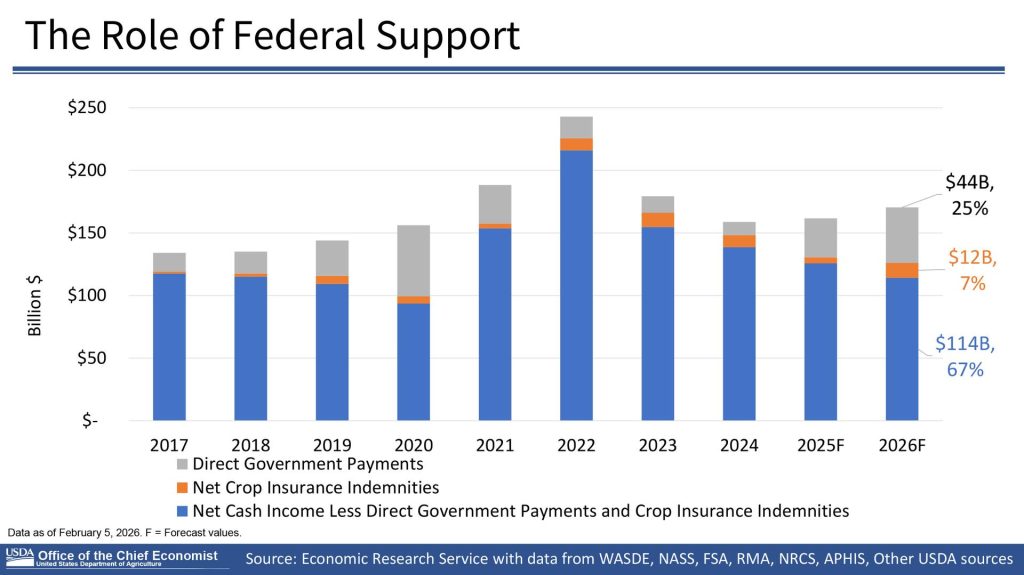
Ad hoc support has been important for keeping producers on the farm and if it ends, “we will lose producers,” Benavidez said.
But ad hoc support needs to be “a bridge to something” — either to a higher safety net or better demand, Benavidez said. The higher reference prices that trigger farm subsidies will create “a more robust safety net,” but there are questions on Capitol Hill about continuing ad hoc support, he said.
Most producers agree federal support “is not the way out,” he said.
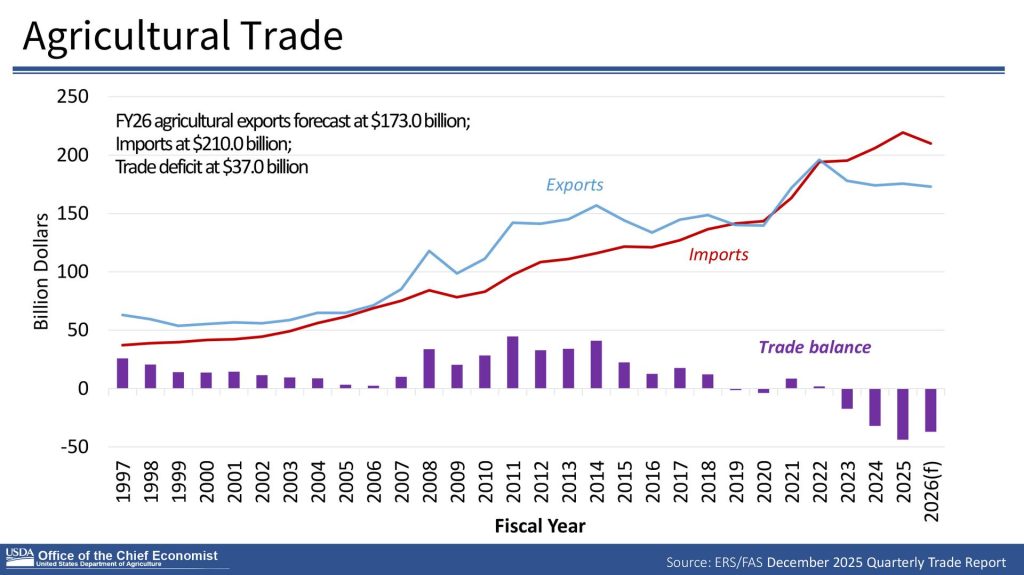
The United States is competitive in bulk exports in world markets but Brazil is outpacing the United States and is becoming more innovative, he said.
On the meat side, there is the “incredible story of the robustness of beef demand,” he said.
“Industry has improved the eating experience” and Americans are demanding more beef even though it is expensive, Benavides added.
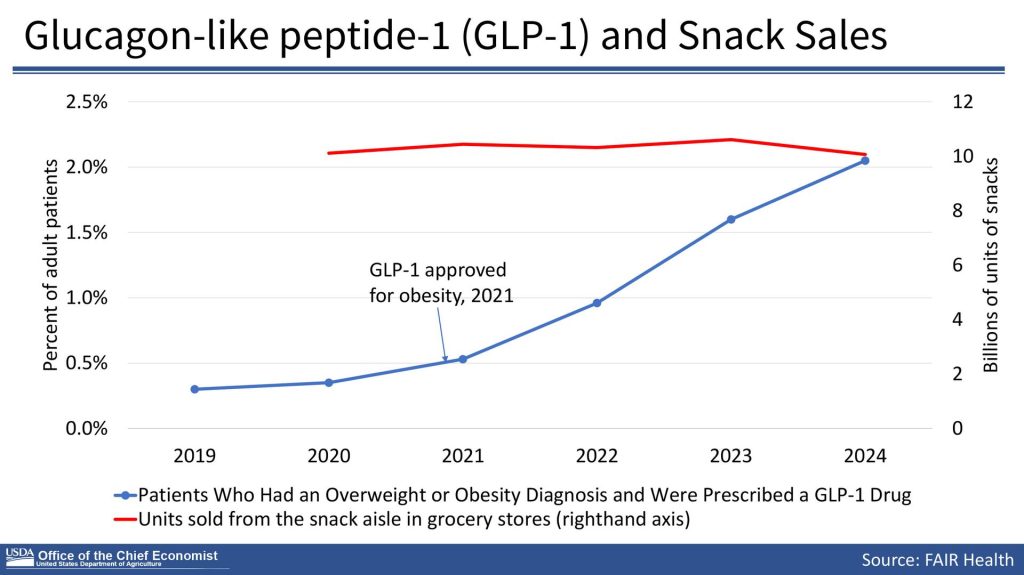
Benavidez said he and his staff wanted to provide more information on the impact of the GLP-1 drugs that suppress appetite, but could not find any statistics later than 2024. He said he was surprised that the latest figures he could get on snack sales showed that the number of units sold has remained roughly the same.
On weather, Benavidez said Oklahoma and the northern Texas panhandle are very dry while the South and the Mountain states have poor subsoil moisture and the Midwest is not as dry.
The Agriculture Department released its commodity outlook charts today, and Benavidez posted the slides he used in his presentation.