Much ado about COOL

Cattle producers and trade organizations spent the week awaiting potential amendments to the farm bill and whether mandatory Country of Original Labeling or MCOOL was included. Ultimately it was included, but the farm bill failed to be passed. With the amendment in, there are multiple viewpoints about whether now is the time for MCOOL.
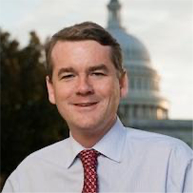
Sen. Michael Bennet, D-Colo., a member of the Senate Agriculture Committee, said for the first time in his years in D.C., he voted against the farm bill passage. One of the amendments he did vote for, he said, was MCOOL.
“That was offered by Sen. John Thune, R-S.D., the leader, and I voted for the amendment because I think consumers deserve to know where their beef is coming from and American ranchers deserve a transparent marketplace,” Bennet said. “There was a broad bipartisan support for that amendment and it was included in this version of the farm bill.”
Bennet said he offered a number of amendments Thursday, many in response to the widespread drought conditions, wildfire and disaster assistance, local food services, support for small farms and livestock producers, and funding for conservation programs.
Bennet said he doesn’t feel like an agreement is out of reach if members of the Senate return to the table once again with sharpened pencils. He said discussions will continue in September and he hopes an agreement will be reached this fall.
“Today’s status quo is not working well for today’s agriculture economy, and I hope Chairman [John] Boozman [R-Ark.] and his team will work with us on a stronger bill that meets the needs of Colorado, the West, and rural communities nationwide,” he said.
For the first time in decades, the farm programs and the food program portions of the farm bill were separated as a result of how the provisions were passed through a reconciliation package and that left senators at odds with balancing the needs of rural and urban America.
“One of the great things about serving on the agriculture committee is that historically, we’ve always acted in a bipartisan way to get a farm bill done,” he said. “I’ve often said, ‘thank God for the Senate Agriculture Committee’ because it’s one last place in the Senate where bipartisan work can still get done. We’ve got to find a way to fuse that bill back together again so we’re representing the interests of rural America and urban America in a coalition that can make good farm policy as well as good food policy for the country.”
NCBA
National Cattlemen’s Beef Association CEO Colin Woodall said the U.S. cattle industry has already been down the road toward mandatory Country of Origin Labeling, and it didn’t do what the proponents anticipated. Now, with a voluntary labeling program in place under U.S. Secretary of Agriculture Brooke Rollins, he said, “One of the biggest arguments for mandatory COOL in the first tranche of this discussion was the concern of product that could come into this country, be processed in the United States, and be able to carry a product of the U.S.A. label,” he said, “That was an accurate statement, that was true, that could happen but we have since changed that. That can no longer happen, and this voluntary COOL program builds off of it. The secretary just put out a press release last week talking about additional companies that are utilizing it.”
Woodall said it’s not just about being against mandatory COOL as much as finding options and that system is a voluntary system that’s already in place.
He said over the history of COOL, consumer research has found that origin claims in general have not ranked high among consumers’ buying criteria.
“What we have seen is if ask someone coming in the grocery store, ‘do you want to know where your beef is coming from?’ that’s a pretty easy yes,” he said. “We don’t dispute that, but what we’ve said is that’s not the end of the discussion. You have to watch and see what they do when they go to the beef case. What we see when they go to the beef case is they’re looking at price, they’re looking at how our beef looks, and those are the primary drivers.”
That said, Woodall said the NCBA recognizes the value in local labels, regional, state labels, and labels about certain production claims.
“We know there are consumers who are looking for those things,” he said. “In order to meet that demand, you have to have the flexibility of various marketing plans and the labeling plans in place offer that and the voluntary program
USCA
The U.S. Cattlemen’s Association is one of the trade organizations that advocate for mandatory COOL labeling, especially with year over year imports of boxed beef up once again. USCA President Justin Tupper, said with the amount of imports coming into the country, countries with looser safety standards ought not to benefit from the good name of U.S. beef.
“Those are questions we need to ask,” Tupper said. “What are those safety standards? Why is it important that the consumer be able to choose? I definitely think you have to have the conversation. There is a place for imported beef, we’re not saying that, that’s not what labeling means.”
Labeling, he said, gives consumers a choice before purchasing beef from a country outside the U.S. Tupper also points out that Canada and Mexico both label their beef and anytime U.S. beef is exported, it, too, is labeled.
“There will be price points that vary also,” he said. “Knowing that and going into the conversation that way, I don’t know how you argue against county of origin labeling.”
USCA, in a statement, applauded the 17 bipartisan senators on the Senate Agriculture Committee who voted to include the American Beef Labeling Act (S.421) in the Senate farm bill. Though the final farm bill package did not pass out of committee today, senators will return in September, and at that time will reconvene and vote, again, on moving the farm bill with the passed MCOOL amendment included.
“We thank Sen. Thune, who has long championed this issue with us,” Tupper said. “We’re encouraged by this progress and look forward to supporting the Senate Ag Committee as they look to send the farm bill to the Senate floor. USCA has led on this issue from the beginning; we were the only cattle producer voice in the halls in D.C. this week.”
USCA Director of Policy Jenna Stanton said the vote demonstrates “what producers on the ground have said for years — there is support behind this in the industry. The bipartisan showing of senators from across the country proves what is true: MCOOL is pro-producer and pro-consumer.”
THE MEAT LADY
Kathryn Miller, who is the CFO of a regional packer with 20 years of experience and best known as The Meat Lady, has spent decades in the meat packing business and when the discussion turns to labeling, she said labeling doesn’t typically reach the meat case in the way many understand.
Brazil has reached their quota limit with China, which triggers a 56% import tariff to China, which Miller said essentially shuts the door to China for Brazilian exports. At the same time, the EU has announced a 24-month moratorium on purchases from Brazil until they meet the EU’s traceability standards. It appears that Brazil is responsible for about a quarter of EU imports of beef and poultry, a significant volume and market.
“It is going to cause a glut of meat available within the international market and there are some people concerned that it’ll make it’s way to the U.S.,” she said.
The cost of production for Brazilian beef is significantly lower than U.S. cost, but she said they produce a different product.
“Much of the cowboy argument is that it’s inferior, it’s low quality and I want to hesitate before we start using words like that because the average consumer doesn’t go to the meat case and say, ‘this is an inferior Brazilian product’ when they’re buying their ground beef. You don’t sit down at a Mexican restaurant and say, ‘this is an inferior Brazilian product’ when you order your fajitas. Most likely, when you go through the drive through and order a hamburger or you go to your local Mexican restaurant and you buy fajitas, you’re probably eating an imported product.”
She said where the labeling argument is misrepresented is that much of the imported beef isn’t sold to the big packers, but typically to a processor that makes, for example, marinated beef fajitas or beef patties out of it and resells it.
“Even if you do mandatory Country of Origin Labeling, there’s a pretty good chance that the bulk of that product is going to be labeled, and then it’s going to go sit in a food service cooler and the only person who is going to see that label, is the guy throwing the patty on the grill or the guy cooking the fajitas in the back of the restaurant,” Miller said. “A large percentage of the beef we’re arguing about, even if we put a label on it, nobody’s going to see it and secondarily, if you go to the grocery store right now, food prices, like everything, are up and if you are holding a food policy agenda that raises food prices, I really think you’re holding the wrong end of the rope.”
She offered the seafood and lamb businesses both as examples of producing products that consumers will still select their choice, despite labeling, on price.
“I think it’s outrageous, and I truly mean outrageous, for a group of cattlemen who represent however many hundreds of thousands of people, versus the 350 million Americans who are going to Walmart every week and standing in front of a meat case and they’re buying an 80/20 ground beef that is, statistically, likely an American-only product because it’s coming right off a National Beef or Tyson lot.”
The real goal of the producer associations, she said, is to protect the domestic market. To use mandatory labeling to accomplish that will have an onboarding time to change protocols and in just 30 days, Brazil will no longer have access to the Chinese market and all of that will be shipping prior to the first label’s application. The solution, rather than labeling, she said, is a tariff quota.
Miller said she’s not convinced tariffs are a solution either, because it still leaves producers holding the end of the rope that raises food prices. It’s also a solution that would face significant hurdles passing Congress and legal challenges about free trade.
“Labeling is not going to impact the beef supply chain in a meaningful way in the time frame that’s required to protect the domestic supply pipeline,” she said. “Here we are fighting among ourselves in opposite directions and at its root, everybody wants the same thing which is a return to profitable domestic conditions for everybody in the supply chain. That’s what the goal should be, but right now, every segment of the beef supply chain is distressed. If you’re a rancher, you’re distressed. If you want to enter the ranching segment, you can’t. There is not a bank in America that will loan you money for cattle and land unless you’re independently wealthy. Same thing for feedlots. There’s an extinction event happening if we don’t get the border open and cattle coming through in the South. And packers it’s the same thing — we’ve closed six plants. You have ranchers retiring or going bankrupt, you have feedlots closing, you have plants closing and when these things go away, they don’t come back.”
“If we spend all of our time as ranchers getting other ranchers frothing at the mouth about how packers are the problem, they’re going to be shocked and dismayed when the packing sector goes away and there’s no one to buy their cattle,” she said. “If you think consolidation is bad now, wait until we close 13 plants like we did in 2013. They will not come back in the next cycle because the return on investment is not there.”