Nebraska legislators approve lower brand fees, fewer audits for registered feedlots

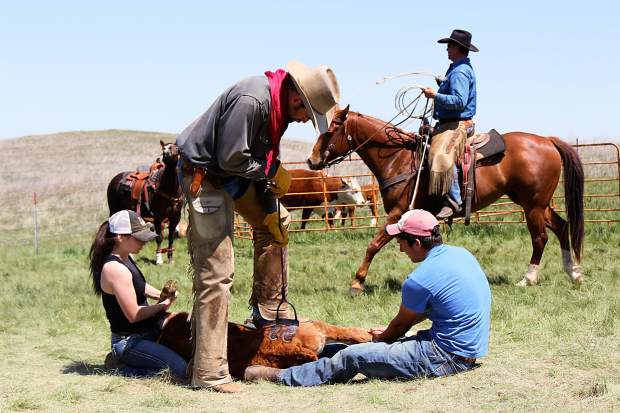
The Nebraska legislative body has given final approval to a bill that will make brand inspection law changes including big cuts to inspection fees paid by some of the state’s largest feedlots.
The original bill made two simple and mostly non-controversial changes to the law: an increase in the inspection fee and a surcharge for mileage.
The Agriculture Committee then discussed two different amendments, neither of which ultimately were added to the bill, but both seemed to provide a starting point and serve as temperature-testers on lowering fees for registered feedlots (RFLs), eliminating inspection requirements when cattle move from backgrounding lots to RFLs, eliminating inspection requirements for approved dairy development lots, changing the makeup of the brand committee (oversight agency) and more.
State citizens showed up in droves to oppose many of these changes.
All told, 321 Nebraskans opposed an amendment to make most of the aforementioned changes. Four testified neutrally and two submitted testimony in favor.
Still, the committee approved a similar amendment. Later, the full legislative body approved yet another amendment with similar language.
The bill now awaits the governor’s signature.
The bill as amended now makes the following changes to the brand law:
- The brand committee will grow to a seven-member board with five members coming from districts and whose principal business or occupation is raising cattle. Two of the five districts include segments of the non-brand area. The additional two members will be a feedlot owner or operator and a livestock auction barn owner or operator. (Current law is a five-member governor-appointed board from anywhere within the inspection area — three are cow/calf producers, one is a feeder and one must own cattle.) Current board members will not be grandfathered in, but will be eligible for possible appointment.
- The governor must approve the board’s selection for a director to oversee the program. (Current law allows the board to autonomously select the director.)
- The fees for registered feedlots (RFLs) will be 25 percent of the brand inspection fee multiplied by their one-time capacity. (Current law is 100 percent of the brand inspection fee multiplied by their one-time capacity.)
- The brand committee may audit RFLs twice per year, or more under certain conditions. (Under current law, audits are usually performed four times per year but the law didn’t specify how many times per year audits were to take place.) Audits will include up to 10 percent of the records on file, with the brand inspector selecting which files to review.
- Cattle can be moved from a backgrounding lot into an RFL without inspection if they come from a non-inspection area or state, originate in a backgrounding lot and are accompanied by “satisfactory evidence of ownership” (brands, tattoos, approved nonvisual identifiers, the point of origin of the livestock, physical description of the livestock) or a brand inspection.
- A registration process was added for dairy heifer development lots. They will be monitored similarly to RFLs.
- At the committee’s request, a mileage surcharge will be implemented the current per-mile charge when inspectors travel to the country.
- At the committee’s request, the inspection fee cap will be raised from $1.10 to $1.50.
- The brand registration fee increases to $400 for every four years. (The current law requires a registration fee of $100 for every four years.)
Sen. Teresa Ibach, a farmer-rancher from Dawson County, sponsored legislation last year to exempt RFLs from brand inspection requirements.
She said, “I feel like we made a step forward with this bill. I think when the dust settles and producers notice that the changes we’re implementing will be very minimal.”
Ibach said she didn’t support another brand bill proposed during session that would have made the brand inspection program voluntary, but added “I support the state being ‘one.'” She didn’t say whether she supported statewide brand inspection or not. The bill to make the entire brand inspection program voluntary was vehemently opposed by producers and did not advance past the ag committee.
Ibach was pleased to see the brand committee expanded to include a feedlot representative and a representative from outside of the inspection area. “This bill is a compromise. When everyone compromises, you don’t always get everything you want, but I think this compromise is good,” she said.
Ibach said she doesn’t expect any bills with “big” proposed changes to come to the legislature in the next couple of years, but “if technical changes are requested by the brand committee, we will listen,” she said. “I think the future will be contingent on what the brand committee feels is important,” she said.
She has come under scrutiny after continuing to advocate for lower fees and relaxed inspection requirements for RFLs while public records show she has received campaign donations from Footes, Lapaseotes, LaVaca and Jerry Adams — all RFL owners. She said these donations did not impact her political decisions.
Sen. Danielle Conrad, an attorney from Lincoln, was one of four who voted against the amendment to the bill.
While Conrad said the industry indicated approval for the increase, and therefore, she was supportive of it as well, the outpouring of citizen opposition to the other changes inspired her to work against them.
“That original legislation was hijacked by a host of fairly hostile amendments that seemed to generate a consensus of concern,” she said.
“When you look at the amendments and the citizens who spoke up, it was extraordinarily lopsided, with a lot of opposition coming from stakeholder groups with deep roots in Nebraska ag policy, but what really spoke to my mind and heart was the fact that Nebraska citizens who have made this their life’s work were appalled with the process and were speaking out in droves asking for someone to hear them. That really, really got my attention because we should always be thoughtful when there is a significant amount of opposition from the public, particularly the public most impacted by these changes,” she said.
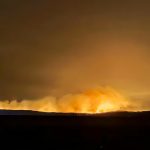
“The way the majority of the legislature treated the public and citizens was a disservice to the citizenry and ultimately ended in an unfair result. You don’t have to be an expert in ag to know that when people take time out of their lives, away from the businesses, especially when they are literally fighting for their lives and livelihoods with fires across the state, this is clearly an important issue to them.”
Conrad believes this bill provided a “sweetheart deal” to some corporate feedlots, at the expense of independent producers. “What we saw in this situation was a reduction in almost a million dollars that the largest feedlots were paying, and increases in fees for almost everyone else. That just spoke clearly to me as an economic injustice,” she said, adding that she believed “everyone at the table was committed to seeing the brand committee continue.”
It was really striking to me that there wasn’t more opposition to this proposal on the floor of the legislature,” she said. “In Nebraska, we consider our citizens to be the ‘second house’ of our unicameral. Those voices were pretty united in opposition to this and someone needed to give voice to those citizens. I sensed an injustice from both the process and substance. That’s why I spoke out and voted against it,” she said.
Conrad pointed out that citizens have one last chance in stopping the legislative changes — a veto by the governor.
Gov. Jim Pillen received over $350,000 in campaign donations from RFLs and Black Shirt Feeders. He has not responded to our request for a comment on his position for this bill.