Rollins: Lawfare ends with this administration

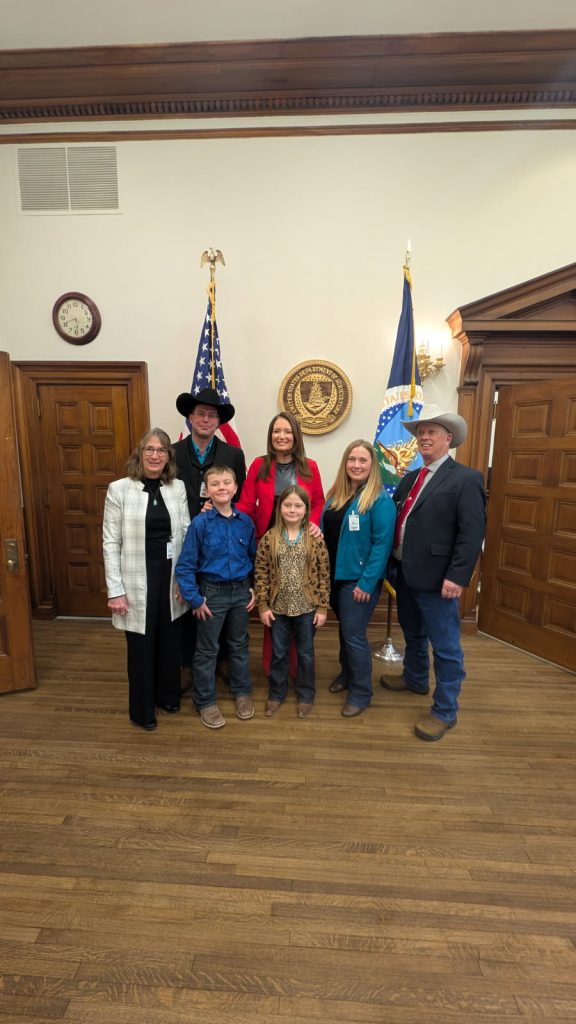
Secretary of Agriculture Brooke Rollins called the lawfare rollout on February 11 a call to arms for farmers and ranchers facing the weaponization of government at all levels. The Farmer and Rancher Freedom Framework, she said, protects the nation’s ag producers from unwarranted, unnecessary, unfair, and unconstitutional lawfare.
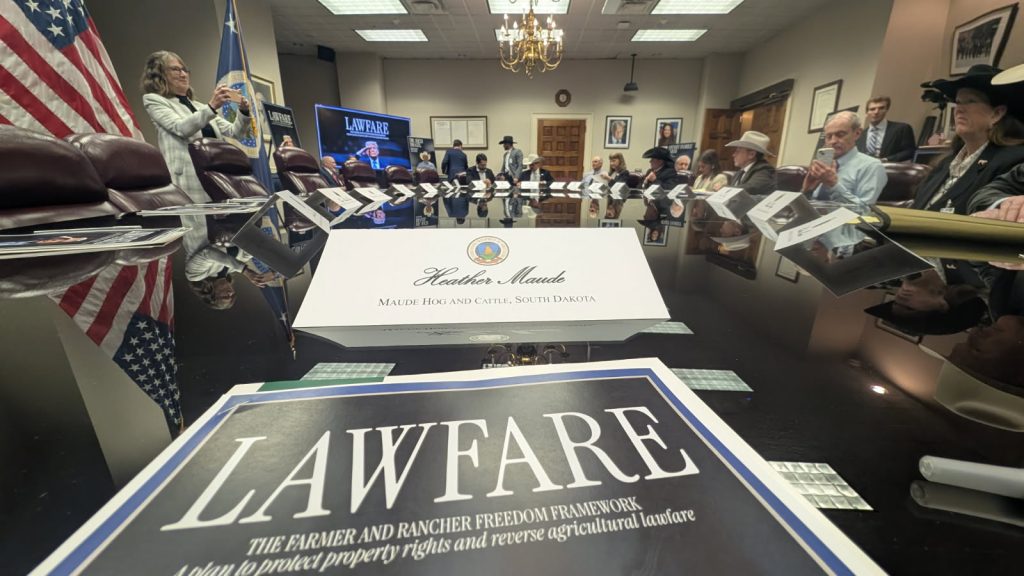
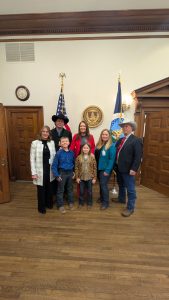
Flanked by top cabinet officials and some of the farmers and ranchers who have faced or are still facing lawfare, she said the rollout is a renewal of America’s promise to protect private property rights and American agriculture. The framework’s Four Pillars are protection of producers, the preservation of land and liberty, the purging of burdensome regulations, and the unification of federal, state, and local leaders to partner for America’s future.
“As we approach the 250th anniversary of our accredited country, we are reminded that this nation was founded by a republic of farmers, whether as signers of the Declaration of Independence, half of the militiamen even fought the British army,” Rollins said. “Farmers, of course, our founding father, who I now call our founding farmer, George Washington, alongside Thomas Jefferson and so many others, this literally goes to the very beginning of our federal country, but American agriculture was born long before the Revolution, when settlers crossed an ocean, cleared the field, built homes, and planted crops on the edge of the wilderness, carving out a piece of America that they call their own, many of them the generational ancestors of a lot of the farmers and ranchers in this room.”
LAND IS ESSENTIAL
Agriculture, she said, is unlike other occupations, where land is optional or arbitrary.
“For farmers and ranchers, land is absolutely essential,” she said. “Their work cannot happen without it, and when that land is over regulated, penalized or taken away, American agriculture and our entire American system goes with it. That’s why the increased attack on American farmland represents an existential threat to everything we know and believe in this country. For years, radical agendas like the Green New Deal have weaponized environmental laws, over-regulated every aspect of our life, created a culture of lawfare in this country, and that ends with this administration.”
Interior Undersecretary Karen Budd Falen, a rancher and attorney from Wyoming, said as part of this work, the Department of Interior is committed to extending stability to public lands ranchers across the West.
“Most of the people around this table have Forest Service and BLM (Bureau of Land Management) grazing permits, and if you don’t know that you’re going to have that permit for another 10 years or for another lifetime, how in the world do you ever tell your kids, please stay on the ranch, please come and work for me when you don’t know if the government is going to pull that permit the next year?” Budd Falen said. “And living in Wyoming, I can tell you that if you don’t have those federal land permits, you don’t have a ranch. It’s not the same as it is back here. And so, my heart is really with all of the federal land ranchers here to make sure that you, if your kids want to stay, they’ve got something to stay on.”
Housing and Urban Development Director Scott Turner said ag producers have been stepped on by previous administrations that weaponized the law and strangled agriculture with red tape.
Stanley Woodward, Jr., associate attorney general at the Department of Justice said the DOJ is enforcing laws, once again, with integrity, consistency and fairness. He said the DOJ is ready to defend the administration’s deregulatory agenda in court, which they have done with success. He cited the clarification of the Waters of the United States as an example.
“To be clear, we are prosecuting criminals,” Woodward said. “This administration, unlike the last, will not use vague and confusing laws to exploit farmers and ranchers. No. No longer. The Department of Justice is no longer weaponizing these laws to target hardworking Americans simply for doing their jobs and pursuing their American dream.”
OVERZEALOUS BUREAUCRATS
Chairman of the House Oversight Committee James Comer, R-Ky., said he grew up in agriculture and FFA and was a state FFA officer at the same time as Secretary Rollins. Since coming to Congress, he said the Biden era executive orders and policy directives and plaguing much of rural America, were enacted without clear approval from President Biden.
“In other words, there were overzealous bureaucrats that made a lot of decisions without any policy discussion, any public debate, and we’ve also uncovered politically motivated discrimination by federal regulators of various financial institutions,” he said. “In the Biden administration, law abiding American citizens and businesses were cut off from basic financial services without due process for their political views or participation in the disfavored industries and many of industries important in agriculture would fall into that category. The Oversight Committee has held extensive hearings on the consequences of over-regulating industries and how an active progressive climate agenda is harmful to American tax payers today we’re investigating rampant fraud across state funding programs, including the failures of the [Tim] Walz administration in Minnesota, government overreach and over regulation have real consequences that everyday Americans are forced to face, from farmers to producers to small business owners and entrepreneurs.”
John Rich, country music singer and songwriter, said the vast majority of the American public understands the level of egregious behavior that has rained down on American landowners every single second of every day in this country.
“The Tennessee Valley Authority, known as the TVA, has power structures through about seven states, including the state I live in, in Tennessee,” Rich said. “And this past year, I was made aware to my shock that the TVA had a task force that was supposed to be used to defend dams, nuclear reactors, any kind of power structures, which they need to protect those.”
He said TVA sent that task force to landowners’ front yards, “wearing bulletproof vests, loaded weapons, 10 vehicles deep, showing up on old lady’s property.”
He said 88-year-old Nicholson of Cheatham County, Tennessee, suffers from dementia.
“She’s standing out in her front yard looking at men with the vests and the guns, and they’re telling her, we’re going to come on your property and we’re going to do destructive testing,” he said.
She asked who they were and why they were there.
“One of the men with TVA said, ‘well, your husband gave us permission to be here, Miss Nicholson. To which the neighbor who was standing there said, ‘That’s interesting, because he died 11 years ago.'”
Since then, he said he’s been using his platform to shine a light on similar situations. He said Americans, no matter their political stripes, find that sort of government behavior reprehensible.
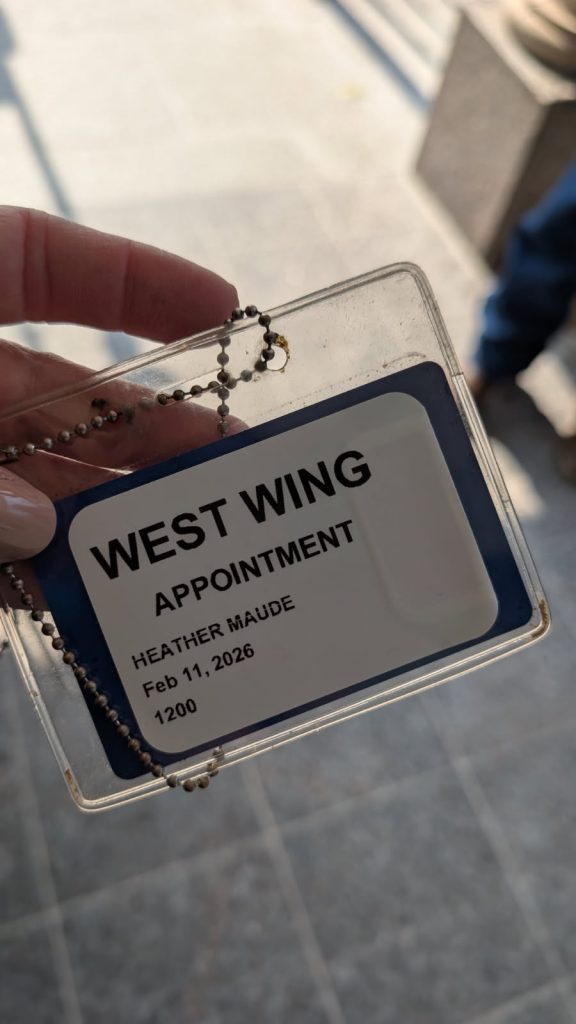
Charles and Heather Maude, ranchers in Caputa, S.D., were also there and spoke about the separate criminal indictments they were served by the U.S. Forest Service regarding a property line dispute on a boundary of the land that had been in the family for 115 years.
“A 114 years later, the Forest Service showed up at our door and said that we may have had a fence that was not on the line,” Heather Maude said. It would later be determined that we had 20 acres of U.S. Forest Service property on our side of the fence, and we had 20 acres of our private property on their side of the fence, because in the west, we build and maintain fences where they can be placed, not on the line. Rather than go through any form of attempted resolution with us, the U.S. Forest Service for the first time in history, to anybody that has looked into this is aware of, chose to charge us with separate criminal felony indictments for theft of government property, which came with 10 years in prison and a $250,000 fine each.”
She said it was on the steps of the USDA building last May with Secretary Rollins, they announced that those criminal charges were dropped. They then spent the next several months working with Brett Tolman, with Chief of the Foreign Service, Tom Schultz, and Rowland, to stop the civil charges and then to resolve the issue.
“When a criminal felony charge is brought against you, you cannot continue pursuing resolution with the government agency, or at least not with the U.S. court,” she said. “We were able to conclude that utilizing what is called the Small Tract Act, which in part says that lands that have been cultivated and are not consistent with the requirements to become national grasslands, in our case, should be offered for sale to the adjoining landowner. And we have photos of Charles’ family cultivating that land in 1911, which was prior to the formation of the national grassland. So, we were able to utilize that Small Tract Act to purchase these acres in question, and we got the deeds to that about a month ago.”
She said she is grateful for all of the efforts, and acknowledges the framework is timely as there is a long history and risk that they will face additional lawfare in the future since they have previously been an agency’s target.
“We have our two children with us today and, God willing, Maudes will still be farming and ranching on the banks of the Cheyenne River another 115 years from today and also for everyone who faces this,” she said. “The U.S. was built as a Christian nation and the Bible says the individual is important and we’re all created to do these good works. I look around this table at this immense amount of talent, and I just want to thank you all for including us in some of your good works and we look forward to continuing to work for you and on behalf of our fellow landowners to ensure we’re all still here.”
IN WASHINGTON AND NEW JERSEY
According to Wade King, the Washington Department of Ecology fined the family $267,000 and ordered them to restore wetlands that weren’t wetlands, but stock ponds, something that experts had estimated would cost $3.7 million.
Of the 32 stock-watering ponds, Department of Ecology did inspections on four, the remained were done by satellite imagery and we still were fined on those,” he said. “They also launched a special inquiry judge statute proceeding used for organized crime to investigate us; we were never charged and to this day, we don’t know what they were investigating us for.”
King said they’ve done nothing wrong that hasn’t been done on our property and all across the western United States for generations while cleaning out stock ponds.
Andy Henry co-owns a farm in New Jersey. The family’s pre-Civil War homestead burned in 1879, two daughters died a decade later, one of tuberculosis in the grips of the Great Depression. The father died shortly thereafter, struck down by a stroke while working in the field, leaving his widow and one remaining daughter to work the farm. After generations of caring for the land, Henry’s father was offered money in 2010 to preserve the farm. He declined. He explained that the land would not be anything other than the working farm it had been since the 1850s. In 2022, a developer offered to purchase the land. The Henry family declined the $2 million per acre offer for what he called the legacy, the soul, and the sweat of generations.
“Through all these crises, we kept farming,” Henry said. “But then the town came and said to us, in effect, ‘thank you for saving this land from development, we now need it for eminent domain to build affordable housing to meet state mandates.'”
Henry said he supports the availability of affordable housing, but their land is inappropriate for the housing according to the state’s own guidelines.
Henry said just as occurred in 1879 when his great grandparents walked out of church and saw the plume of smoke that was their home burning, a neighbor stepped in to help. State agriculture officials, New Jersey Farm Bureau, attorneys, neighbors, Secretary Rollins, and others all stepped in to help, he said, and the farm is nearing the end of the process to protect it in perpetuity.
WATER ISSUE
Dr. Rich Brazil, DVM, spoke about the dams in what is called the Potter Valley Project in Potter Valley, California.
“They have provided hydroelectricity and water for more than 600,000 people in our area of northern California for more than 118 years,” he said. “More than five generations have grown to depend upon this water — homes, farms, ranches, businesses, communities — have all depended upon this water. It’s not a blue or a red issue. Regardless of how one votes, we all need water, we all need food, regardless of how we vote, we all want to wash the dishes, take showers, flush toilets, and not have to make a choice of which to do each day.”
If the dams in question are removed, he said, the domestic wells in Potter Valley will per facto dry and irrigation will cease, ending farming and ranching operations.
“The communities that depend upon will be decimated,” he said. “Our local property values will collapse, the work of lifetime and even of generations is going to be destroyed.”
Additionally, Brazil said that area of California experiences massive wildfires virtually each year, and has been the site of two of California’s three largest wildfires in the past eight years. One of those fires, over a million acres in size, and many others, he said, have all been contained using water from the dams being removed.
“We’re in an area where we can no longer purchase private fire insurance for our homes and businesses because of the great risk and we’re going to take away the water? Take away the fire mitigation?,” he said. “This is an issue about the weaponization of government against its people; it’s about abuse of power; it’s about the corruption of power of the very institutions. About the use of the legal system, lawfare; about the abuse of science; it’s about the abuse and corruption of our prophesies; about quid pro quos; and it’s ultimately about a fundamental disregard for We the People.”
He said access to basic resources for 600,000 people is in jeopardy.
“This is all being exchanged for the political gain of the few, and the long-term financial gain of the preferred,” he said. “In our area, we’ve been weighed on the balances and found to be expendable, to be irrelevant. Farmers, ranchers, working people who simply want to work, to be left alone, to pay their taxes in order to feed the people of this nation and the people of this world.”
Shad Sullivan, the R-CALF USA Private Property Rights chairman also spoke and said private property rights are divinely inspired, and it is only through those rights that Americans have freedom.
“I think about bloodshed in foreign lands in the name of freedom, but more importantly, I think of Lyle and Kennedy (Maude) whose heirs of liberty are why we’re here today,” Sullivan said.
Rollins said it’s nearly impossible to determine the losses to agriculture due to government overreach but said over the past decade, the number of farmers and ranchers has declined by 150,000.
“The call to action here is we’re not going to lay low on this anymore,” Rollins said. “We’re stepping up as an administration, we’re calling on all of our governors to stand alongside us, we want to work with everyone. This is not Democrat or Republican, this truly is the future of our country.”
Rollins also said the radical ideology behind many of the decisions in Washington, California, and other states, is not representative of most.
“That (ideology) is not where most Americans are,” she said. “They don’t agree with it, they don’t believe in it, but a very small percentage of our country, in those states especially, in a large part are being run by this radical idea. So we need to be able to do hand to hand combat when that happens.”
She said historically, there has been “mission creep” at USDA, especially in the last administration.
“The United States Department of Agriculture, instead of serving our agriculturists, served the DEI [Diversity, Equity, and Inclusion] and inclusivity agenda,” Rollins said. “As a result of that, taxpayer investments were going to pay for things that had nothing to do with a lot of the things we’re hearing today. Instead of supporting the people that needed support, we were supporting an ideology that had nothing to do with agriculture.”
NRCS Chief Aubrey Bettencourt said the U.S. loses 5,000 acres of farmland daily, so to prioritize keeping ag producers in business, NRCS is focused on an easement program to ensure productive farmland remains highly productive farmland.