America | Hauling the mail: Riders re-create Pony Express every July 4

-
Riders from many states, Norway and South Africa have taken part in the event.
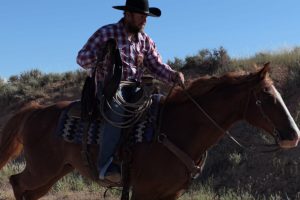
PE_rider_in_pasture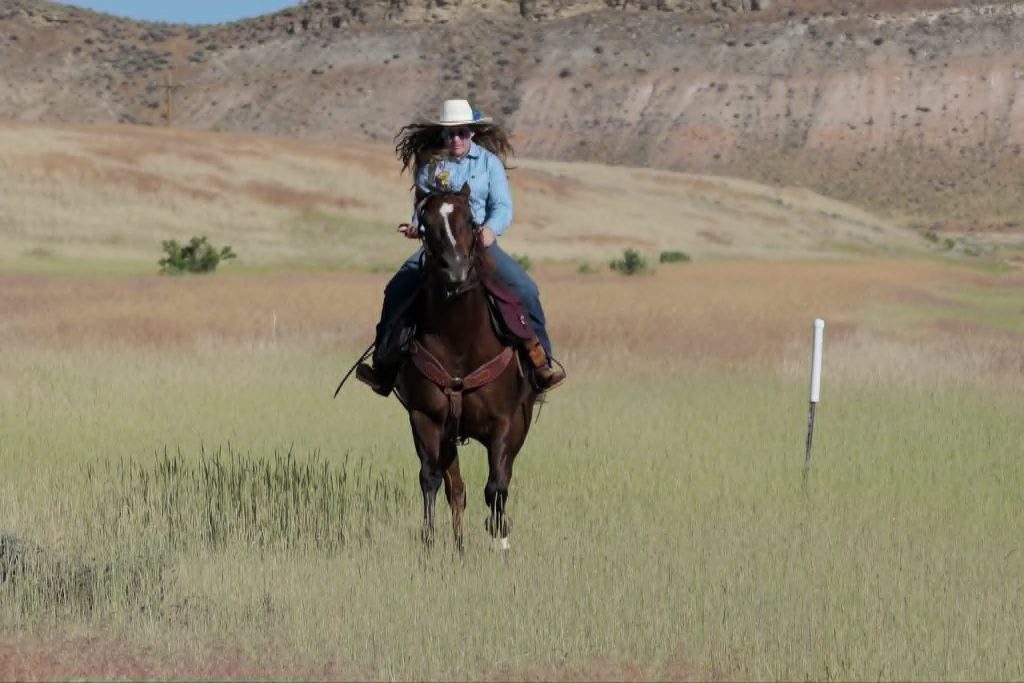
-
Stetson Dawson hustles to keep the pace fast.
PE_Stetson_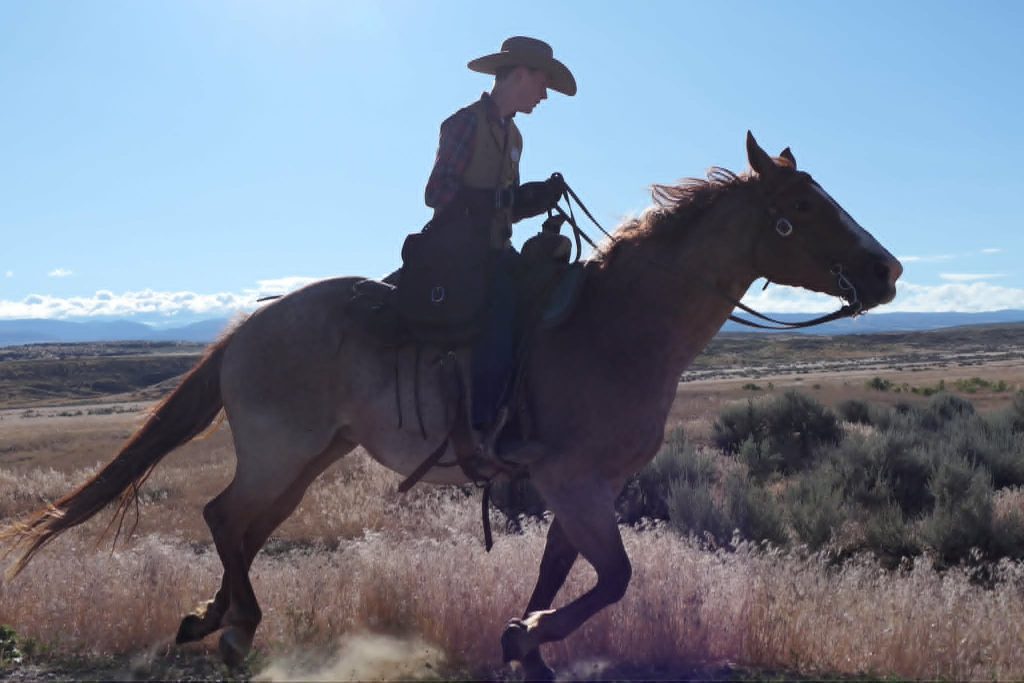
-
The local postmaster swears in the mail carriers.
PE_swearing_in_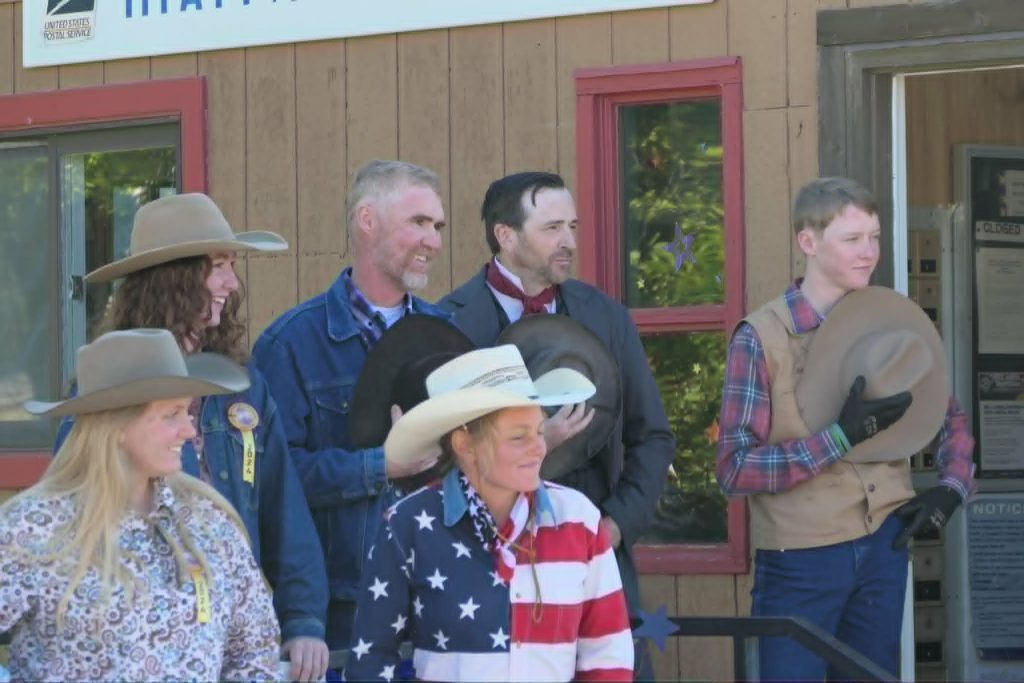
-
-
The riders are responsible for transportation to the route and also to the parade in Ten Sleep.
PE_trailer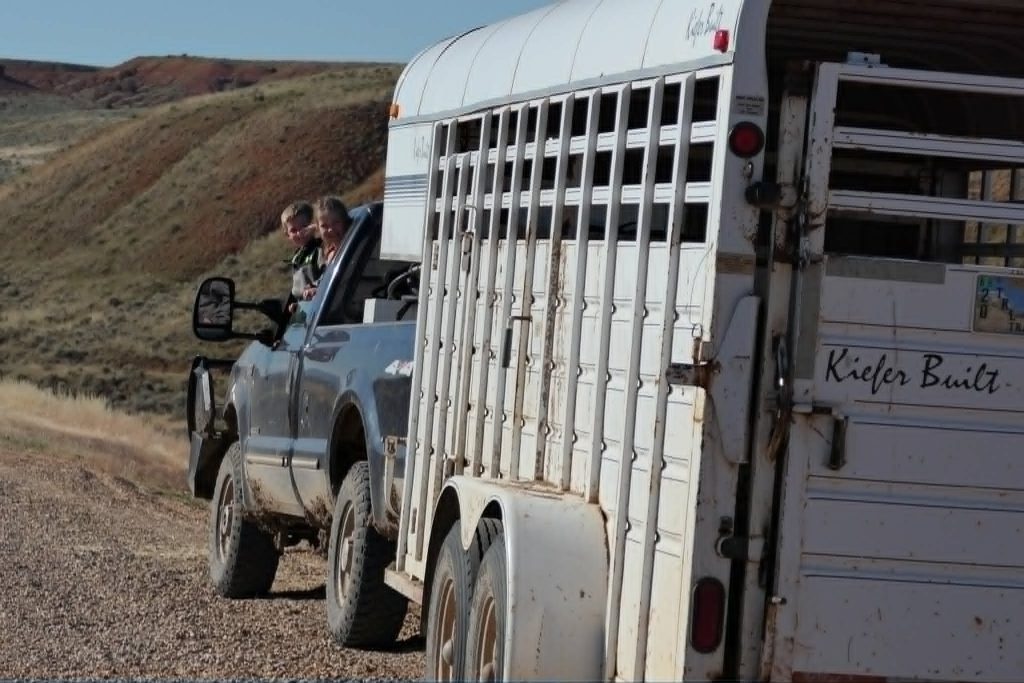
-
Tyler Greer hands the mail bag to his cousin James Drake.
PE_Tyler_Handoff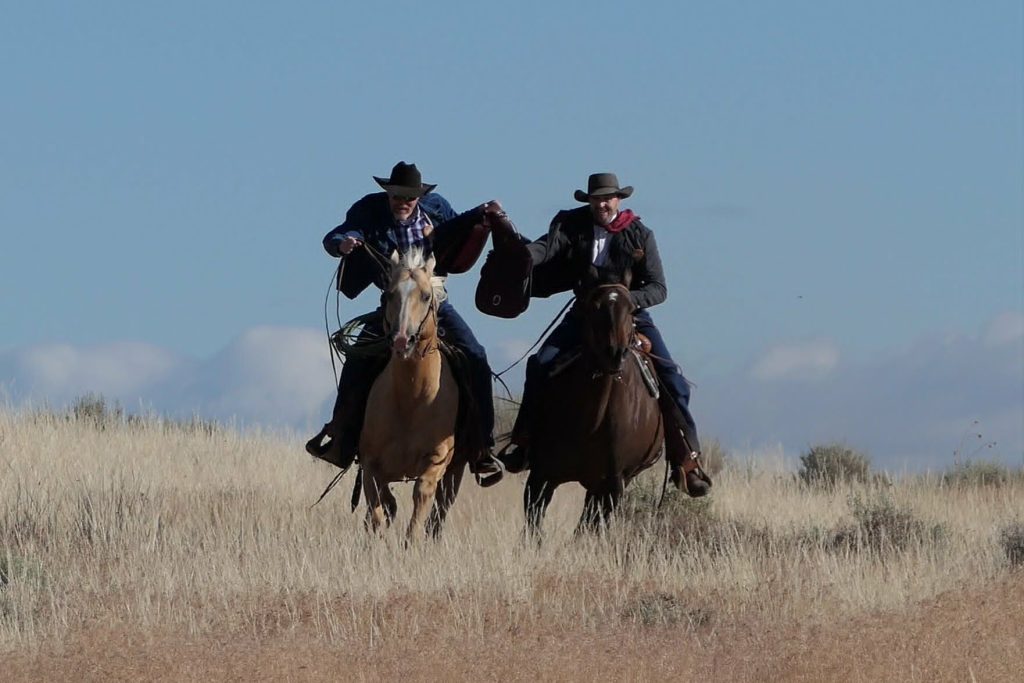
-
Tyler Greer hands the mail bag to his cousin James Drake.
PE_Tyler_handoff1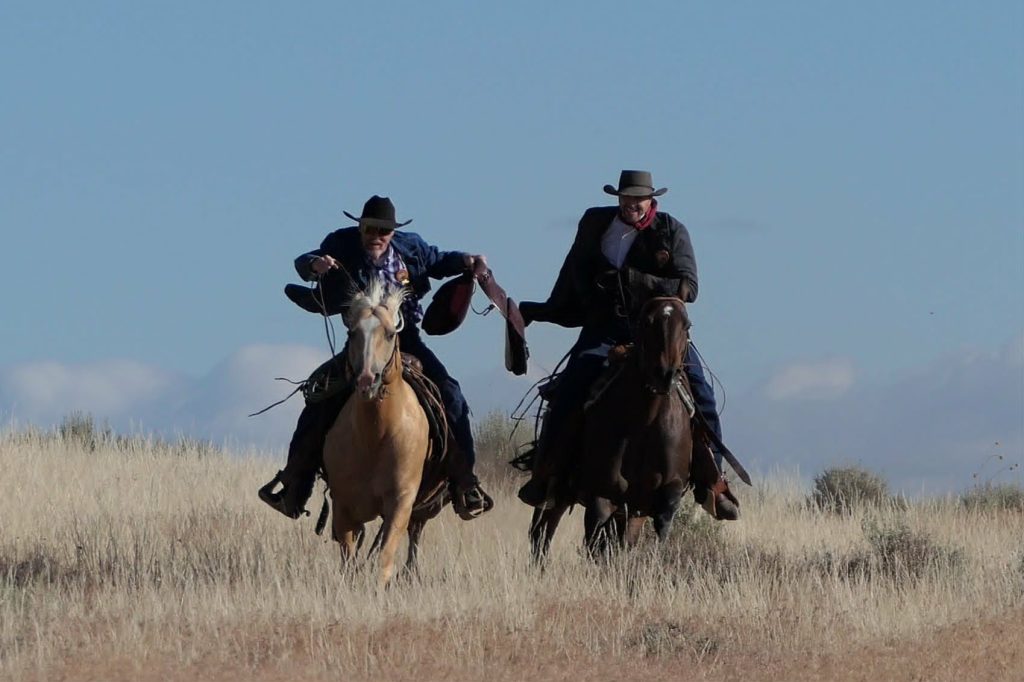
-
The Pony Express is a family event that helps the community keep close ties to the American frontier heritage. The $5 envelopes help raise funds for the Lions club.
PE_woman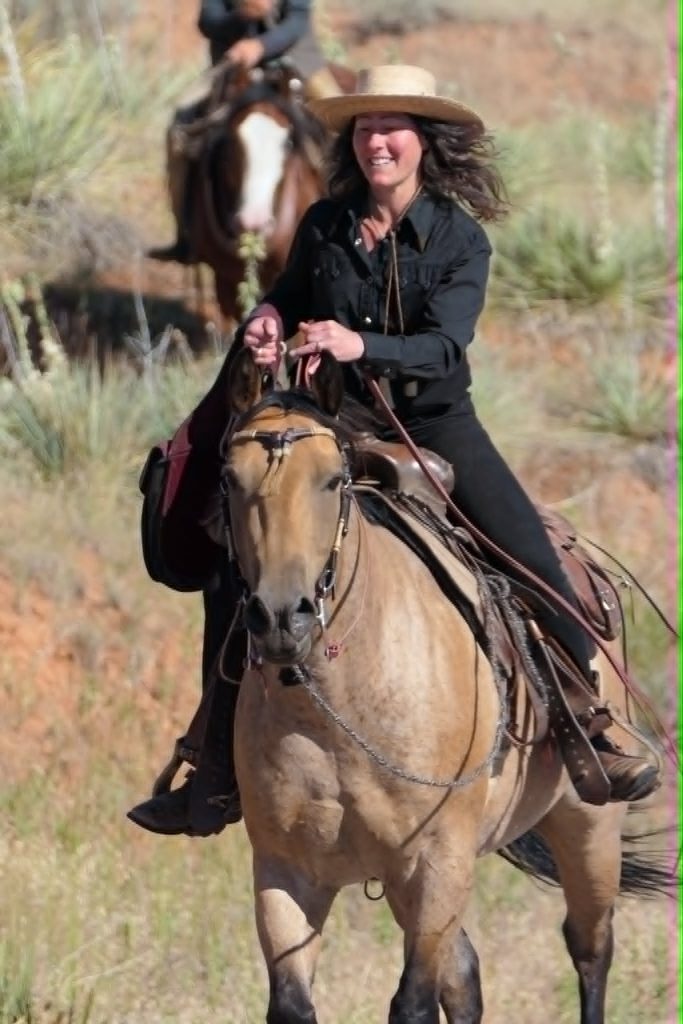
-
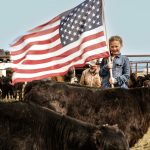
Event organizer Lyle Spence (right) often carries the flag in the parade immediately following the Pony Express ride. Amber Greer, courtesy photo
Lyle_Spence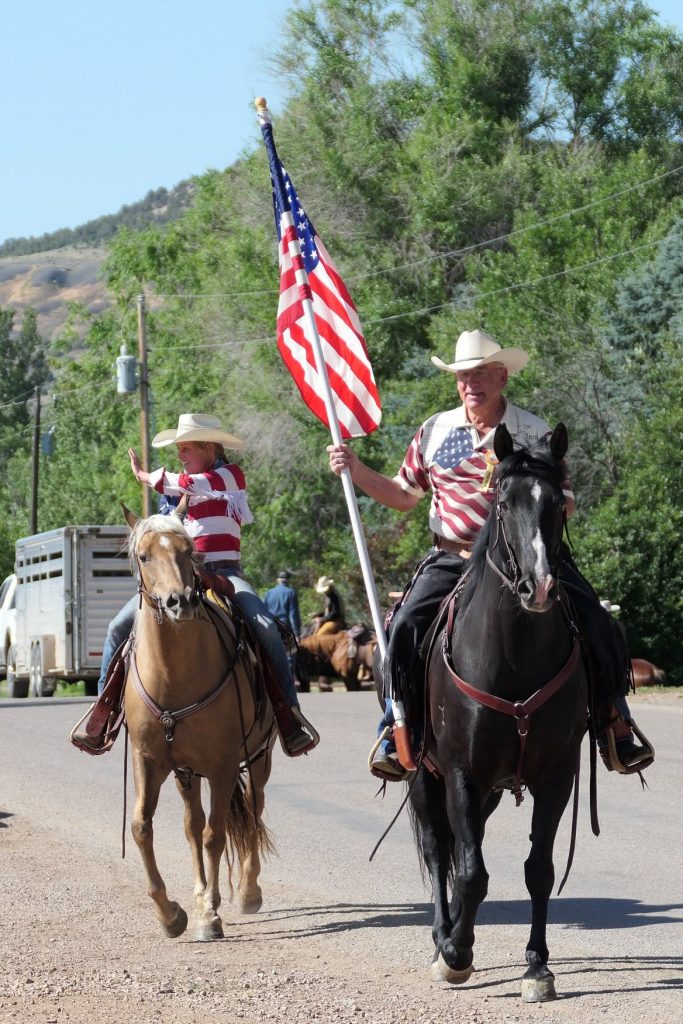
-
Allison Greer hands off to her brother Dawson Greer.
PE_allison_and_brother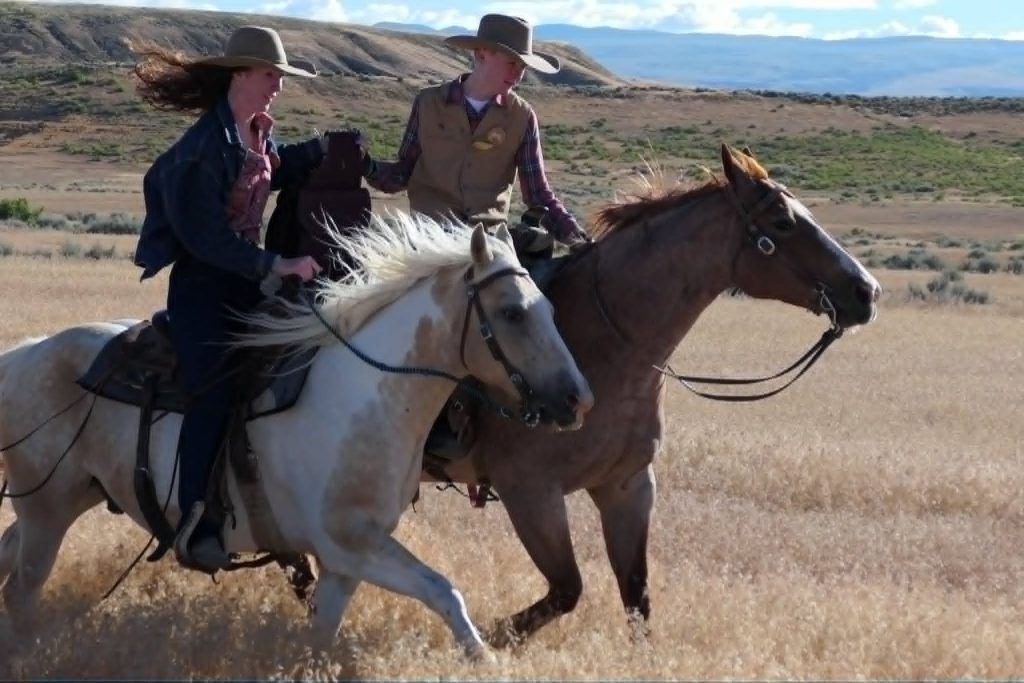
-
Allison Greer rides out of Hyattville on the first leg of the trip.
PE_Allison_begijning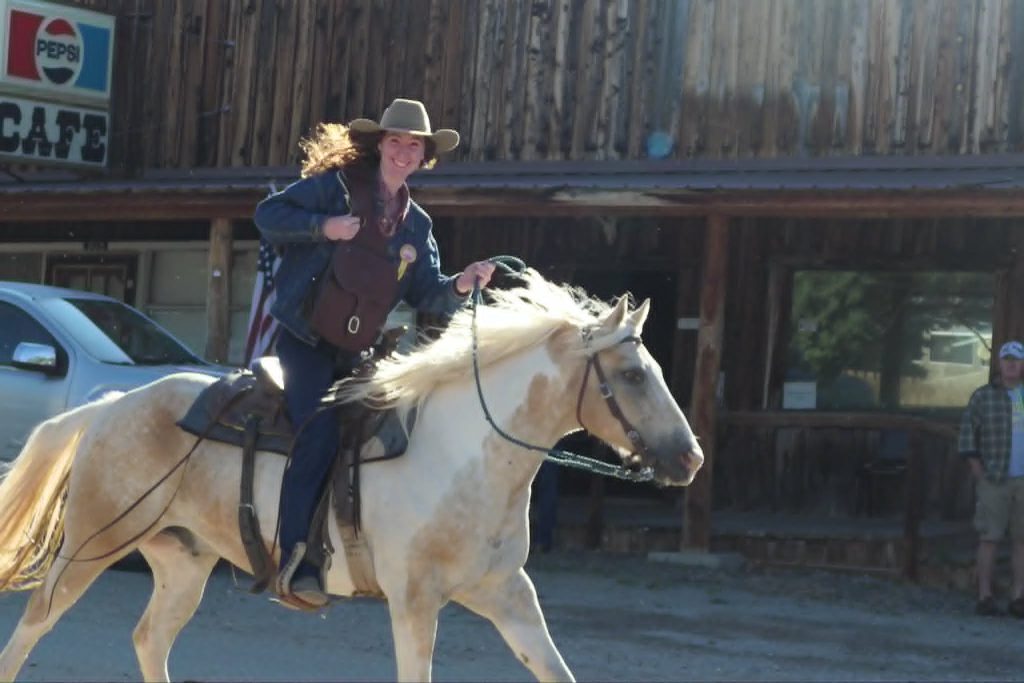
-
Allison Greer was honored to accept her assignment: to kick off the ride.
PE_Allison_getting_mail_bag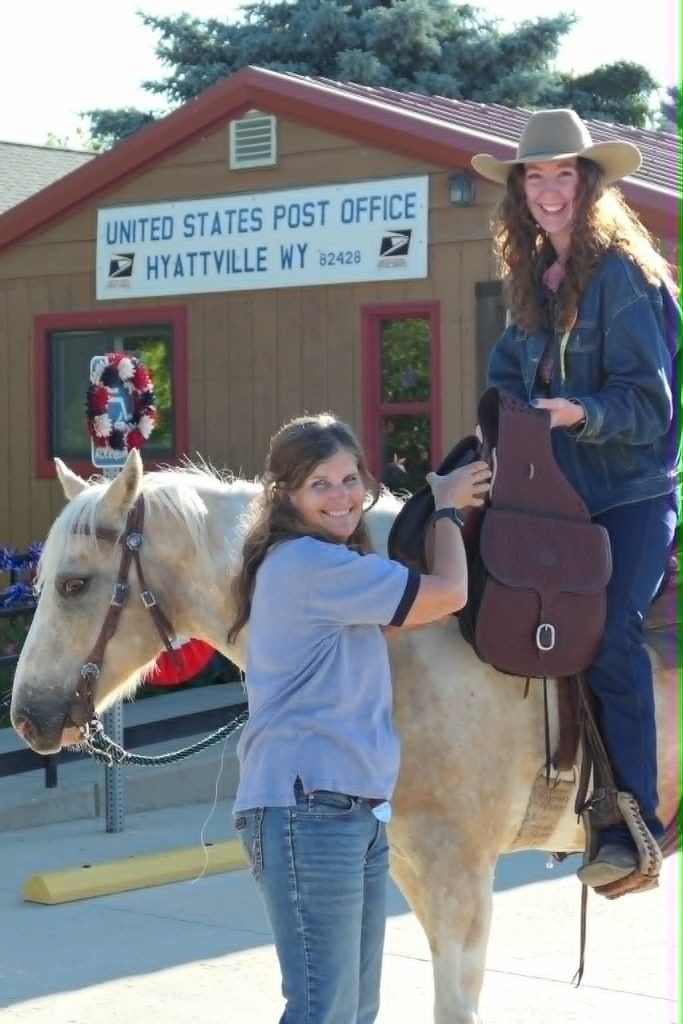
-
Allison Greer rides out of Hyattville on the first leg of the trip.
PE_Allison_leaving_town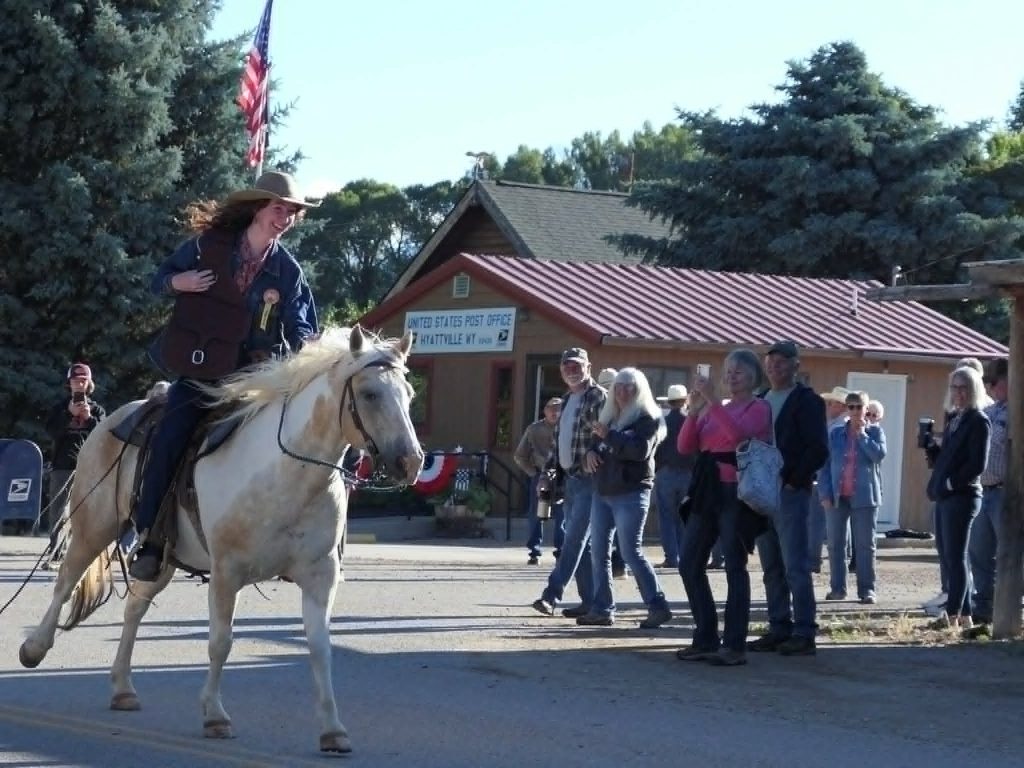
-
Riders travel with the mail for a mile at a fast pace before handing off to the next delivery cowboy or cowgirl.
PE_close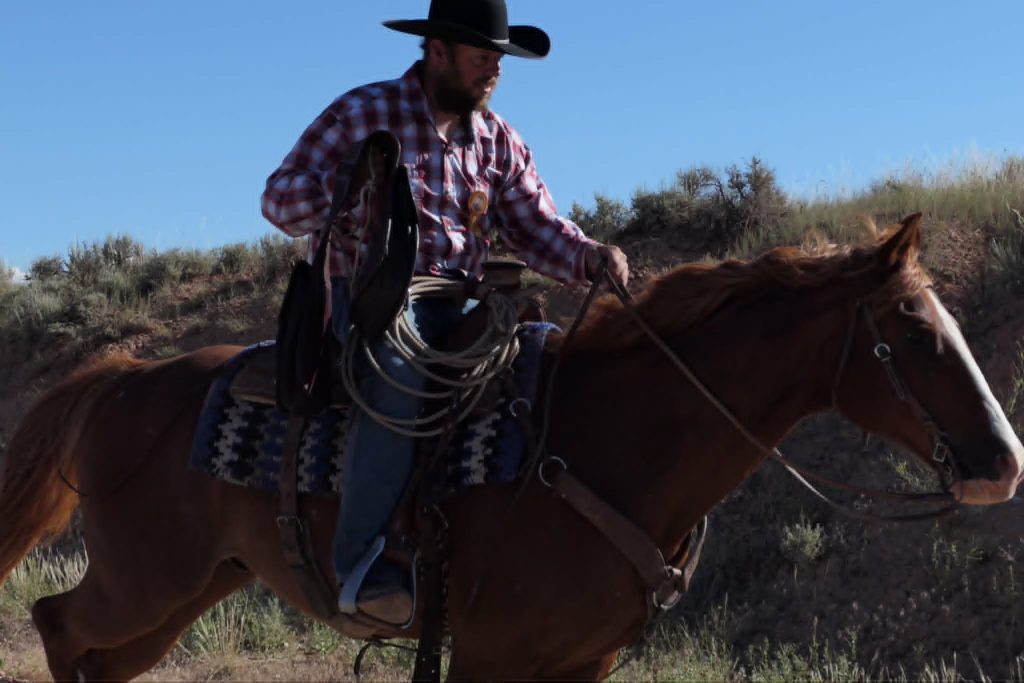
-
Dave Greer assembled the first event, and subsequent rides for 25 or more years.
PE_Dave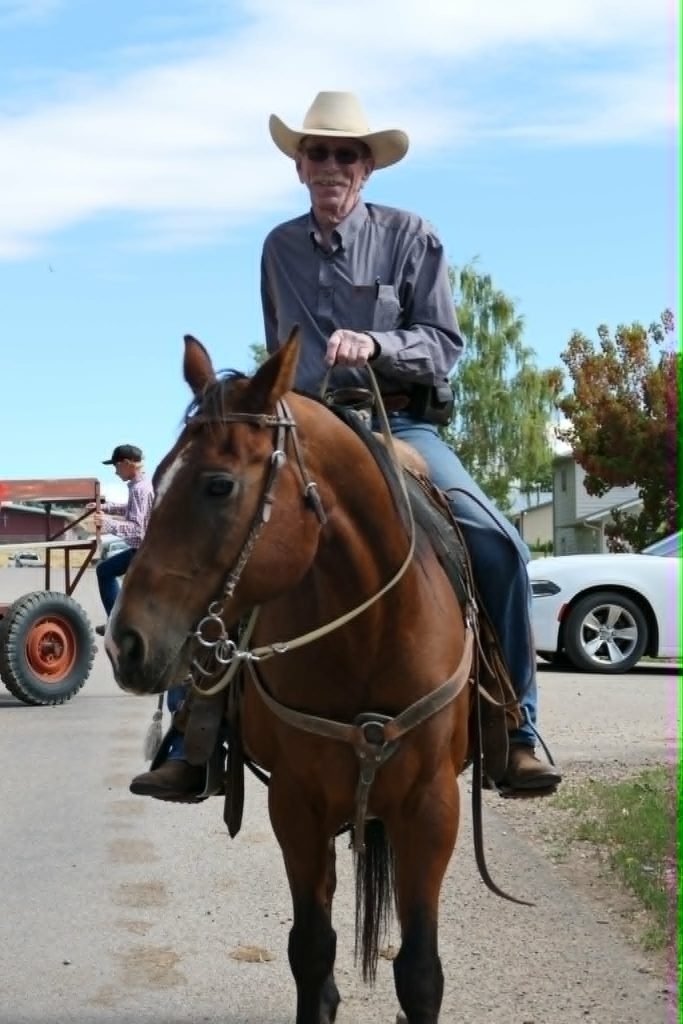
-
The 17.5 mile trek is across open range country, and usually takes the group about 1.5 hours to complete.
PE_distance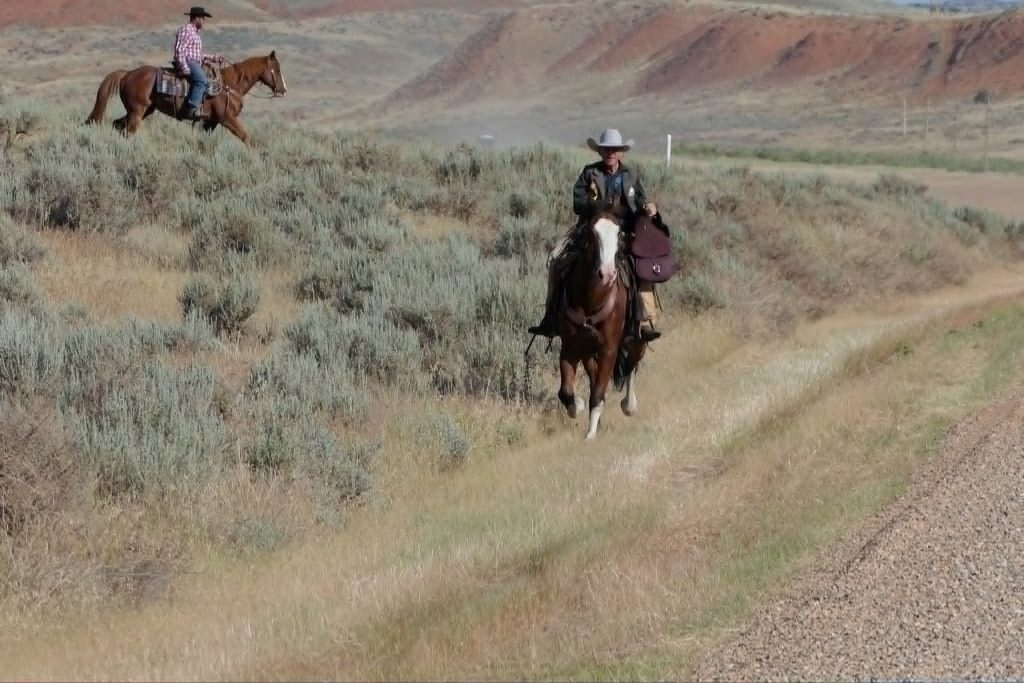
-
Riders hand off the mail bag.
pe_handoff_in_sun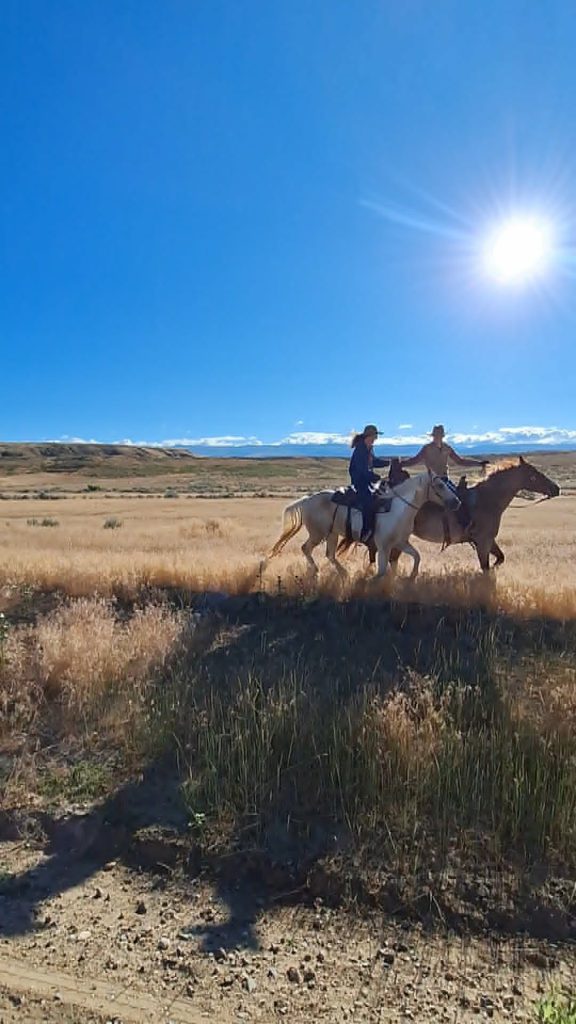
-
The riders all wind up in Ten Sleep where they ride together in the annual Independence Day parade. Here, event organizer Lyle Spence carries the flag.
PE_parade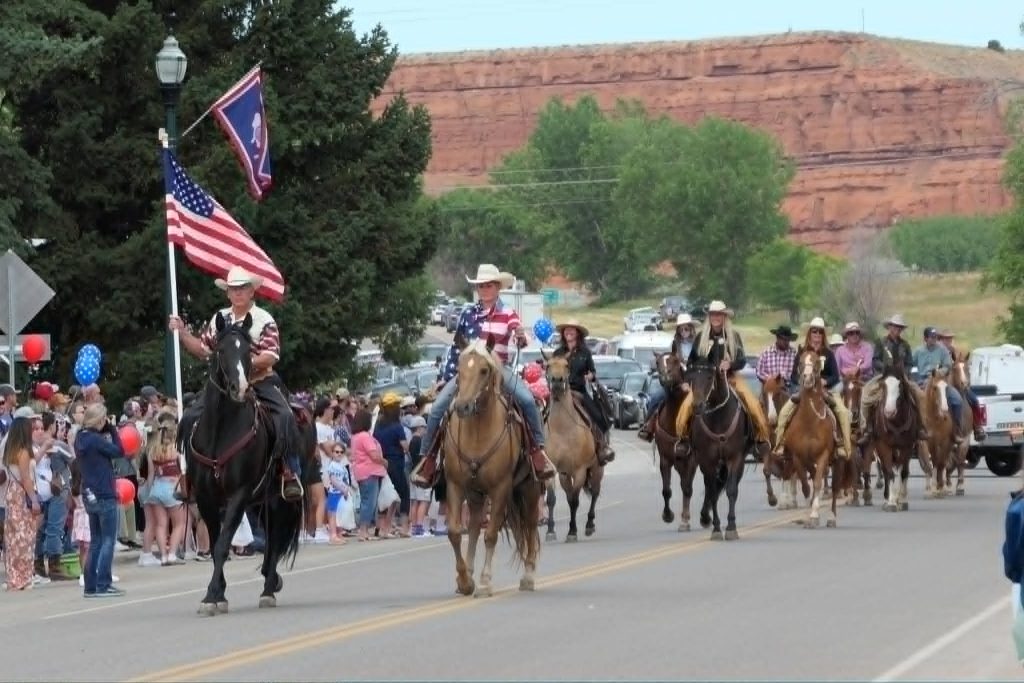
All photos courtesy Amber Greer
The Stakes
In 1860, a letter from New York to California took three weeks by stagecoach, longer by ship around Cape Horn. The country was three months from electing Lincoln and twelve from civil war. California — gold, ports, half a million people — was effectively unreachable in real time.
Three freight men in Leavenworth, Kansas — William Russell, Alexander Majors, William Waddell — proposed something close to delusional. Ten days, end to end. Five hundred horses. A relay of riders moving day and night across two thousand miles of plains, mountain, and desert. – reprinted from the Pony Express National Museum
“I’m very, very proud to be an American. The fourth of July is my favorite holiday,” said Wyoming native Allison Greer who rode in her community’s Pony Express re-enactment as a teenager.
Allison and many others have gotten a taste for the thrill of carrying mail at a high lope across the open range through the Hyattville to Ten Sleep annual Pony Express ride.
“It was a fun thing to do. I love the wild west and that time frame. I think I was born in the wrong time period, I should have been born when they were settling the west,” said the Hyattville ranch woman.
Her family enjoys the parade, rodeo and street dance on July 4, along with the pony express ride. “It’s a whole day of Western, American fun. When I was little, I rode in the parade with dad and grandpa.”
Allison’s great uncle Dave Greer implemented the event about 30 years ago – nobody can remember exactly when the first ride took place.
While Hyattville to Ten Sleep is not on the original Pony Express route, the town of Hyattville was a trading center due to its location approximately half way between two historically significant markets of Casper, Wyoming and Billings, Montana that were connected by wagon trail. Some interesting and related trivia on Hyattville: the town was known as Paintrock crossing in the pioneer days “because there was a good place to cross the creek with a freight wagon,” said Dave Greer. The town’s name was changed to Hyattville after its very first postmaster, Sam Hyatt.
Dave, who, like his mother, was born and raised on the family ranch just three miles east of Hyattville helped the Ten Sleep postmaster organize the event which raises funds for the local Lions Club.
Specially marked envelopes with a unique cancellation stamp are sold prior to the event for $5 apiece, with all funds going to the Lions Club for community service projects including a fourth of July rodeo. Coincidentally, the cost of a first class letter in 1860 was also $5, which translates to about $200 in today’s economy.
The ride often carries mail addressed to about 40 different states and six or seven different countries. Experienced riders from anywhere are welcome – a ranch intern from South Africa once participated, as did visitors from Norway.
The rider who covers the last leg delivers the mail bag to the Ten Sleep post office.
Dave oversaw and took part in the event for at least 25 years before stepping down about 5 years ago, at which time Lyle Spence took the reins.
Lyle said the entire event is intended to show reverence to the nation’s heritage. At 74 years of age, he continues to take one leg of the ride.
Riders and horses usually begin to arrive around 6 to 6:30 a.m. A local supporter often provides breakfast.
“We start with the pledge of allegiance. Then we offer a prayer. Occasionally we have someone since a patriotic song. It’s a neat ceremony. We are unashamed of our patriotism,” said Spence.
“We usually have some special gifts for the riders and we do have some special surprises this year to celebrate our country’s 250th birthday,” he said.
“It’s an occasion for people to stop and pause and show recognition for the wisdom and courage of our founding fathers and what they did that day in 1776,” he said. While there is no dress code, the riders dress appropriately with many of them wearing clothing that looks authentic to the pony express time frame.
The riders take part in a swearing-in ceremony, no different than any other U.S. Postal Service carrier. “They are carrying the U.S. mail,” said Dave. The current postmaster administers an oath of fidelity to each rider at about 7:30 am, then the riders disperse to their designated legs of the ride.
“The first rider leaves Hyattville on a high lope at 8 a.m. sharp. We are usually in Ten Sleep by 9:30, in time for the parade, which starts at 10,” said Dave. The riders participate in the parade, with some carrying flags.
In the earlier years, he sometimes had six to eight riders to work with. The riders would ride a mile leg, then trailer ahead for another leg, in order to complete the 17.5 mile trek without stressing any of the horses. Sometimes a fresh horse awaited the rider, but if their equine partner was in good shape, they might not switch mounts. In more recent years, riders have numbered as high as 20 or more. If there are more than 18 riders, the organizer might put two riders together for one stretch, to keep each leg at about a mile.
While safety was of the utmost importance, the intent was for the riders to mimic the fast pace of the original Pony Express, with “flying” handoffs when possible.
“We would do flying handoffs to the next person if you had the right riders,” said Dave. “I did it with my boys, and I did it with Tyler Greer (Allison’s dad).” The mail bag, usually weighing about 20 pounds, is a traditional saddle bag with pouches on either side. Some riders carry the bag between their body and the saddle horn, while a few will sling it over their shoulder. “The first-time riders are usually surprised when you sling that mail bag to them,” said Dave. “They don’t expect it to be that heavy.”
The Greer family from Hyattville and the Hampton family from Ten Sleep have both been involved in every single re-enactment ride.
Allison carried mail for three years in a row, beginning when she was 15.
“We would practice a couple of times with dad in the pasture. My dad’s horses were really broke so it wasn’t an issue, but some people had horses that were skittish,” she said.
“The first two times I rode, I was kind of in the middle. The last time I did it, I was the one that started it. The mail lady handed me the bag at the post office and I took off through town. That was fun.”
Besides her dad, Tyler, Allison’s sister Madison and brothers Stetson and Dawson and even her brother-in-law have joined the fun over the years.
“When I was little, I loved watching dad do it. I love riding horses to work and move cattle, but you can’t always lope as fast as you can. So the ride is definitely fun, I can go as fast as my horse will go. I love traveling through the desolate country to deliver mail Those men rode through Indian territory and barren country. There was nothing. It was crazy. It was also fun because we are re-creating something that Americans did historically to communicate with each other as we were setting the west.”
History of the Pony Express
The Pony Express ran each week in each direction, with an average time of 10 days. Delivery of Lincoln’s inaugural address set a new record of slightly less than eight days. The mail averaged almost 250 miles a day. In the nineteen months the Pony Express existed, only one rider was killed by hostile Indians, and only one bag of mail was lost. The riders had covered 650,000 miles by horseback.
Financial Burdens
The following information was found on the Pony Express National Museum website and the City of St. Joseph website:
Exciting as it was, the Pony Express was never a financial success. It was never a part of the United States Postal service, although the galloping Pony Express rider was the official symbol on every letter carrier’s shoulder until the invention of Mr. Zip. The most significant thing the Pony Express accomplished was to help hold California, and its gold, for the Union at the start of the Civil War.
Russell, Majors, and Waddell lost $500,000 on the Pony Express. Eventually Ben Holladay became the owner of what remained of the Pony Express. He merged it with his Central Overland Stage Lines.
William Russell, former president, died in 1872, broke and shunned. William Waddell never went back in business. A son was killed in the Civil War, his property was sold for taxes, and he, too, died broke in 1872. Alexander Majors returned to freighting and in 1867 moved to Salt Lake City. He took part in construction of the Union Pacific Railroad and died in 1900. Wealthy Ben Holladay died a poor man shortly after the Panic of 1873.
As a business venture, the Pony Express was a failure. It lasted only 19 months. But a century and a quarter later, it still fascinates the world as an example of good old American determination and know-how.
List of Pony Express Riders by Name
James Alcott
Andrew Ole Anderson
J.W. Anderson
John Anson
Henry Avis
Rodney Babbit
Lafayette Ball
James Banks
James Barnell
Jim Baughn
Marve Beardsley
James Beatley
Charles Becker
John Bedford
Thomas Bedford
Martin Bengtson
James Bently
Asher Bigelow
Charles Billman
G.R. Gills
“Black Sam”
“Black Tom”
Lafayette Bolwinkle
Bond
“Boston”
William Boulton
John Brandenburger
James Brink
Hugh Brown
James Brown
James Bucklin
David Burnett
Ed Bush
Henry Butterfield
William Campbell
James Carlin
Gustavas Carlton
Alexander Carlyle
William Carr
William Carrigan
James Carter
Michael Casey
William Cates
James Clark
John Clark
Richard Clarke
Richard Cleve
Charles Cliff
Gustavus Cliff
William Cody
Buck Cole
Bill Corbett
Edward Covington
James Cowan
Jack Crawford
James Cumbo
Louis Dean
James Dennis
William Dennis
Frank Derrick
Alex Diffenbacher
Thomas Dobson
J. Dodge
Joseph Donovan
W.E. Dorrington
Calvin Downs
Tommy Drum
Daniel Drumheller
James Dunlap
William Eckels
Major Howard Egan
Howard Ransom Egan
Richard Erastus Egan
Thomas J. Elliott
J.K. Ellis
Charles Enos
George Fair
H.H. Faust
Josiah Faylor
Johnny Fischer
John Fisher
William Fisher
Thomas Flynn
Jimmie Foreman
Johnny Fry
William Fulkerson
Abram Fuller
George Gardner
James Gentry
James Gilson
Samuel Gilson
Jim Gleason
Frank Gould
“Irish Tom” Grady
Martin Hall
Parley Hall
Sam Hall
Billy Hailton
James “Bean” Hamilton
Sam Hamilton
Robert Haslam
Theodore Hawkins
Sam Haws
Frank Helvey
Levi Hensel
William Hickman
Lucius Ludosky Hickok
Charles Higginbotham
Martin Hogan
Clark Huntington
Lester Huntington
William James
David Jay
William Jenkins
Jennings
Samuel Jobe
William Jones
Jack Keetley
Hiram Kelley
Jay Kelley
Mike Kelly
Thomas King
John Koerner
Harry LaMont
Thomas Landon
George Larkin
William Lawson
Charles Larzelere
James Madison Lenhart
George Leonard
George Little
N.N. Lytle
Joseph Malcom
Robert Martin
Philip Mass (Messero)
Elijah Maxfield
Montgomery Maze
Silas McAulas (Macaulas)
Emmet McCain
J.G. McCall
Charlie McCarty
James McDonald
Pat McEneany
David McLaughlin
James McNaughton
William McNaughton
Lorenzo Meacona
J.P. Mellen
Howard Mifflin
Charlie Miller
James Alexander Moore
John Mussy
Jeramiah Murphy
Newton Myrick
Paul Obershaw
Mathew Orr
Robert Orr
William Johnson Osborn
G. Packard
William Page
Charles Parks
John Paul
“Mochila Joe” Paxton
George Perkins
Joseph Perkins
Edward Pollinger
Charles Pridham
Thomas Ranahan
Theodore Rand
James Randalll
Charles Reynolds
Thomas Reynolds
William Minor Richards
H. Richards
Johnson W. Richardson
Sewell Ridley
Bartholomew Riles
Jonathan Rinehart
Don Rising
Harry Roff
Edward Rush
John Rutsel
Thomas Ryan
Robert Sanders
F.H. Saunders
G.G. Sangiovanni
Henry Clay Scrafford
George Scovell
John Seebeck
Jack Selman
Joseph Serish
James Shanks
John Sinclair
George Smethurst
John Sprague
George Spurr
Edward Sterling
William Streeper
Robert Stricklen
William Strohm
John Sugget
George Talcott
Billy Tate
George Thatcher
J.J. Thomas
Bill Thompson
Charles Thompson
James Thompson
Alexander Toponce
Elias Littleton Tough
William Tough
George Towne
Bill Trotter
Henry Tuckett
Warren Upson
John Wade
Henry Wallace
Jun Waller
John Watson
Daniel Wescott
Michael Whalen
George Wheat
“Whipsaw”
J. Williams
H.C. Wills
Thomas Thornhill Willson
Elijah Nicholas Wilson
Slim Wilson
Ira Wines
Joseph Barney Wintle
Henry Worley
James Worthington
Amos Wright
George Wright
Jose Zowgaltz
More from the Pony Express National Museum
2,000 miles in 10 days
In April 1860, a relay of young riders set out to do the impossible — carry the mail across the American West in a fraction of the time anyone believed possible.
The Stakes
In 1860, a letter from New York to California took three weeks by stagecoach, longer by ship around Cape Horn. The country was three months from electing Lincoln and twelve from civil war. California — gold, ports, half a million people — was effectively unreachable in real time.
Three freight men in Leavenworth, Kansas — William Russell, Alexander Majors, William Waddell — proposed something close to delusional. Ten days, end to end. Five hundred horses. A relay of riders moving day and night across two thousand miles of plains, mountain, and desert.
“Wanted: young, skinny, wiry fellows, not over eighteen. Must be expert riders, willing to risk death daily. Orphans preferred.”
— Recruitment notice, attributed (likely apocryphal but widely reprinted)
Day 1, Mile 0
The First Rider
The mochila — a leather mail pouch designed to slip from saddle to saddle in seconds — was loaded at the Pikes Peak Stables. The first rider out, by most accounts, was Johnny Fry. Some say Billy Richardson. The records of the first night are themselves part of the legend.
The horse was led down to the Missouri River ferry. Across, into Kansas Territory. By morning, the mail had crossed two hundred and fifty miles of plain. Behind it, the second rider. Behind that one, the third.
Day 2, Mile 320
Onto the Plains
Out of the Missouri bottom and into the Flint Hills. The Big Blue River. Marysville, then northwest into present-day Nebraska, picking up the Little Blue and finally the Platte — the Pony Express’s great east-west highway.
Riders rode in shifts of seventy-five to a hundred miles, swapping horses every ten or twelve. A swing station was sometimes a sod hut and a corral. A home station was where you ate and slept until the eastbound mail came through.
Day 3, Mile 560
Along the Platte
Fort Kearny was the first major army post on the route — a home station with company, a meal, the closest thing to civilization for hundreds of miles in any direction. The mail pulled in, the mail pulled out. Fresh horse, fresh rider, gone again.
Past Kearny, the Platte stretches west like a slow brown ribbon under a sky too big to think about. Buffalo herds, sometimes still in the millions, rolled across the route like weather. Riders learned to ride around them, never through.
Day 4, Mile 850
Chimney Rock and Beyond
Past Julesburg, the land rose. Chimney Rock appeared — a thin stone needle visible for two days’ ride in either direction, a landmark that emigrants used to chart their progress for a generation. Then Scotts Bluff. Then Fort Laramie, the great waystation of the trans-continental West.
Beyond Laramie, the trail turned hard for the high country. The Sweetwater. Independence Rock. The rise toward South Pass.
Day 5, Mile 1100
South Pass
The Continental Divide, at 7,400 feet, broad and almost gentle — the only place in the Rockies where wagon trains, emigrants, and now Pony Express riders could cross without the country trying to kill them. From the saddle, a rider couldn’t always tell when he had crossed it. The water, though, knew. East of the pass, every creek ran to the Atlantic. West of it, every creek ran to the Pacific.
Down toward Fort Bridger. Then southwest, into the Wasatch. Then down the long descent into the valley of the Great Salt Lake.
Day 6, Mile 1300
Salt Lake City
The largest home station on the route. The single place along the entire trail where a Pony Express rider could expect a hot meal, a real bed, and the sight of more than a dozen people. The Mormon settlement was thirteen years old. Brigham Young had picked it for its inaccessibility, and the Pony Express had just made that inaccessibility a little less true.
West of Salt Lake, the country emptied out completely. Ahead lay the Great Basin — the most punishing thousand miles on the route.
Day 7, Mile 1500
The Paiute War
In May of 1860, six weeks into the run, a war broke out across the entire central section of the route. The Paiute, retaliating against settler violence on the Carson River, attacked stations from Carson Sink to Ruby Valley. Eight stations burned. At least sixteen station men killed. The mail kept moving anyway.
One rider, “Pony Bob” Haslam, finding his relief station burned and the next rider dead, rode on. He covered three hundred and seventy miles in just over a day and a half — through hostile country, on relays of exhausted horses, with a wounded jaw — and delivered the mail. It is, by some measures, the longest documented sustained ride in American history.
“Through dangers and difficulties no man can describe, the mail came in on time.” — Sacramento Daily Union, June 1860
Day 8, Mile 1700
Mark Twain Sees a Rider
The young Samuel Clemens, traveling west by stagecoach in the summer of 1861, watched a Pony Express rider pass his coach. Years later, in Roughing It, he gave it the most quoted description anyone has ever written:
“He rode a splendid horse that was born for a racer, and fed and lodged like a gentleman; kept him at his utmost speed for ten miles, and then, as he came crashing up to the station where stood two men holding fast a fresh, impatient steed, the transfer of rider and mail-bag was made in the twinkling of an eye, and away flew the eager pair and were out of sight before the spectator could get hardly the ghost of a look.”
— Mark Twain, Roughing It, 1872
Day 9, Mile 1850
Crossing the Sierras
The hardest hundred miles of the route, and the last of them. The Sierra Nevada in summer is a steep grind. In winter it is something else — riders in snowshoes leading horses up Echo Summit when drifts swallowed the trail entirely. The legend includes more than one rider who dismounted, wrapped the mochila in his coat, and walked the last mile.
Down the western slope. Past Friday’s Station. Strawberry. Hangtown — Placerville. The country opened. The air thickened. The mail had reached California.
Day 10, Mile 1966
Sacramento
The B.F. Hastings Building. A small crowd, sometimes; on the very first ride, a brass band, fireworks, and most of the city. The mochila came off its last horse at half past five in the afternoon. From there a steamer carried the mail down the Sacramento River to San Francisco overnight.
Total elapsed time on that first run: nine days, twenty-three hours. The fastest was a special run carrying Lincoln’s first inaugural address — seven days, seventeen hours.
October 1861
The wires went up, and the riders went home.
On October 24, 1861, the transcontinental telegraph was completed at Salt Lake City. A message that had taken ten days now took ten seconds. Two days later, the Pony Express was officially discontinued.
It had run for eighteen months. It had lost its founders roughly two hundred thousand dollars. It had carried about thirty-five thousand pieces of mail.
And it had set, in the American imagination, the image of a single rider against an enormous country — a young man on a fast horse with the mail on his back and the West to cross — that the country has never quite let go of.