America | LO Cattle Company: A young man’s dream
-
The Brown cattle herd is predominantly Angus, with some baldies that reflect the Hereford influence introduced in the 1950s.
IMG_5404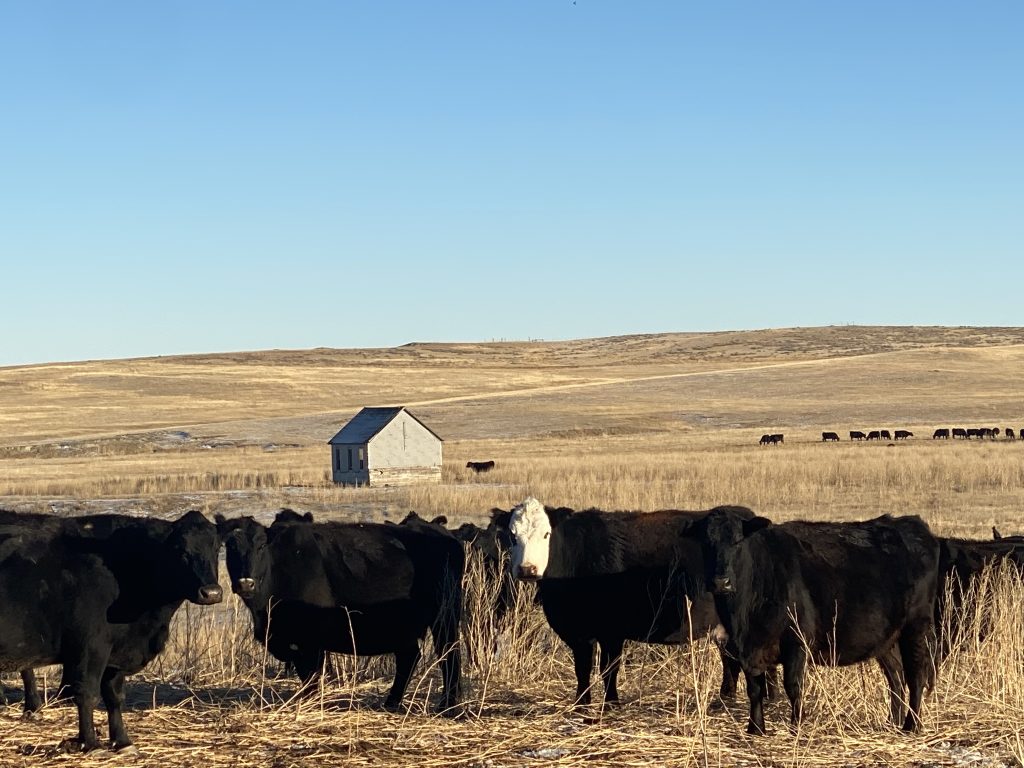
-
Spring branding at the LO Bar Ranch Tuesday, June 8, 2021 in Sand Springs, Montana. MSU photo by Kelly Gorham
kg20210608_-_Branding_in_the_Winter_Pasture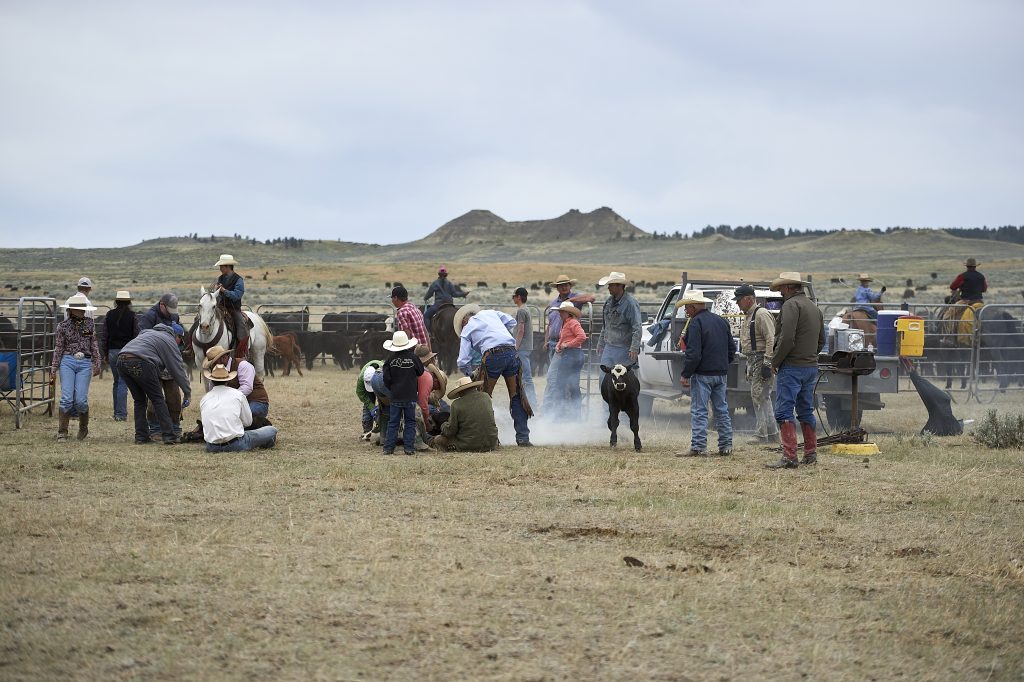
-
Travis Brown and his daughter Blair on Ransom spend some quality time together checking a calving trap.
Travis_and_Blair_on_Ransom_in_calving_trap_4.1.21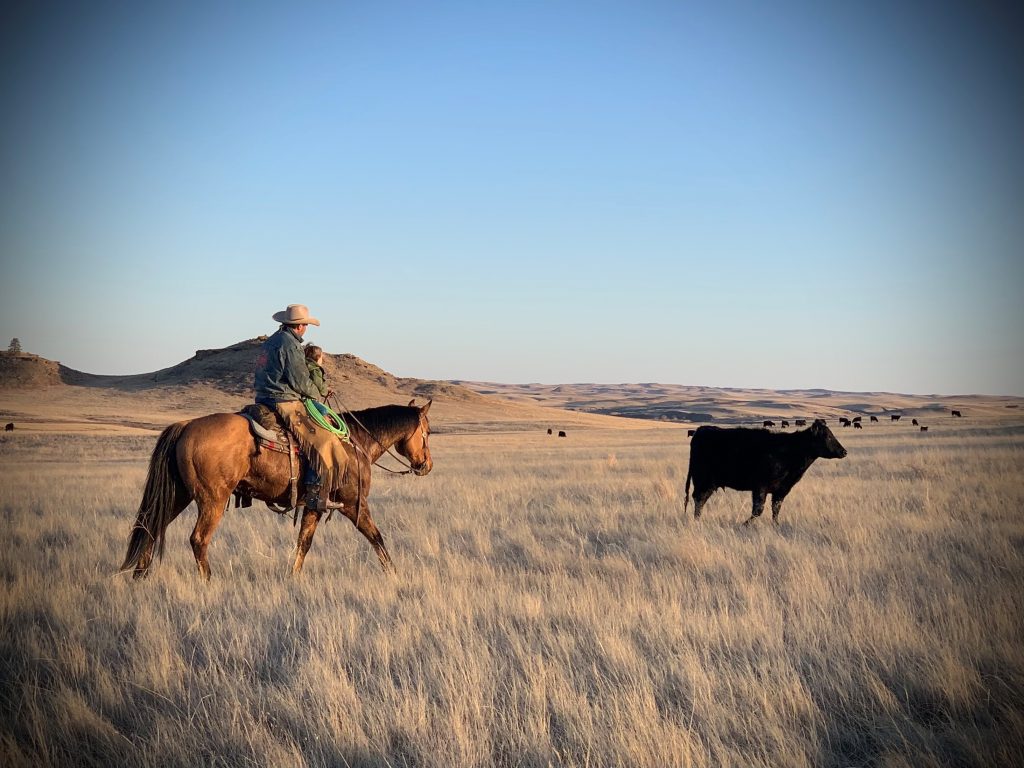
-
-
Bill Brown Sr. and his son Bill Brown Jr. (pictured here) moved the ranch forward when they relocated to Sand Springs, Montana and established a ranch there.
Bill_Brown_Jr._photo_at_horsebarn_20x24_1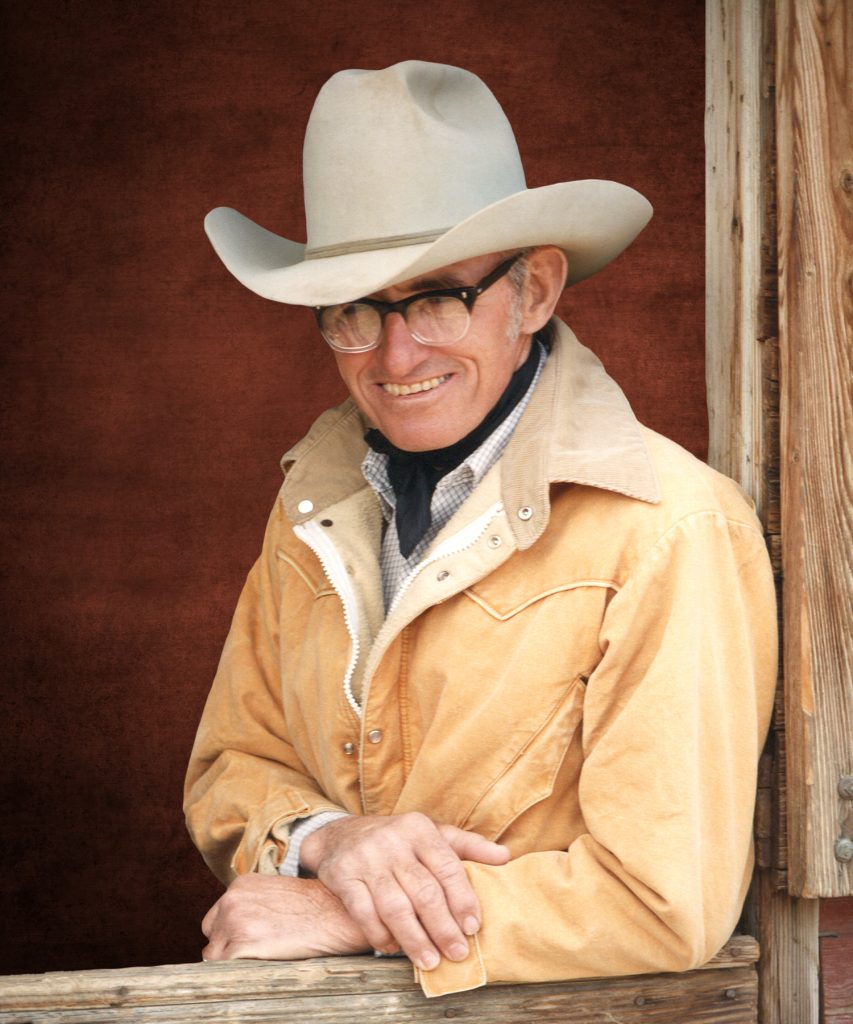
-
Bill Brown Sr’s dream of moving north from Texas to establish a ranch began when he was a young man who had listened to stories about the Texas Trail Drives. Bill Sr. began his journey with a trip to Sheridan, Wyoming at the age of 15 to begin building ranch experience.
Bill_Brown._Sr._8x10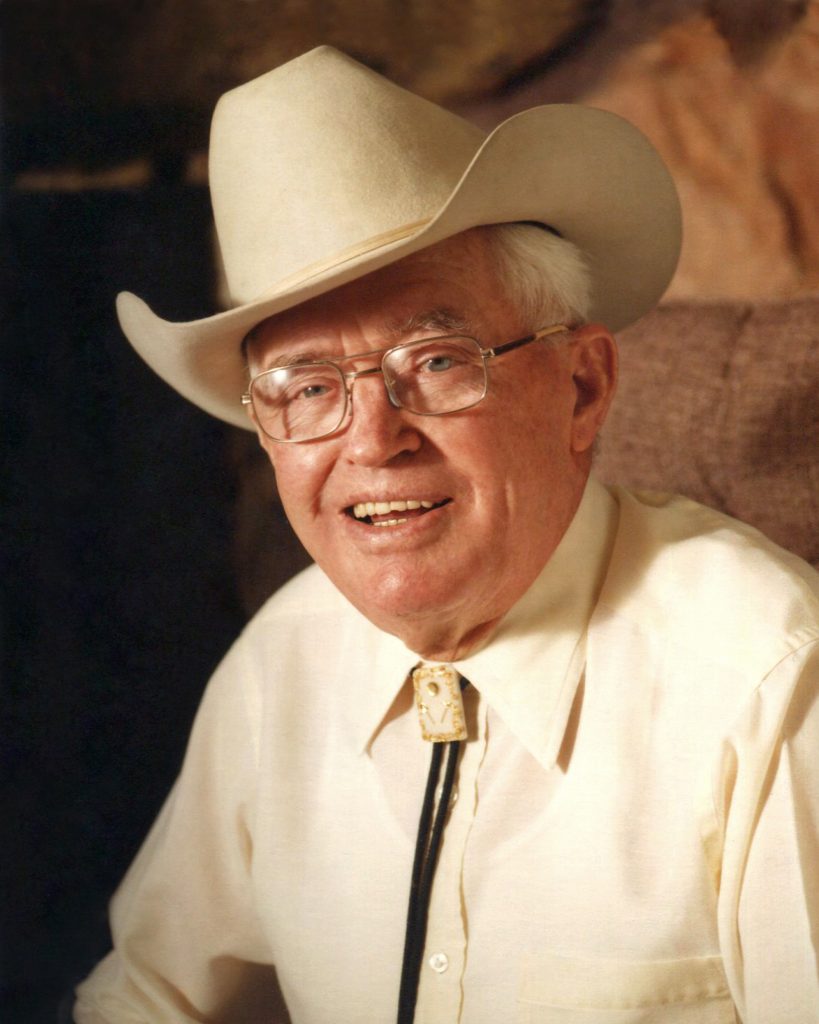
-
Branding requires a lot of help, and the Brown family always has plenty.
Branding_at_Lufborough_2020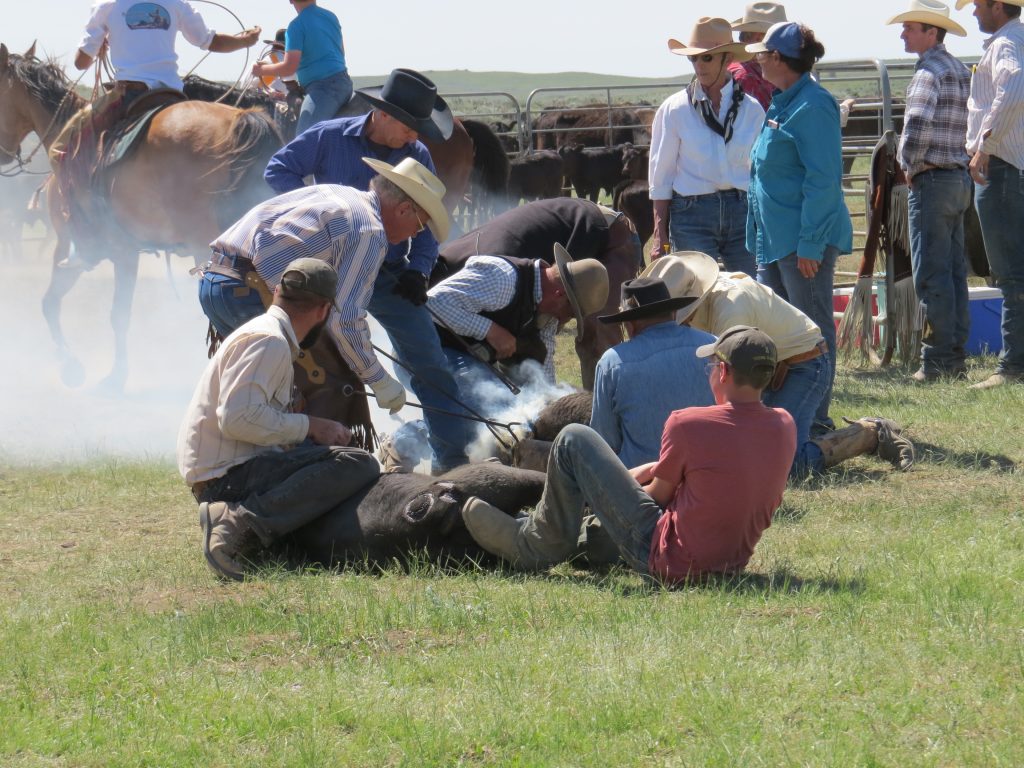
-
Travis Brown and his wife Mary are the fourth generation on the ranch, and their young children are the upcoming fifth generation.
IMG_1105_Mary_and_Travis_waiting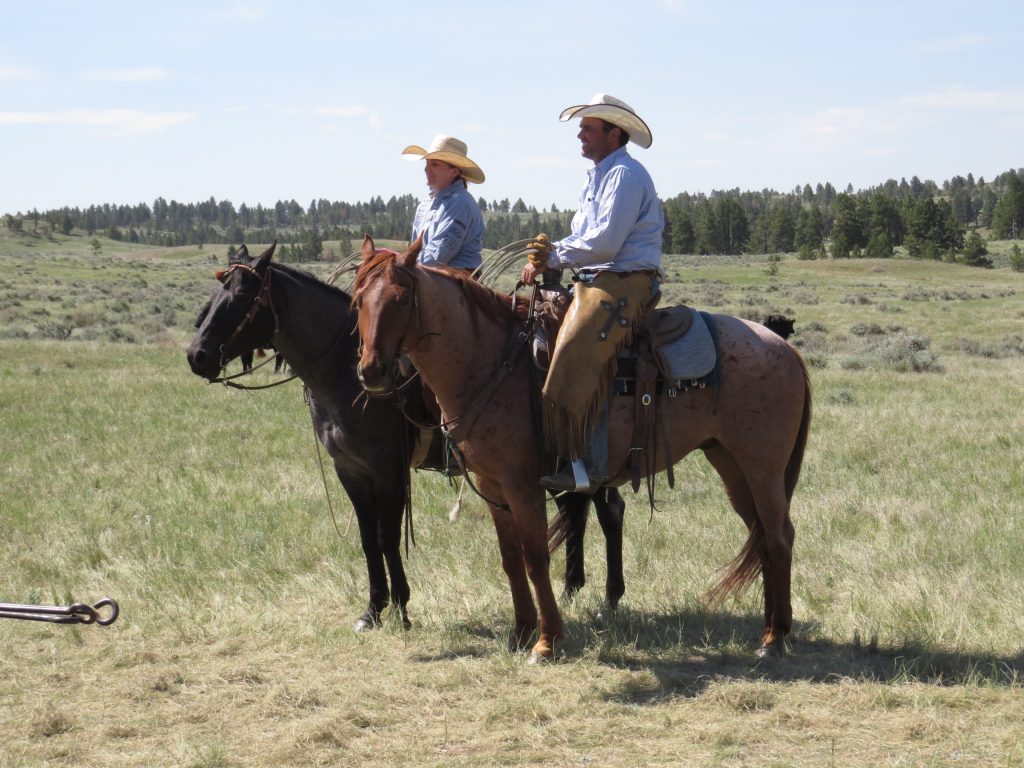
-
Temporary corrals and plenty of hands help separate calves at branding time.
IMG_1109_Branding_at_Breeding_Pasture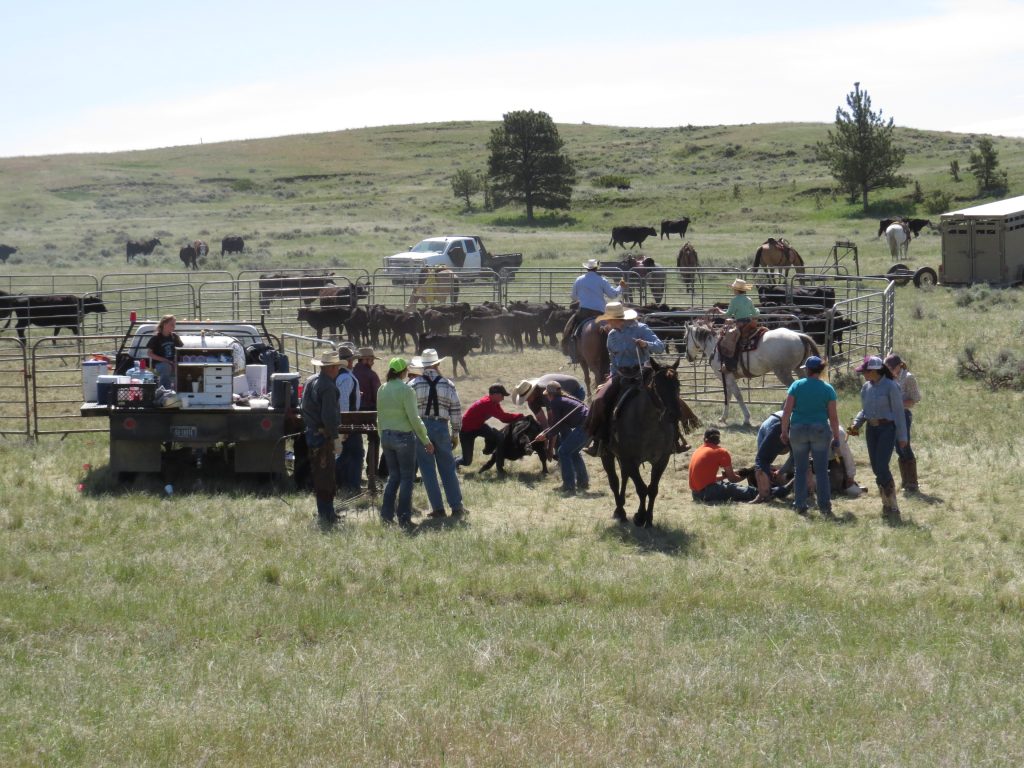
All photos courtesy of Taylor Brown and family.
When young Bill Brown Sr. was a child moving corncobs and horseshoes around on the floor of the family home in Texas, his mother asked him what he was playing. Her son replied that the horseshoes were his horses and the corn cobs were the cows on his ranch in Wyoming.
“My granddad was the oldest of nine kids in Lampasas, Texas,” Taylor Brown, Bill Sr.’s grandson said. “He was born in 1901, so imagine a little kid playing on the floor, with all his uncles, neighbors and friends, and they’re talking about the recent Texas Trail Drives. My granddad heard stories about trailing cattle to Montana and grew up thinking he wanted to ‘go up north.'”
Young Bill Sr. heard stories about how it took “six months to trail the steers to the Yellowstone River and six weeks to bring the horses home.”
In the fall of 1917, at 15 years old and armed with an eighth-grade education, teenage Bill Sr. headed north with his uncle, Jim Brown. They traveled by train to Sheridan, Wyoming, with young Bill Sr. carrying only his saddle, a bedroll and his goods bag.
“They came across Bob Givens, manager of the Spear-Faddis Cattle Company,” Taylor said. “Spear was running several roundup wagons in Wyoming and Montana when they hired this fifteen-year-old kid.”
Taylor details an important aspect of his granddad’s story, explaining that Spear-Faddis later became Faddis-Kennedy, and in 1948, it became Brown-Kennedy when Bill Sr. joined as a half partner in the same ranch where he had started working as a 15-year-old. Because he was too young to serve in World War I and too old to serve in World War II, Bill Sr. continued ranching through those years. In 1927, Bill Sr. married a local girl named Beth McQueen and Taylor’s dad, Bill Brown Jr., was born in 1929.
At one point, when Bill Sr. was tending camp, the bosses showed up and told him, “It has come to our attention that you own a few cows.” Bill Sr. explained that yes, he had bought 20 cows but was running them on a neighbor’s land. The bosses reminded Bill Sr. of what he already knew: company policy dictated that hired men couldn’t run their own cows.
“They decided my granddad could run a few cows, but they told him not to get too big,” Taylor said. “He looked them in the eye and said, ‘I’ll keep working for you, but I’m going to get as big as I can and just as quick as I can. You tell me when I’m too big.”
The years following World War II were prosperous for agriculture and the cattle business, so Bill Sr. started expanding in the 1950s.
“He was buying steers in Mexico, bringing them up here and putting them on grass,” Taylor said. “He was also buying other ranches – getting as big as he could, as fast as he could. In 1959, his partner Porter Kennedy told Bill Sr. he was too aggressive and wanted to dissolve the partnership. They agreed to sell half of the ranch.”
The question was “who would buy and who would sell?” Both wanted the ranch, so they agreed on a price, and relied on a coin toss to determine their fate.
“My granddad had been lucky his whole life and knew he’d win the toss,” Taylor said. “He lost the toss but still thought he’d probably get the ranch because his partner Kennedy was more of a businessman.”
That isn’t how it went. The ranch had been in Kennedy’s family for a long time and since Kennedy won the toss, he decided to buy. Bill Sr. received a fair price, and the Browns were now seeking a ranch.
“They looked at a lot of places and ended up in Sand Springs, Montana,” Taylor said. “We moved on April 1, 1960, when I was three years old. My granddad, Bill Brown Sr., and my dad Bill Brown Jr. started the Brown Ranch in Sand Springs. They eventually added three more ranches.”
Taylor explains that the LO Bar was Bill Sr’s original brand he had gotten in Wyoming, so that became the name of the ranch.
“My dad evolved into being the manager and had purebred Hereford cattle,” Taylor said. “In the 1950s we started raising our own bulls with a purebred line from Curtice–Martin Herefords called Beau Donald. We had commercial and purebred Hereford herds, and for about 20 years we sold two-year-old purebred Hereford bulls at an annual bull sale.”
When exotic cattle breeds were introduced in the 1970s, Bill Jr. became interested in using Simmental bulls and was among the first ranches to use that breed in crosses. Since Simmental bulls weren’t yet available in the U.S., they used A.I to breed Hereford cows.
“My dad went to Ireland and bought a Simmental bull,” Taylor said, “but Simmental cattle weren’t efficient on our ranch because they required more feed. We only have 11 to 13 inches of rain each year, thin topsoil and a short growing season. Simmental are growthy but required more feed than we could easily provide.”
The Browns tested other breeds including Limousin and Maine-Anjou bulls which they bred to Hereford cows. These crosses resulted in good F1s, but the Browns eventually turned to Angus for lighter birthweights. By the late 1990s, black cattle were the heart of the LO Bar herd.
Taylor’s son Travis was born in 1984, and although Travis wasn’t raised on the ranch, the family spent a lot of time there. After graduating from Montana State University, Travis worked as an ag lender, then moved to the ranch full-time in 2011. Through that time, long-time family friend Rick Potts served as the ranch manager for nearly 25 years.
“Rick, who was recently inducted into the Cowboy Hall of Fame, was instrumental in managing the operation between my dad’s retirement and Travis moving to the ranch,” Taylor said, crediting Potts for the successful management transition to Travis and his wife Mary and their five children.
In 66 years on Calf Creek, the LO Bar has survived some hard winters, multi-year droughts, grasshopper hordes, the Lodgepole Fire, and even a flood, but the grit and resilience of Bill Brown’s legacy lives on.
One of the upcoming challenges will be the logistics of transferring the ranch to Travis and Mary’s children, the upcoming fifth generation, but the family remains dedicated to the ranching business.
“It takes so much work to keep multi-generational ranch families in place,” Taylor said. “But I think they may be the only ones who can make this kind of outfit succeed over the long-haul. It takes families who are committed to the land.”