Heavier carcasses unlock value for Country Natural Beef ranchers

BIF-RFP-100526
Country Natural Beef’s cattle became less feed efficient as the cooperative extended days on feed, but they also produced more beef and returned nearly $400 more per head to member ranches.
Tylor Braden, CEO of Country Natural Beef, explained how retained ownership allows the producer-owned cooperative to follow cattle from ranch to harvest and determine where value was created. Braden presented the findings June 3 at the 2026 Beef Improvement Federation Symposium in Boise, Idaho.
“One of the benefits of Country Natural Beef is allowing producers to participate in the complete value chain,” Braden said.
Retained ownership reveals the endpoint
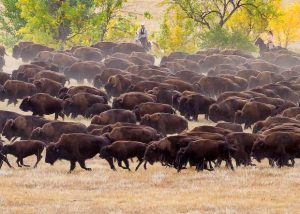
Country Natural Beef began with 13 central Oregon ranchers marketing three head per week in the mid-1980s. Today, more than 80 family ranches across 11 states in the West, including Hawaii, market about 75,000 head annually through the cooperative. The cattle are all-natural and grain-finished and participate in third-party verification programs. Ownership transfers at harvest.
That structure gives the cooperative access to feedyard closeouts, individual carcass records, fabrication yields and final return-to-ranch data. Braden’s analysis included more than 229,000 carcass records, 700 harvest lots and 2,200 feedyard closeouts. Prices and costs were held constant to isolate changes in production and management from market movement.
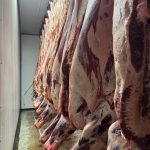
Beginning in 2022, the cooperative gradually extended feeding periods. Average days on feed increased from about 170 to 220, while hot carcass weight climbed from approximately 840 pounds to more than 965 pounds. Dry matter conversion worsened by about 0.6 pound, but the cattle produced 63 additional pounds of red meat per carcass.
ADDED POUNDS OVERCOME DECLINING EFFICIENCY
Hot carcass weight explained about 85 percent of the variation in net carcass value. Each additional pound of carcass weight generated an estimated $4.74 in net value, or about $3.01 per pound of live gain at a dressing percentage of 63.5 percent.
“If the last pounds they’re putting on are less than $3 cost of gain, then you’re making money to continue adding pounds,” Braden said.
Across the period studied, an additional 125 pounds of average carcass weight created $637 per head in net carcass value and approximately $395 in added return to the ranch after feeding costs. Longer feeding increased fat deposition and the number of Yield Grade 4 and 5 carcasses. However, total pounds of saleable red meat continued to rise, while many cooperative costs remained fixed on a per-head basis.
Braden cautioned producers against using days on feed alone to judge profitability. Lighter cattle generally require more time to reach a common endpoint. When the analysis controlled for placement weight, return to ranch increased with additional days on feed even as feed conversion declined.
MANAGEMENT ALLOWS GENETICS TO SHOW
The cooperative has no breed or genetic requirements, and Braden said the rapid performance change could not be credited to a coordinated genetic shift. Instead, longer feeding allowed cattle to express genetic potential already present in member herds.
The percentage of cattle grading Choice or better increased nearly 10 percentage points to about 98 percent. Prime increased 21 percentage points, and the share grading high Choice or Prime increased 32 percentage points to approximately 85 percent.
Country Natural Beef is now evaluating its grid so producer incentives better reflect measured value. Potential changes include raising the minimum carcass weight from 700 to 800 pounds, removing some traditional quality- and yield-grade premiums and discounts, and rewarding carcasses weighing more than 900 pounds that maintain Yield Grades 1 through 3.
Braden emphasized that the findings are not a blanket call for larger cows. Producers could instead prioritize terminal genetics, a longer yearling program or delivering a 900-pound feeder rather than a 600-pound calf. The goal of Country Natural Beef is to give ranchers economic signals that help them match genetics and management to their resources while capturing more value from every animal.
Access the 2026 BIF Symposium presentation archive, which is continuously updated, at BIFSymposium.com. Braden’s full presentation is available on the BIF YouTube page at https://youtu.be/lYu7HcmrBDQ.
KEY TAKEAWAYS
· Retained ownership makes value visible. Country Natural Beef can connect feedyard performance, carcass data, fabrication yields and final ranch returns because members retain ownership to harvest.
· Biological efficiency and economic efficiency are not always the same. Although feed conversion declined as days on feed increased, the added carcass weight produced enough value to improve overall returns for producers in the Country Natural Beef cooperative.
· Heavier carcasses increased ranch returns. An additional 125 pounds of average carcass weight generated $637 per head in net carcass value and approximately $395 per head in added return after feeding costs.
· Management helped cattle express existing genetic potential. Without a coordinated genetic change, Choice or better reached about 98 percent, while high Choice and Prime increased to approximately 85 percent.
· Producer incentives should reflect actual value. Country Natural Beef is evaluating grid changes that would reward economically valuable carcass weights while encouraging producers to match genetics and management decisions to their individual resources.