State Land Board Lesser Prairie Chicken Plan approved

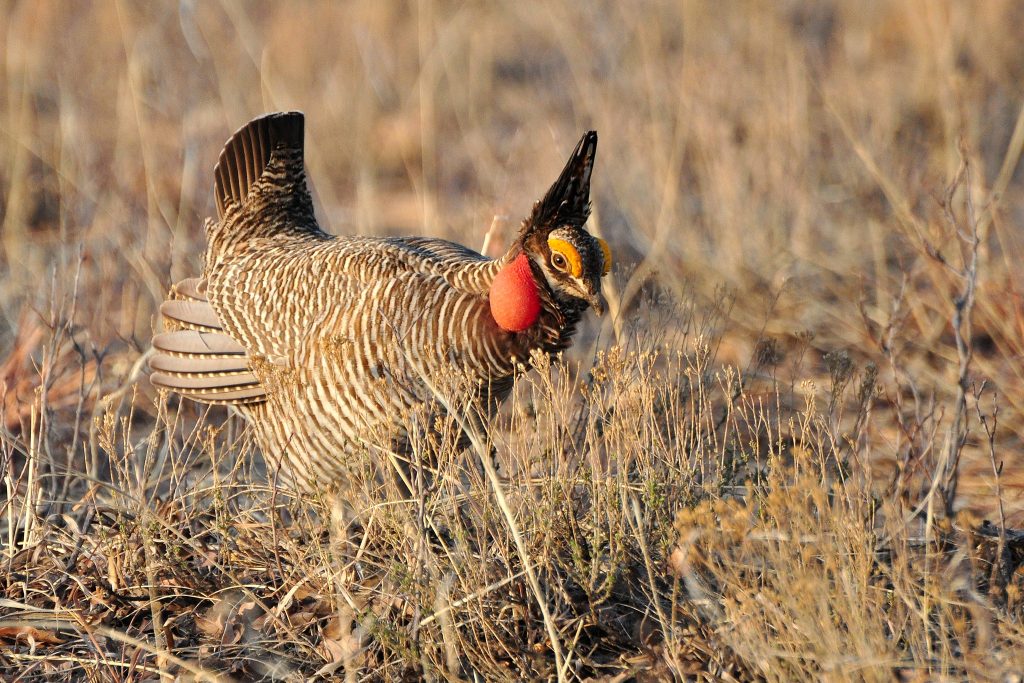
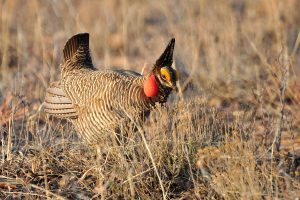
(C)H.Dodge,L.Lamsa
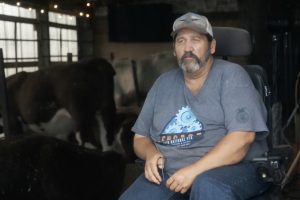
Dallas May, a Prowers County rancher and the Colorado representative for the Lesser Prairie Chicken Landowners Alliance, offered public comment after the Colorado State Land Board moved and seconded a motion to approve the staff-authored LPC Plan last week at their meeting, which was ultimately approved unanimously.
May said his ranch, which is home to LPC habitat, wouldn’t exist were it not for cattle production.
“People have to have a means to support their families, pay their mortgages, so there are some places, such as our ranch, that are preserved because of cattle,” he said. “The importance of grazing I can’t overstate.”
He said there are sections of his ranch that have been fenced off and excluded from grazing for the purpose of the preservation of wildlife habitat. May said his ranch burned in a wildfire four years ago, destroying all the fences.
“Those enclosures that did not have cattle grazing within them, are the last to recover,” he said. “They had no biodiversity of seeds, seed banks, they had developed into a monoculture of essential species of plants. I want to make that point — cattle grazing is an important part of grassland health. It’s either grazing or fire or light tillage such as happens on CRP (Conservation Reserve Program) lands. But grasslands need disturbance.”
May said grazing should be responsible to maintain habitat for the long-term. He said one of the LPC leks is located a mile from his grandfather’s homestead, where it has remained active for years.
May also said compensatory mitigation in areas of LPC habitat, which is excluded from the Public Lands Council plan, must occur in Colorado where the work is done. May said there was a recent transmission line through PLC habitat in southeastern Colorado, and all compensatory mitigation was invested in Kansas rather than where the damage was done.
“If you need to reduce your cattle inventory to provide better habitat, there’s a cost to that,” he said.
Tony Hass, Las Animas County Commissioner, also addressed the board and echoed May’s comments about the importance of grazing to LPC habitat. Ashley House, vice president of strategy and advocacy with Colorado Farm Bureau said she appreciated the scientific data from Colorado Parks and Wildlife included in the LPC Plan. She said partnership and trust between the State Land Board and private landowners is important to species recovery.
DIVERSE INCOME STREAMS
She told the SLB the current farm economy is placing great pressure on producers in southeast Colorado with historic drought and rising input costs. She said restricting all new oil and gas development and renewable energy projects greatly reduces the opportunities for diverse income streams for landowners. She said she’s concerned that the restriction does not strike a balance between rural economies and conservation.
Mindy Gottsegen, SLB’s Stewardship and Ecosystem Services program manager, presented the LPS Plan. The SLB adopted the LPC Stewardship Action Plan after Commissioners Josie Heath and Christine Scanlon spoke about the importance of collaboration with lessees. SLB Executive Director Nicole Rosmarino emphasized the importance of grazing once again prior to the vote.
“I want to underscore what comes through really clearly in the plan is that what our first steps are on grazing is to reach out to our lessees and to look at how they run the operation, how the state land factors into the operation, so if that point was lost, I just want to really lift that up,” Rosmarino said. “The whole purpose is to have communication and offer incentives for various programs that are in place and there are programs we may put in place to actually make it more financially attractive to engage with the State Land Board on trying to conserve this bird.”
Rosmarino said the current count of LPC is 36 breeding males in the state.
“I don’t think anybody should feel OK about that number and so I think we can all come together and decide whether or not we’re going to let this species disappear from the state on our watch,” she said. “I think there are a lot of good reasons why the State Land Board should say we’re going to be part of the solution and one of them is actually economic revenue.”
She said there is tremendous opportunity for income in ecosystems services with there being examples of six figure revenue with the potential for seven-figure revenues. She said while 82% of the trust’s revenue comes from oil and gas production leases, that isn’t “in our beneficiary’s best interest, that’s not a long-term solution.”
RESTRICTIONS
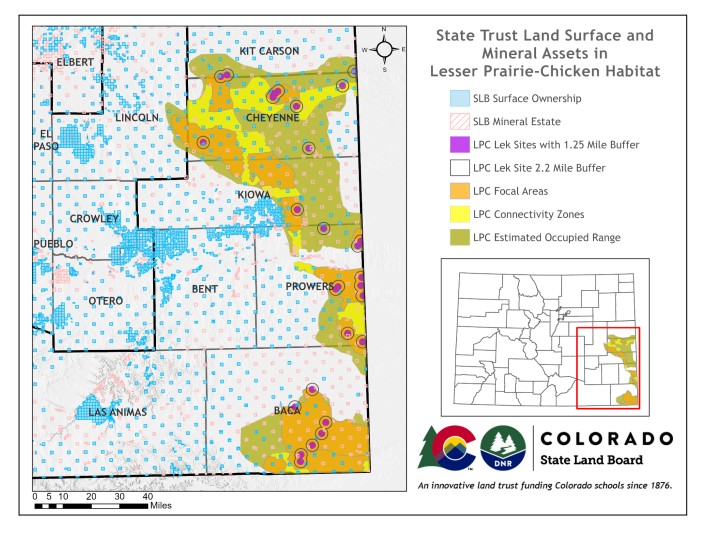
The new plan includes restrictions on new oil and gas, solid mineral, and renewable energy development within 2.2 miles of active LPC leks; no surface occupancy for oil and gas development within 2.2 miles of active leks in Estimated Occupied Range; and no new renewable energy leasing for wind or solar development within 2.2 miles of active leks in the Sand Sage Generational Grassland (SSGG), which is an area in southern Kiowa and Prowers county and is designated as a state high priority area, Focal Areas, and Connectivity Zones. Focal areas contain the highest quality core habitat, have the fewest anthropogenic impacts, and contain lek sites. Connectivity Zones connect Focal Areas and Estimated Occupied Range is the area identified as suitable LPC habitat. The SLB owns 104 sections of surface land in Focal Areas; 51 sections of surface land in Connectivity Zones; and 83 sections in Estimated Occupied Range. The SLB currently has 114 grazing leases located entirely or partially in LPC habitat totaling approximately 80,263 acres. Of these, 72 leases (63%) are located entirely or partially within Focal Areas and Connectivity Zones, the two highest priority habitat sub-types.
The plan goals include SLB staff providing information to lessees on the use of regenerative grazing, followed by long recovery periods as a grazing management tool; the potential for grassland carbon and cropland practices that increase the sequestration of soil organic carbon and provide a revenue-share mechanism for lessees; and for staff exploration of a SLB deferred grazing or incentive program. The plan also directs the continued work on a species conservation bank with a focus on the 14 sections in the SSGG. The State Land Board’s Ecosystem Services program issues leases for regulatory mitigation and species conservation banks and new voluntary market projects involving forest and grassland carbon and biodiversity projects. During the last five years, the agency had one ecosystem services planning lease with a mitigation bank sponsor to develop a species conservation bank for LPC. There was previously work on establishing a conservation bank, but according to the plan notes, the volatile federal status of LPC decreased market demand for LPC habitat credits and the planning lease was discontinued.
LPC habitat is also being pressured by new powerlines being built in the area. According to Gottsegen, about 1,650 acres of LPC habitat is impacted by the transmission lines.
Since 2019, the SLB has supported increased use of regenerative grazing practices on state trust lands and approved regenerative and holistic grazing lease provisions on some of the trust’s largest ranches including the Lowry, Chico Basin, Brett Gray and Chancellor.
Of the nearly 2.8 million acres of LPC habitat in the state, the State Land Board owns and manages about 84,250 acres of state trust land and 170,300 acres of mineral estate in LPC habitat, or about 3% of the state’s LPC habitat. About 50 percent of the agency’s mineral ownership is “severed estate” meaning the surface land has been sold and the State Land Board retains just the mineral ownership. These mineral assets may still be leased, but the State Land Board has no control over how the surface lands are managed so lease stipulations cannot be enforced.